

You have picked out the kit — a front bumper, side skirts, a rear diffuser, a wing. Then you read about ADRs, VSB14, engineered certification and state-by-state rules, and it starts to feel like a styling upgrade needs a project manager.
The good news is that Australia’s system is more logical than it first looks. There is a national technical standard and a state administrative process, and once you separate the two, the answer for a normal bolt-on kit is simple.
Here is the straight answer: a body kit is legal in Australia. Cosmetic parts that bolt on, keep your lights and plates visible, and do not change the vehicle’s dimensions or affect its compliance with the Australian Design Rules are the easy case. The moment a kit changes your car’s width or length, requires cutting or welding, or affects something the ADRs cover — lighting, external projections, occupant protection — it moves into the certification lane. This guide explains where that line sits for a BYD.
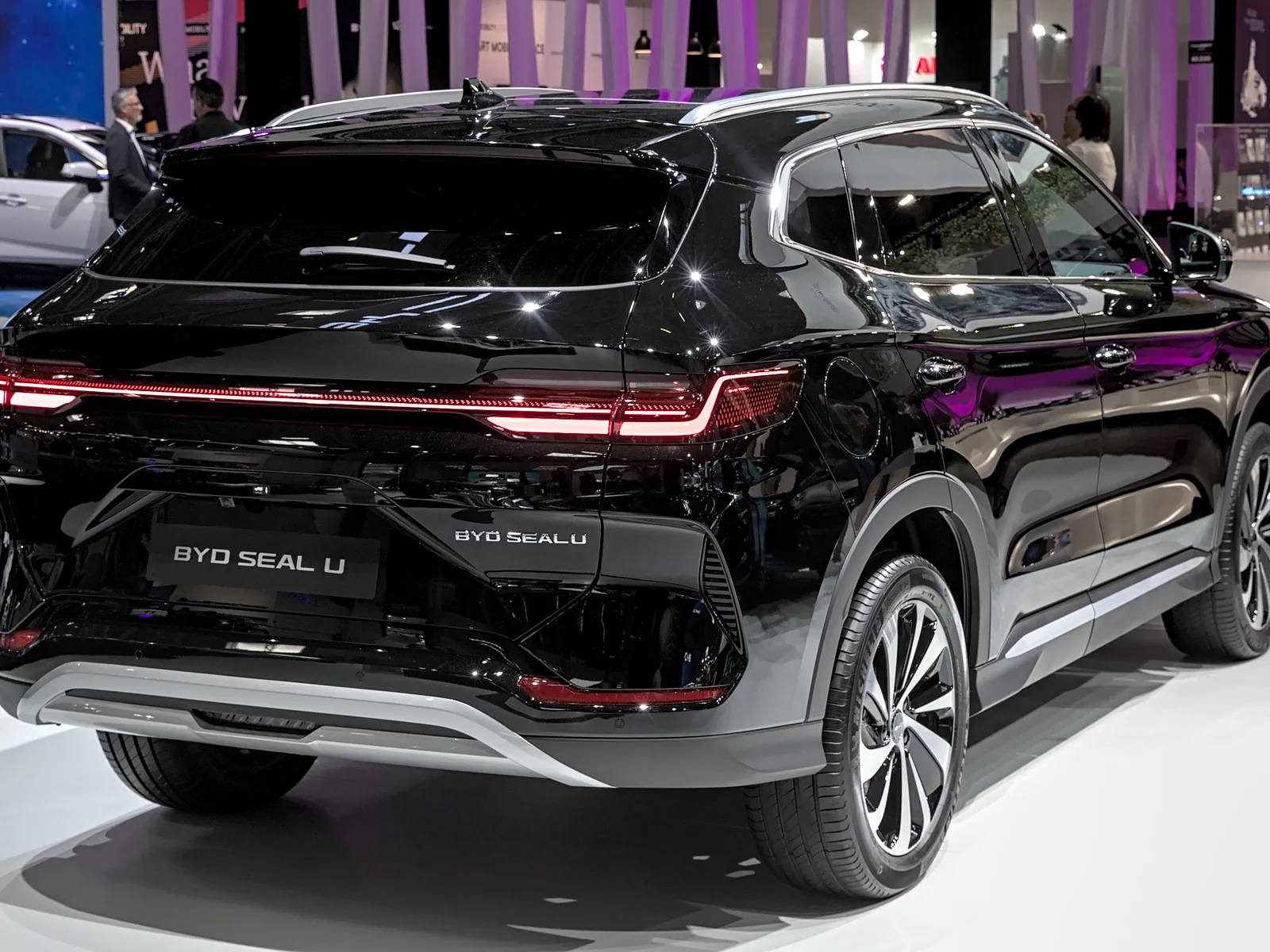
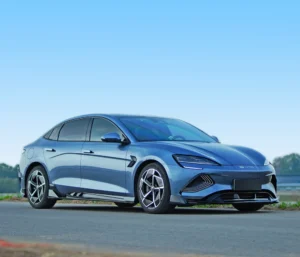
Photo: Alexander-93 / Wikimedia Commons (CC BY-SA 4.0)
The short answer: body kit legal in Australia has two layers
Australia splits modification rules into two parts, and knowing which part applies to you saves a lot of confusion.
Layer one is national and technical. The Australian Design Rules (ADRs) set the standards every vehicle must meet, and Vehicle Standards Bulletin 14 (VSB 14) — the National Code of Practice for Light Vehicle Construction and Modification — sets out the technical requirements for modifying a light vehicle. VSB 14 covers engines, transmissions, brakes, seating and occupant protection, and body and chassis modifications.
Layer two is state and administrative. As the federal government’s own guidance puts it, VSB 14 does not cover the administrative requirements of each state and territory — registration processes, inspection fees, applications for approval to modify, exemptions, and the administration of modification schemes and signatories. That is why a modification can be technically compliant with VSB 14 and still need a jurisdiction-specific approval.
Each state adopts the national code through its own scheme: VSCCS in New South Wales, VASS in Victoria, and Queensland’s Code of Practice, to name the three largest.
| What you fit | Position in Australia |
|---|---|
| Bolt-on lip, skirts, diffuser or spoiler that keeps the car’s dimensions and ADR compliance | The straightforward case — fit it properly and keep it secured |
| A kit that changes the vehicle’s width or length | Certification through your state’s scheme, and updated registration records |
| Anything that affects lighting, external projections or occupant protection | Needs to be assessed against the ADRs before you rely on it |
| Cutting or welding of structural metal | Engineering certification, without exception |
| Anything that blocks the plate, lights or mirrors, or creates a dangerous projection | A defect risk regardless of paperwork |
The four questions that decide whether you need certification
- Does it change a dimension? Extra track, extra width, extra length — these are the changes that turn a kit into a certified modification, because they affect how the vehicle sits within the ADRs.
- Does it affect an ADR? Lighting performance, external projections, and the vehicle’s occupant protection are all covered by ADRs, and a bumper or wing that changes those areas has to be assessed.
- Does it require cutting or welding? Bolt-on work is a styling job. Structural metal work is engineering.
- Does it change your registration details? If the vehicle’s recorded details change, the registration record has to follow, and in some states that means an inspection.
If the answer to all four is no, you are dealing with a cosmetic accessory. If any answer is yes, talk to a licensed certifier in your state before you buy the parts — that conversation is free and it prevents the expensive version of this article.

How the state layer works in practice
New South Wales is a useful example because its rules are published clearly. Most light vehicles more than five years old need a yearly safety inspection report — a pink slip — calculated from the compliance plate date, and only an Authorised Inspection Scheme station can issue one. The report is valid for six months, and if the car fails, repairing it within 14 days and returning to the same station avoids a second inspection fee.
NSW also uses the AUVIS inspection (the blue slip) in situations that include a vehicle coming in from another state or country, a registration that lapsed more than three months, and — relevant to anyone modifying a car — changes to vehicle registration records due to significant changes. Certification of modifications themselves runs through the VSCCS scheme.
Other states and territories do the same job with different names and different inspection cycles: Victoria’s certification runs through VASS, Queensland publishes a Code of Practice, and most jurisdictions require a roadworthy or safety certificate when a vehicle is sold or re-registered.
The practical takeaway is not to memorise the whole map. It is to do two things: check your own state’s rules, and keep the modification cosmetic so the state layer never has to do anything more than read your paperwork.
Who does what: you, the seller, the workshop and the certifier
| Who | What they handle |
|---|---|
| You | Choose the parts, check your state’s rules, and keep the documents |
| The seller | Accurate product information: the exact part, the model and year it fits, the material, the weight, the mounting points and photos of the fixings |
| The workshop | Fits the kit properly, with correct fixings and a neat finish |
| A licensed certifier | Where required, assesses the modification against the national code and issues a certificate your state accepts |
What you want from the seller is accurate information about the part and the car it fits: the correct part number for your model year, the material and weight, how it mounts, and photos of the fixing points. That is what your workshop works from and what a certifier will ask for — and it is what we send with every kit we ship.
Fitment: model year, drilling, and going back to stock
A body kit is not a universal product, and BYD’s line-up proves it. A Seal, an Atto 3, a Dolphin, a Sealion 7 and a Shark 6 share almost nothing at the mounting level, and facelifted versions of the same model can change the bumper shape, the sensor layout and the tow-hook cover.
Before you buy, give the seller the model, model year, trim, market version and VIN. A supplier that will not ask for the VIN is guessing. Our BYD model lineup is a useful starting point if you are still confirming which generation you own, and our BYD exterior accessories hub lists styling parts by model.
Three fitment questions matter more than any photo:
- Sensor and camera cutouts. If the original bumper carries ultrasonic sensors, a front radar or washer jets, the new one must provide the right openings and brackets. Cutting them by hand is the most common source of problems — which is why we mold every kit around the openings on your car.
- How it is fixed. Original mounting points, with screw holes molded to match the OEM positions. If you would rather not drill at all, parts such as the no-drill front bumper lip for BYD Seal are designed for that approach.
- Whether you can go back. With a bolt-on kit, returning to standard means unbolting the parts and refitting the originals — which matters if a future inspection or a buyer asks questions.
Popular BYD styling parts for Australian builds
The parts Australian owners ask for most are the ones that change the car’s look without touching its dimensions:
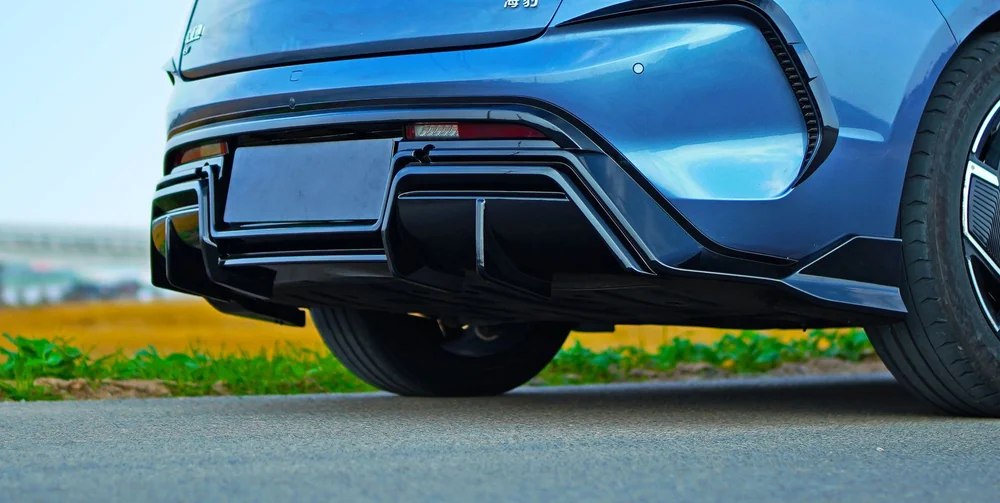
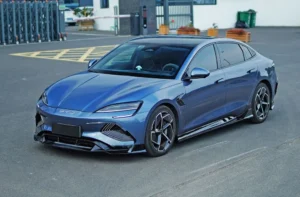
- A PP body kit for BYD Seal 7 DM-i for a complete front, side and rear upgrade in one order.
- A roof spoiler wing for BYD Sealion 7 to finish the rear roofline.
- Side skirts for BYD Sealion 7 to close the gap along the sills.
- A rear bumper diffuser for BYD Sealion 7 for a finished rear end.
- A roof spoiler wing for BYD Seal U DM-i for the SUV body.
All of them bolt on, and the full BYD accessories range covers interior, exterior and replacement items if you are building a complete car.
Radar, cameras, ADAS and the tailgate
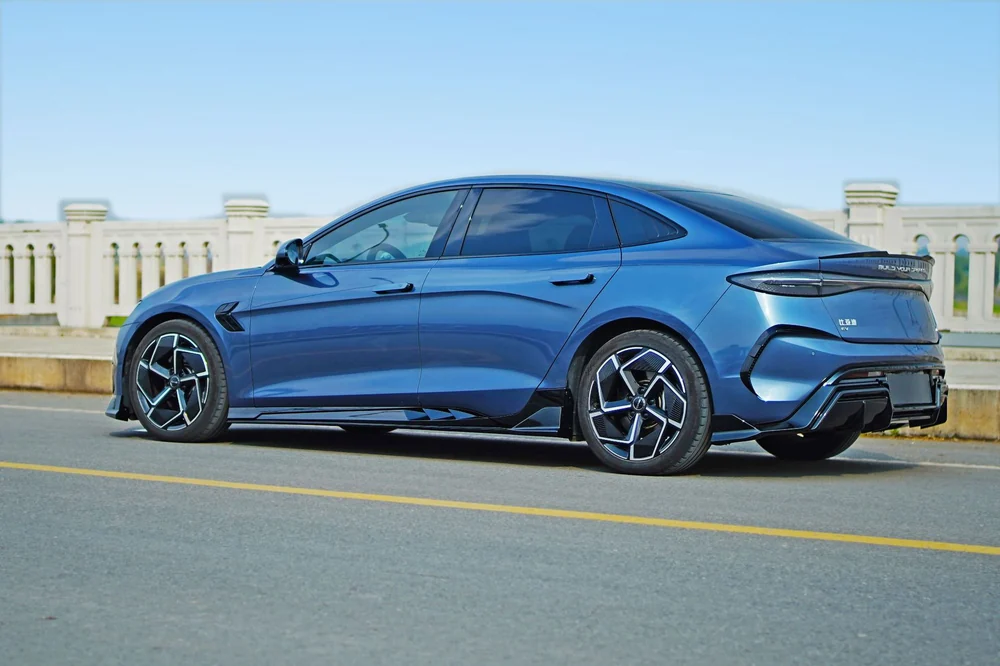
Modern BYDs are sensor platforms. Front radar modules, ultrasonic park sensors, surround-view cameras, rain sensors and lane-keeping cameras are spread across the bumper, grille and windscreen area — and in Australia those systems sit inside the ADR framework, which is exactly why a bumper that carries them has to be handled carefully.
Replacing a bumper that carries those sensors is a different job from adding a cosmetic lip, because a sensor that is moved, tilted or shielded no longer sees what it is supposed to see. In practice: the new bumper has to hold the radar and sensor modules at the same height, angle and depth as the original; the workshop should run the calibration routine the manufacturer specifies; and power tailgates, soft-close doors and sensor-triggered features should be tested through a full cycle before the car leaves the workshop.

Materials, paint and Australian conditions
Kit materials are usually ABS, polyurethane, fiberglass or carbon fiber, and Australia’s climate makes the choice matter.
Polyurethane (PU) flexes, handles heat cycling well and shrugs off parking knocks, which is why it is the usual choice for full bumper replacements on daily-driven cars. ABS is lighter on cost, takes paint well and suits lips, grilles and trim. Fiberglass is easy to shape and repair and is popular for custom widebody work. Carbon fiber is the lightest option and the one buyers choose when weight and finish matter most.
Australia is hard on finishes. UV levels are among the highest in the world, and a part painted without proper primer and a UV-stable clear coat will fade long before the factory panels do — especially on a car that lives outside. Ask your paint shop for a UV-stable clear coat and, on metallic finishes, blending into the neighbouring panels. If you drive near the coast or on unsealed roads, add two more considerations: salt air attacks exposed fixings, and dust and gravel work like abrasives on anything loose or unprotected.
High-speed vibration is almost never a material problem. It comes from insufficient fixing: too few fasteners, adhesive-only joints, or brackets that were never designed for the load. If a wing or diffuser moves when you push it by hand, it will move far more at highway speed — and an insecure body component is a defect, not a styling choice.
Insurance: disclose the kit, and keep the paperwork
Australian insurers price a policy on the vehicle as described. Body kits are extremely common here, so most insurers have a clear process — but they need to know about it. A modification that was never declared can put a claim at risk, and for significant modifications some insurers will ask for the certification paperwork before they will cover the car at agreed value.
The routine is short: tell your insurer what you are fitting and when, keep the invoice and the workshop’s record, and add the certification documents if a certifier was involved. It takes ten minutes and removes the most common reason a claim goes wrong.
After the install: inspections, registration and resale
Once the kit is on, your obligations depend on where you live. In NSW, a light vehicle over five years old needs its yearly pink slip, and significant changes to the vehicle’s registration records can require an AUVIS inspection. Elsewhere, a roadworthy or safety certificate is typically required on sale or re-registration.
That is why the smart approach in Australia is unchanged from everywhere else: keep the kit cosmetic, bolt-on and correctly fixed, and keep the documentation for it. A car with a tidy, documented kit passes the administrative side of the system without a detour. A car with an undeclared, insecure or dimension-changing kit is the one that turns a routine inspection into a project.
Why the effort is worth it
None of the above is a reason to skip the kit. It is a reason to buy one that fits properly and to keep it in the lane where no certification is needed.
A bumper that reuses the factory mounting points, keeps every sensor opening in place and arrives with real fitting data is the easy case in Australia: it is cosmetic, it is reversible, and it sails through the state layer without a certifier. You end up with the car you wanted, on the road, with a folder that answers every question.
Body kit legal in Australia: a pre-purchase checklist
| Check | Why it matters |
|---|---|
| Model, year, trim and VIN confirmed by the seller | Facelifts and market versions change bumpers and sensor layouts |
| Kit does not change the car’s width or length | Dimension changes are what trigger certification |
| No cutting, welding or structural work | Structural metal work always needs engineering |
| Lights, plate and mirrors stay fully visible | ADR and defect requirements, not style preferences |
| No sharp or dangerous projections | Directly relevant to how the vehicle is assessed |
| Sensor, camera and radar positions documented | Keeps ADAS and parking systems working after fitting |
| Fixings appropriate for highway use | An insecure component is a defect |
| UV-stable paint and suitable material | Australian sun punishes poor preparation |
| State rules checked before purchase | VSB14 is national; approval and inspection are not |
| Insurer told in writing | Protects the claim, not just the premium |
Frequently Asked Questions
Are body kits legal in Australia?
Yes. Cosmetic, bolt-on kits that keep the vehicle’s dimensions and ADR compliance intact are the straightforward case. Modifications that change dimensions, affect ADR areas such as lighting or occupant protection, or involve structural work need certification through your state’s scheme.
What is VSB14, and is it law?
VSB 14 is the National Code of Practice for Light Vehicle Construction and Modification — a national technical standard. It is not legislation by itself; each state and territory adopts it through its own scheme, such as VSCCS in NSW, VASS in Victoria and the Code of Practice in Queensland.
Do I need an engineer’s certificate for a spoiler or side skirts?
If the part bolts on, keeps the car’s dimensions unchanged, stays clear of lights and plates, and creates no dangerous projection, it is a cosmetic accessory. If it changes dimensions or affects an ADR area, it needs to be assessed by a licensed certifier.
How often does a car need a safety inspection in Australia?
It depends on the state. In NSW, most light vehicles more than five years old need a yearly safety inspection report — a pink slip — calculated from the compliance plate date, and an AUVIS (blue slip) inspection may be required for significant changes to registration records.
Will a body kit affect my insurance?
It can if it is not declared. Modifications are common in Australia and insurers have processes for them, but an undisclosed kit can put a claim at risk — and for significant modifications the insurer may ask for certification paperwork.
What product information should come with the kit?
Enough for your workshop to fit it and for a certifier to assess it if needed: the part and model identification, the material and thickness, mounting drawings or photos of the fixing points, and the weight. We include that pack with every kit we ship.
Get a fitment-matched BYD body kit for Australia
If you would rather not discover the technical questions after the parts arrive, start with the fitment check. We supply BYD exterior accessories and body kits for the full BYD range — complete kits, or individual front and rear bumpers, side skirts, lips, diffusers, wings and spoilers.
Three details matter here. First, our bumpers are not glue-on parts: the screw holes are molded to match your car’s original mounting points, so the kit fixes the way the factory bumper fixes. Second, sensor openings, washer jets and brackets stay in their factory positions, so the bumper goes on and the assistance systems recalibrate normally. Third, every order ships with the fitting pack your workshop needs — part identification, material spec, mounting photos and weight — and you get one-to-one support from the person who matched your parts if a question comes up mid-install.
We ship from China with MOQ 1 piece, and we also handle bulk orders and dropshipping for accessory shops, workshops and resellers across Australia and New Zealand. Send us your model, year and VIN, and we will confirm compatibility before you pay — then request a quote with the parts and delivery terms you need. If you also buy vehicles, our global sourcing service covers cars and parts in the same order.
References
- Vehicle Standards Bulletin 14 (VSB 14) — National Code of Practice for Light Vehicle Construction and Modification — Department of Infrastructure, Transport, Regional Development, Communications and the Arts — https://www.infrastructure.gov.au/infrastructure-transport-vehicles/vehicles/vehicle-design-regulation/rvs/bulletins/ncop
- Safety checks and vehicle inspections — Transport for NSW / NSW Government — https://www.nsw.gov.au/driving-boating-and-transport/driving-nsw/vehicle-registration/renewing-vehicle-registration/safety-checks-and-vehicle-inspections
- Safety checks, inspections and vehicle changes — Service NSW — https://www.service.nsw.gov.au/services/safety-checks-inspections-and-vehicle-changes
- Harmonising light vehicle modification standards — National Transport Commission — https://www.ntc.gov.au/project/harmonising-light-vehicle-modification-standards

 English
 Portuguese
 French
 Turkish
 Russian
 Arabic
 Spanish