

Charging is the part of BYD ownership that changes the most between models, markets, and chargers. A China-spec car may have a GB/T port, a 7 kW home wallbox, and a 120 kW public charger — while an export version may use CCS2 and a different onboard charger.
This guide covers the car side of BYD charging: AC vs DC, ports and cables, how to start and schedule a charge, battery care, and what to check when a charge will not start.
Quick answer: use AC charging for overnight and daily top-ups, and DC fast charging for road trips. Plug in, confirm the port is locked, start the charge on the charger or in the BYD App, and set a limit of about 80–90% for daily use unless you need the full range. Use the app to schedule off-peak charging.
AC vs DC charging
AC charging uses the car’s onboard charger to convert mains AC to DC. It is slower, but gentler on the battery and cheaper to install at home. DC charging bypasses the onboard charger and feeds DC directly into the battery; it is faster but best used for trips rather than every day.
| AC charging | DC fast charging | |
|---|---|---|
| Typical power | 3.3–11 kW | 60–250 kW |
| Typical time | 5–10 hours | 20–40 minutes to 80% |
| Best for | Home, office, overnight | Road trips, top-ups |
| Battery effect | Gentler | More heat; use when needed |
Ports and cables
China-spec BYD cars use the GB/T standard: a seven-pin AC port and a nine-pin DC port, usually under one flap or two separate flaps. Export versions may use CCS2, Type 2, or a local standard.
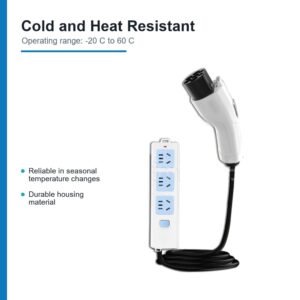
You need the right cable for the charger. A portable AC charger usually has a household plug and a car connector; a wallbox may have a tethered cable or a socket. DC chargers have their own tethered gun, so you do not need a cable.
Do not use a converter or adapter unless it is designed for the car and the charger. A DC adapter that passes the wrong voltage or does not communicate with the car can damage the port or stop the charge.
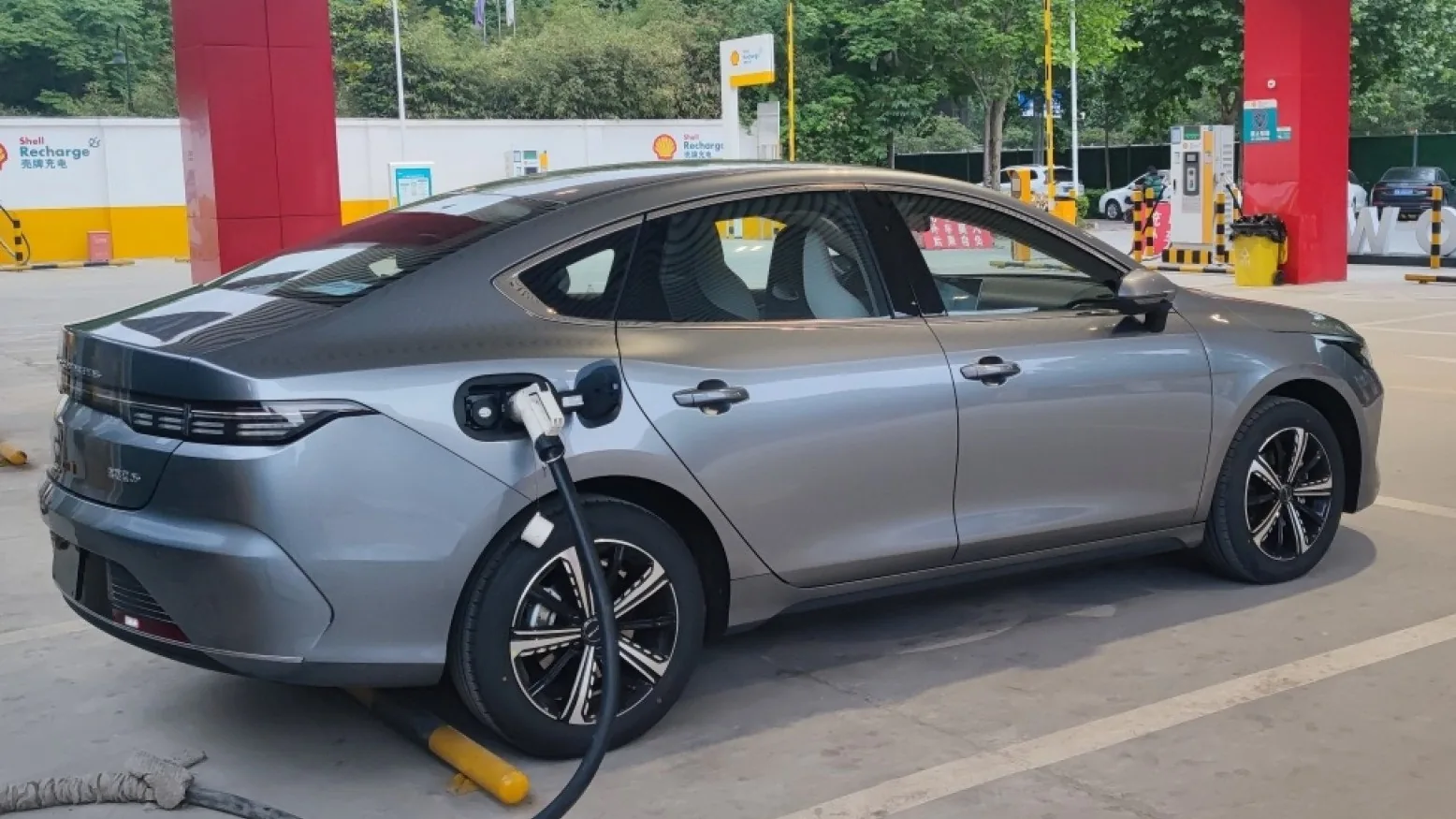
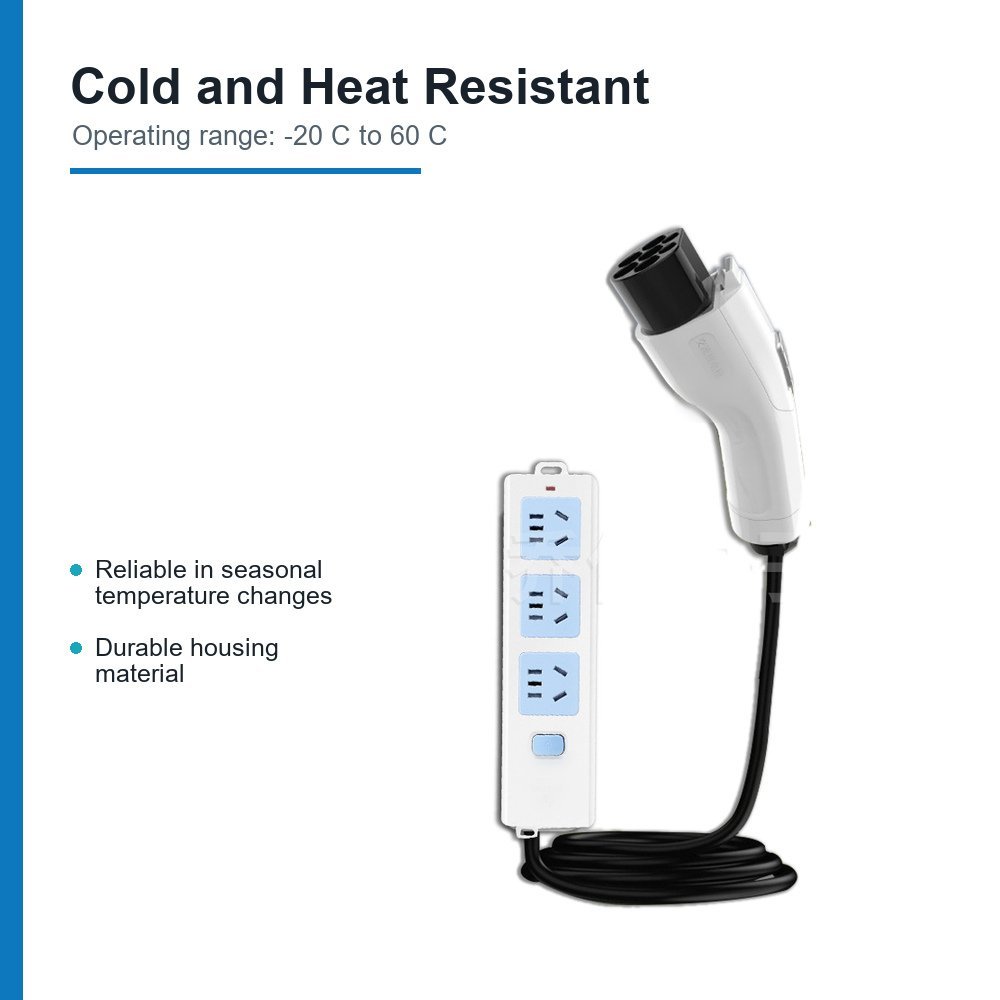
How to charge: AC
- Park close enough for the cable to reach without strain.
- Open the AC charging flap and remove the port cap.
- Plug the charger connector in firmly until it clicks.
- Start the charge on the charger (card, app, or RFID) or in the BYD App.
- Check that the charging indicator is on and the car shows a positive power flow.
- When finished, stop the charge on the charger or app, unlock the port, and unplug.
For a home wallbox, the sequence is usually the same: plug in, authenticate, and let the car manage the session. If the wallbox has a scheduled-charge feature, use one scheduler — either the car or the box — not both at once.
How to charge: DC
- Open the DC flap and check the gun and port for water, dirt, or damage.
- Plug the gun in firmly; the lock should engage.
- Start the session on the charger screen or app.
- Monitor the power and the estimated time; peak power drops as the battery fills.
- Stop at the charger or in the car, release the lock, and unplug.
DC charging is usually most efficient between 10% and 80%. Above 80%, the car deliberately slows down to protect the battery. On a road trip, plan to arrive with a low-but-safe state of charge and leave before 100% unless you need the range.
Scheduled charging and charge limits
Most BYD models let you schedule charging in the central screen or the BYD App. Scheduled charging usually works only with AC; DC charging starts immediately. Set the start time for off-peak electricity and the end time before you leave.
Set a daily charge limit of about 80–90% if you do not need the full range. For long trips, charge to 100% shortly before departure. If the car has an LFP blade battery, follow the manual’s recommendation for a periodic full charge to help the battery management system balance the cells.
In cold weather, preheat the cabin while plugged in. Some models also preheat the battery for faster DC charging; use the app or the charging screen to start it before you reach the charger.
Battery care that actually matters
- Avoid leaving the car at very low or very high SOC for long periods.
- Use AC for daily charging; save DC for trips.
- Do not charge in standing water or with a damaged cable.
- Keep the port clean and dry; close the flap after charging.
- In extreme heat or cold, let the battery reach a normal temperature before a fast charge if you can.
- Follow the service schedule for coolant and battery checks.
Troubleshooting
| Symptom | Likely cause | What to do |
|---|---|---|
| Charge will not start | Gun not seated, charger not authenticated, or schedule set | Replug, check the charger, disable the schedule, try another charger |
| Charging stops early | High temperature, low power, or charger fault | Check the screen for a message; try a different charger |
| Gun stuck | Port lock still engaged | Stop the session, unlock in the app or screen, then release |
| Port flap will not open | Ice, dirt, or actuator fault | Clean around the flap; use the emergency release if equipped; see a dealer |
| Slow DC speed | Cold battery, high SOC, or charger limit | Preheat, arrive at a lower SOC, try a higher-power charger |
| 12V battery flat | Car not used or accessory drain | Jump-start or charge the 12V battery; check for a faulty module |
China-spec vs export
China uses GB/T; Europe and many other markets use CCS2 or Type 2. The onboard charger, port, and software may differ. Do not assume a China-spec car can use a local DC charger without an adapter, and do not assume an export car has the same charging power as the Chinese brochure.
If you are importing, confirm the port standard, the onboard charger power, the cable set, and whether the car can use the local charging network. For home charging, see our BYD home charging guide.
FAQ
Can I charge a BYD with a normal household socket?
Yes, with the correct portable AC charger and a socket rated for the current. Keep the charge power low and make sure the wiring is in good condition.
Should I charge to 100% every day?
No. For daily use, 80–90% is enough for most drivers. Charge to 100% before a long trip, and follow the manual for periodic full charges if your car has an LFP battery.
Does DC charging damage the battery?
Occasional DC charging is fine. Frequent high-power charging adds heat and can accelerate wear; use AC for daily charging when possible.
Can I schedule charging with a public AC charger?
Only if the charger stays active and the car supports scheduled charging on that session. Many public chargers end the session if the car does not start drawing power, so check before relying on it.
Why is my DC charge slower than the brochure?
Peak power depends on the charger, battery temperature, state of charge, and the car’s charging curve. The brochure figure is a best-case peak, not a constant rate.
References
- BYD. 2025 Seal 06 DM-i Owner’s Manual. BYD China, 2025.
- BYD. 2025 Sealion 06 DM-i Owner’s Manual. BYD China, 2025.
- BYD. 2025 Han DM-i Owner’s Manual. BYD China, 2025.
- BYD. User Manual Download Centre. byd.com/cn/user-manual.
Image: BYDCN media library.
Need a China-spec BYD with the right charging setup? Browse our BYD models or send us your requirement.


 English
 Portuguese
 French
 Turkish
 Russian
 Arabic
 Spanish