

Tire pressure is the cheapest performance upgrade you can make to a BYD. Correct pressure improves range, reduces wear, and keeps the car stable under emergency braking. Too low, and the tire overheats; too high, and the centre of the tread wears faster.
This guide covers the China-spec BYD tire-pressure system: where to find the correct pressure, how to read the TPMS display, how to reset or relearn the sensors, and what to do when the warning light stays on.
Quick answer: check the driver’s door jamb for the cold-pressure label and set all four tires to that figure. Most BYD passenger cars sit around 2.3–2.5 bar (33–36 psi); larger SUVs and MPVs may need 2.5–2.8 bar. Use the car’s TPMS display or app to confirm, and reset or relearn the sensors after rotation or replacement.
Where to find the correct pressure
The most reliable source is the tire placard on the driver’s door jamb. It lists the cold pressure for the front and rear tires, often for normal and fully loaded conditions. The owner’s manual and the tire sidewall also carry information, but the placard is specific to the car.
Use cold pressure — measure before driving, or after the car has been parked for at least three hours. Driving heats the tires and raises the pressure by 0.2–0.4 bar, which can make a correctly inflated tire look overinflated.
| Vehicle type | Typical cold pressure | Notes |
|---|---|---|
| Compact hatchback / city EV | 2.3–2.5 bar (33–36 psi) | Check the placard; rear may be higher when loaded |
| Sedan / compact SUV | 2.4–2.6 bar (35–38 psi) | Common BYD range |
| Large SUV / MPV | 2.5–2.8 bar (36–41 psi) | Higher load index; check rear figures |
These are starting ranges, not a substitute for the placard. A Seagull, a Seal, and a Tang L do not use the same pressure. If the placard and the manual disagree, follow the placard for the tires fitted to the car.
How the BYD TPMS works
Most BYD models use a direct TPMS: a battery-powered sensor in each valve stem measures pressure and temperature and sends the data to the car. The dashboard or central screen shows each tire’s pressure; some models also show temperature.
Some cars use an indirect system that estimates pressure from wheel speed. Indirect systems cannot show individual pressures and need a reset after inflation or rotation. Check your manual to see which system your car has.
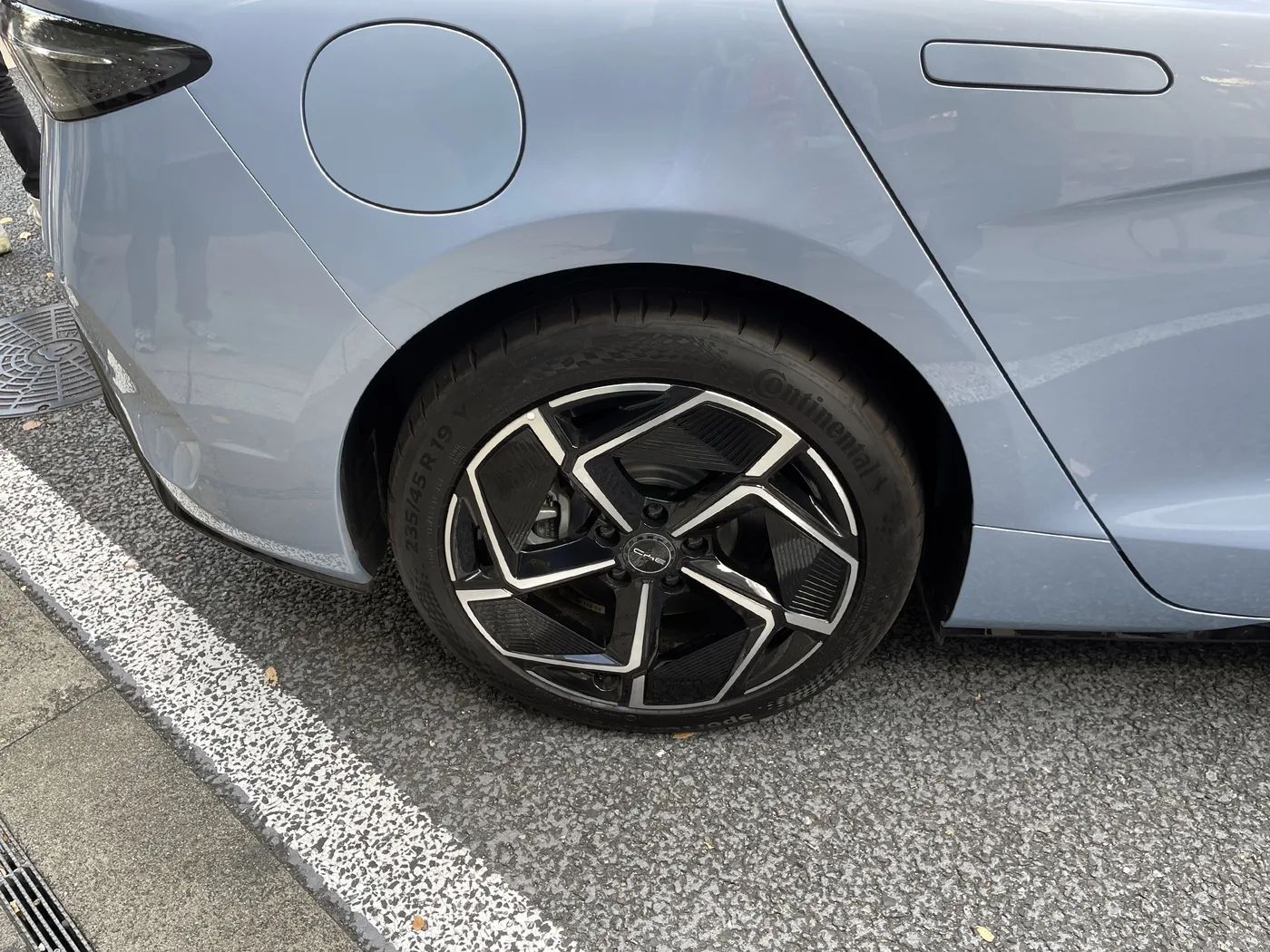
How to check pressure in the car
- Switch on the car and let the display boot.
- Open the vehicle status or tire-pressure page on the central screen.
- Check each tire against the placard, not against the other tires.
- If the app supports it, compare the app reading with the screen.
- Inflate or deflate to the cold target, then recheck.
Do not rely on a visual check. A tire can look fine and still be 0.5 bar low. Use a good gauge; the TPMS is a warning system, not a precision workshop gauge.
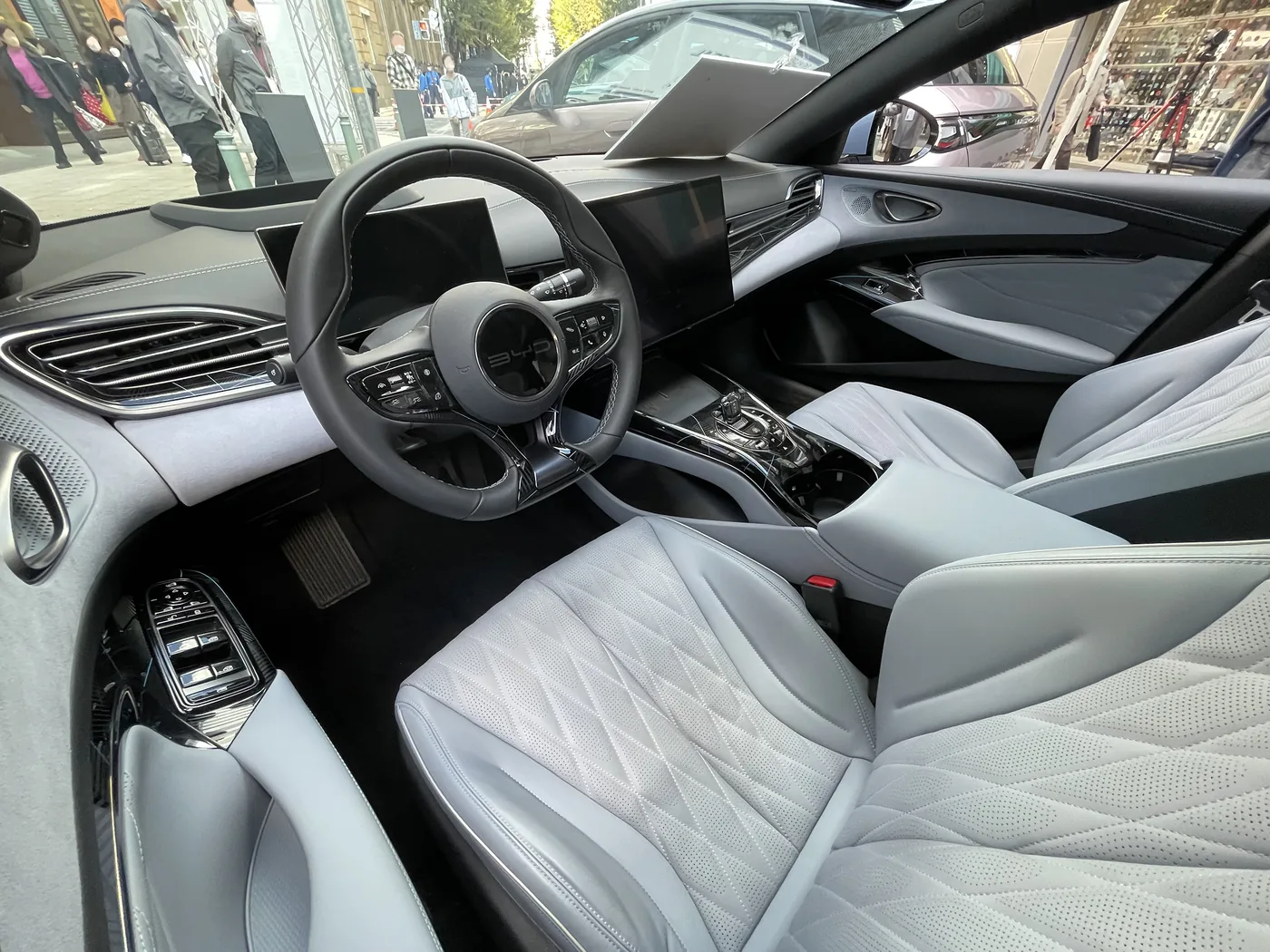
TPMS reset and relearn
After inflating the tires, the direct system usually updates on its own once you drive for a few minutes. If the warning remains, check for a slow leak or a sensor fault before resetting.
After a tire rotation or sensor replacement, the car may need a relearn. Some models have a TPMS reset option in the settings; others require a diagnostic tool or a dealer visit. Do not assume every BYD has a dashboard reset button.
| Situation | What to do |
|---|---|
| Inflated a low tire | Drive for a few minutes; the direct system should update |
| Rotated tires | Relearn the sensor positions with a tool or dealer if the car does not do it automatically |
| Replaced a sensor | Program the new sensor ID; a dealer or tire shop with a TPMS tool can do it |
| Indirect system | Reset through the settings or the specified button after setting all pressures |
| Warning stays after reset | Check for a leak, damaged valve, or dead sensor battery |
Why EV tires lose pressure faster
EVs are heavier and deliver torque instantly, so the tires work harder than on a comparable petrol car. A small leak that would be minor on a light hatchback can become a handling issue on a 2-tonne SUV. Check pressures monthly and before a long trip.
Temperature matters. A 10°C drop can reduce pressure by about 0.1 bar. If the car sits outside in winter, check the pressure more often and adjust after the tires cool.
Rotation, wear, and replacement
Rotate tires every 8,000–10,000 km, or according to the manual. Front and rear tires wear differently on a front-wheel-drive EV; rotation keeps the set even. Directional tires can only move front-to-back on the same side, so check the sidewall arrow.
Replace tires when the tread is at 1.6 mm (the legal minimum in many markets), or earlier if the shoulder is worn, the sidewall is damaged, or the tire is bulging. On a heavy EV, do not wait for the wear indicator if the tire is cracking or losing pressure repeatedly.
Troubleshooting the warning light
| Symptom | Likely cause | What to do |
|---|---|---|
| Warning light on, pressure normal | Sensor fault, temperature, or system not reset | Check all pressures cold; drive; reset or relearn |
| One tire loses pressure repeatedly | Nail, valve, bead, or cracked wheel | Soap-test the tire; repair or replace |
| Warning flashes then stays on | Sensor or receiver fault | Scan the system; replace the sensor if needed |
| No pressure readings | Dead sensor battery or receiver issue | Service the TPMS; sensor batteries last several years |
| Warning after tire change | New sensor not programmed | Relearn or program the sensor |
China-spec vs export
China-spec cars use 433 MHz TPMS sensors in many models; export versions may use a different frequency and sensor type. If you import a car and need a replacement sensor, match the frequency and protocol, not just the shape. A dealer or tire shop with the right tool can read the old sensor ID.
For a model-specific guide, see our BYD Seal tire pressure guide. For the wider range, browse BYD models.
FAQ
What pressure should I use for daily driving?
Use the cold pressure on the driver’s door placard. The table above is only a starting range; the placard is specific to your model, tire size, and load.
Should I set the pressure when the tires are hot?
No. Set it cold. If you must add air after driving, add enough to reach the placard plus the expected heat gain, then recheck cold.
Can I reset the TPMS myself?
Some models have a reset option; direct systems often update automatically after driving. Sensor replacement and rotation may need a TPMS tool or dealer.
Why does the pressure drop in winter?
Cold air contracts. A 10°C drop reduces pressure by about 0.1 bar. Check and adjust more often in winter.
Do I need a spare tire?
Many BYD models do not include a spare; they use a repair kit or run-flat-style sealant. Check your car and carry a gauge, compressor, and sealant if there is no spare.
References
- BYD. 2025 Seal Owner’s Manual. BYD China, 2025.
- BYD. 2025 Sealion 06 DM-i Owner’s Manual. BYD China, 2025.
- BYD. 2025 Han DM-i Owner’s Manual. BYD China, 2025.
- BYD. User Manual Download Centre. byd.com/cn/user-manual.
Images: BYDCN media library.
Need a China-spec BYD with the right wheels and tires? Browse our BYD models or send us your requirement.

 English
 Portuguese
 French
 Turkish
 Russian
 Arabic
 Spanish