

A hard tri-fold tonneau cover is a strong choice if you want rigid panels covering your pickup bed and quick access to the back two-thirds of your cargo space. Just make sure you can live with where the folded panels end up: on many covers, the folded stack still covers the front of the bed behind the cab, while flip-up designs trade your rear-window view for full height.
Before you pick a cover—whether for a BYD Shark 6 or another dual-cab pickup—focus less on panel finish and more on three practical details: how the cover opens for your tallest cargo, whether its clamps clear your bed liner and sports bar, and what extra parts or labor the install actually needs.
How a hard tri-fold works (and what “hard” actually means)
A tonneau cover closes off the open top of a pickup’s cargo bed (often called the tub in Australia and New Zealand). A hard tri-fold uses three connected rigid sections that fold toward the cab. A soft tri-fold uses a flexible outer cover over a supporting frame instead.
Still, “hard” does not mean you can walk across it or bolt a heavy overland rack to the top. Manufacturers often publish an evenly distributed load rating—meaning weight spread across the whole surface, like snow buildup—rather than point loads like a boot heel or a rack foot pressing down on one spot. Unless a cover specifically states it is rated for top-mounted racks or standing weight, treat the panels as cargo protection, not a load deck.
A tri-fold also behaves differently from a one-piece hard lid, which swings up as one assembly, and a retractable cover, which moves along the bed into a storage area. If you are still deciding between those styles, our BYD Shark canopy vs. tonneau cover guide walks through how each category compares.
What “open” actually looks like when you load
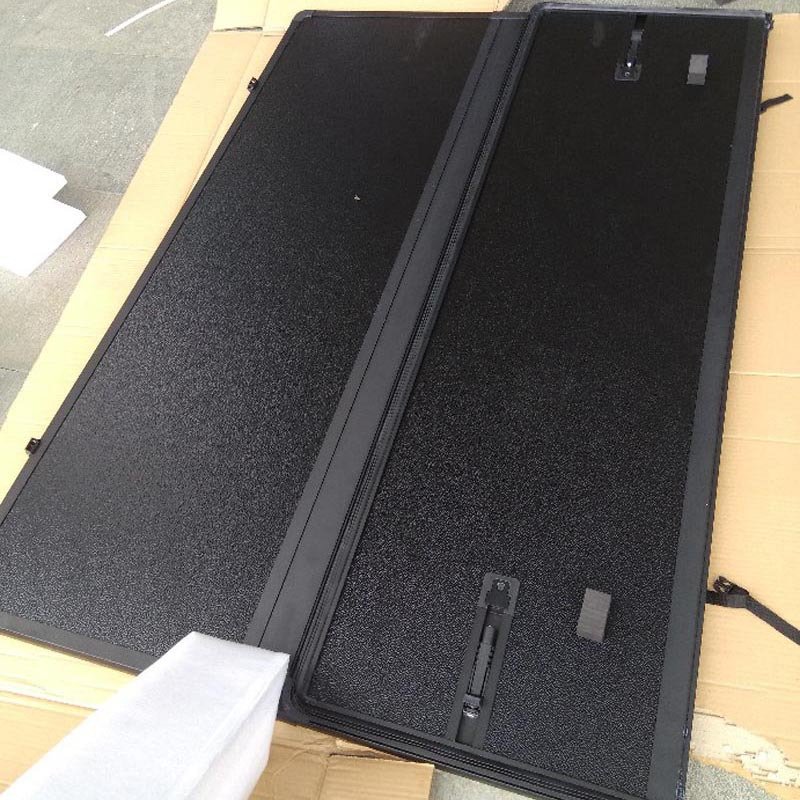
Two hard tri-folds can look nearly identical when closed and give you completely different loading space when open. Always check which of the two folding designs you are buying:
- Horizontal stack behind the cab: The back two panels fold forward and rest flat on top of the front panel. You can reach the back two-thirds of the bed from the tailgate, while the front third stays covered. Some covers in this layout can be unclamped and lifted off as a unit when you need the entire bed open.
- Flip-up upright stack: After folding the panels forward, the whole stack pivots vertically against the cab and locks onto side prop rods—rigid support arms attached to the rails. That setup lets you slide tall items all the way to the front wall without taking the cover off, though the upright panels block most of your rear window and need clear space in front of any sports bar.
Picture the bulkiest item you haul every month before choosing. Low tool cases, groceries, and luggage slide easily under a flat folded stack. Tall appliances, dirt bikes, or palletized cargo dropped in from above hit that front stack unless the cover either flips upright or lifts off easily.
Can you drive with a hard tri-fold partway open?
Being able to fold back a panel while parked does not make that a driving position. Use only the open and closed positions approved in that cover’s manual. A cover that must stay fully latched when closed, or fully folded and secured at the cab with buckle straps and safety tethers (secondary retaining straps) when open, should be driven only in those secured positions.
Why bed length alone doesn’t guarantee a clean fit
Matching the truck model and bed length is only half the story. How a cover attaches to your bed rails—the top edges along each side of the tub—determines whether it bolts right on or turns into an afternoon of trimming and bracket swaps.
Two common layouts are useful to recognize:
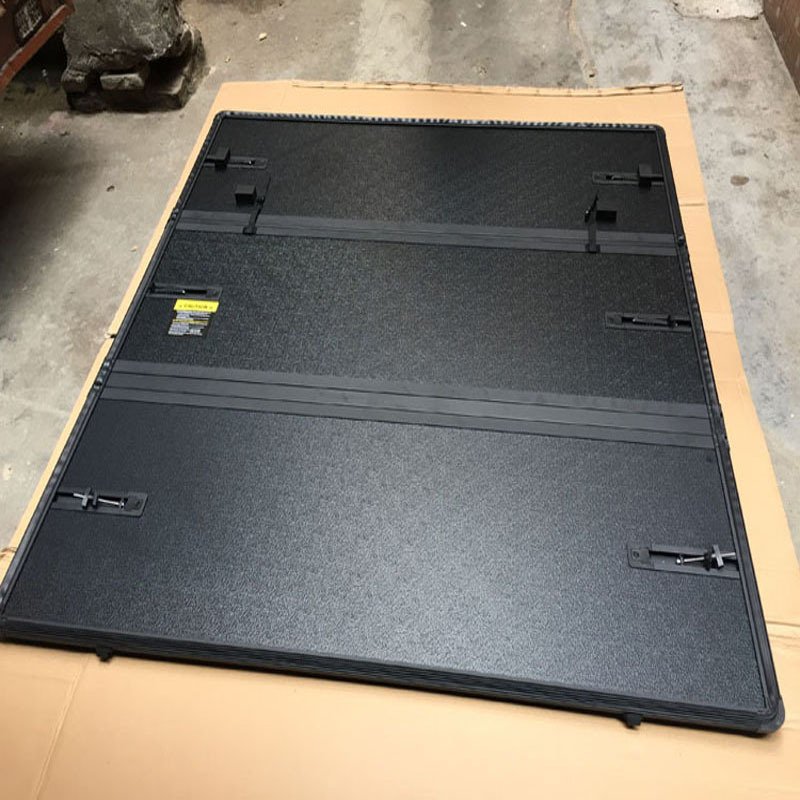
- Direct clamp-on designs drop onto the top of the bed rails and tighten from underneath with built-in clamps and rear latch brackets. On some of these designs, the clamp jaws grip the bed rail’s inward-facing metal flange—the lip tucked beneath the top rail cap.
- Side-rail systems attach two separate aluminum channels along the inner bed walls first. The cover then locks onto those rails, and slam latches underneath the panels snap into the rail grooves as you close each section.
Three truck features change how well those mounts work in real life:
- Drop-in bed liners vs. spray-in liners: A thick plastic drop-in liner can wrap over the lip a flange-grip clamp needs, leaving no clean metal edge until an installer trims small notches out of the liner. Spray-in liners add far less thickness, though heavy coating around the lip can still change the clamp angle.
- Factory cargo tracks and tie-downs: A factory cargo track can occupy the same area a clamp would use. Adapters then provide attachment according to that vehicle’s layout, such as slide blocks or brackets that anchor into the track.
- Sports bars and tailgate timing: A sports bar mounts along the top of the bed rails—the same strip a side-rail cover may need. Even when a bar sits outside the closed panels, its rear legs or base plates can block the cover from flipping upright. Tailgate clearance matters just as much: some covers let you shut the tailgate with the rear panel already latched, while others require you to drop the tailgate, close the cover, and keep a specific sequence so the rear seal doesn’t fold inward.
Before ordering, look underneath your bed rail caps to see whether bare metal, a thick liner, or a cargo track sits there, and note where any sports bar feet bolt down.
How seals and drain tubes actually keep cargo dry
The rigid panels shield the wide top opening from rain. Seals and drainage govern where water can still enter:
- The bulkhead seal: The bulkhead is the front bed wall behind the cab. On many pickups, its top edge sits slightly lower than the side bed caps. A foam or rubber bulkhead seal bridges that step so water running off the cab roof doesn’t blow straight under the front panel.
- Side seals and rail alignment: Rubber flaps along the sides need even contact with the bed caps. On a side-rail cover, poor clamp engagement or overtightening can tilt a rail inward, pulling the seal up on one side and leaving latches misaligned.
- Drain tubes: Some rail systems collect water in channels and carry it out of the bed through drain tubes. A tube that empties onto the bed floor has not completed that path.
That drainage path is also why a “no-drill” cover isn’t always zero-modification. The clamps may attach without drilling steel, while front drain tubes still need an exit through an existing rubber bed plug, behind a drop-in liner, or through a small hole in a plastic plug or liner wall. Once the cover is fitted, a gentle hose along the seams and front corners can show a pinched seal or a loose hose before the first heavy rain.
Why installation costs vary from truck to truck
The sticker price of a hard tri-fold rarely tells you the full out-the-door cost. A simple clamp-on cover on an open, bare-metal bed goes on quickly with basic hand tools. A more involved install costs more because of real extra parts and shop hours:
- Adapter hardware: Vehicle-specific cargo-track brackets, angle shims for recessed rail lips, or spacer kits to clear a sports bar.
- Liner and drainage work: Trimming a drop-in plastic bed liner for clamp clearance, pulling or modifying bed plugs, and routing drain hoses cleanly without kinking them.
- Shop fitting and latch tuning: Leveling separate side rails, adjusting strikers (the metal brackets the latches catch on) so corners pull tight without slamming, and checking the tailgate seal.
- Freight and delivery: Freight, import handling, and local delivery add to the total for a full-width hard cover shipped in a bulky carton.
When comparing prices, make sure one quote isn’t just the boxed cover while another includes mounting adapters, liner trimming, and installation labor.
Choosing a bed cover for a BYD Shark or Shark 6
On a BYD Shark or Shark 6, a bed liner or sports bar can share the same bed-rail space a hard tri-fold needs, so check that those parts still leave room for the cover to mount and open.
If you want help comparing bed cover styles or checking fitment for your truck’s model year, market, and existing liner or sports bar setup, you can contact the Marvix team before placing an order.
In the end, the best hard tri-fold isn’t the one with the toughest-sounding panel spec—it’s the one that clears your biggest everyday load and locks cleanly onto the bed rails you actually have.


 English
 Portuguese
 French
 Turkish
 Russian
 Arabic
 Spanish