

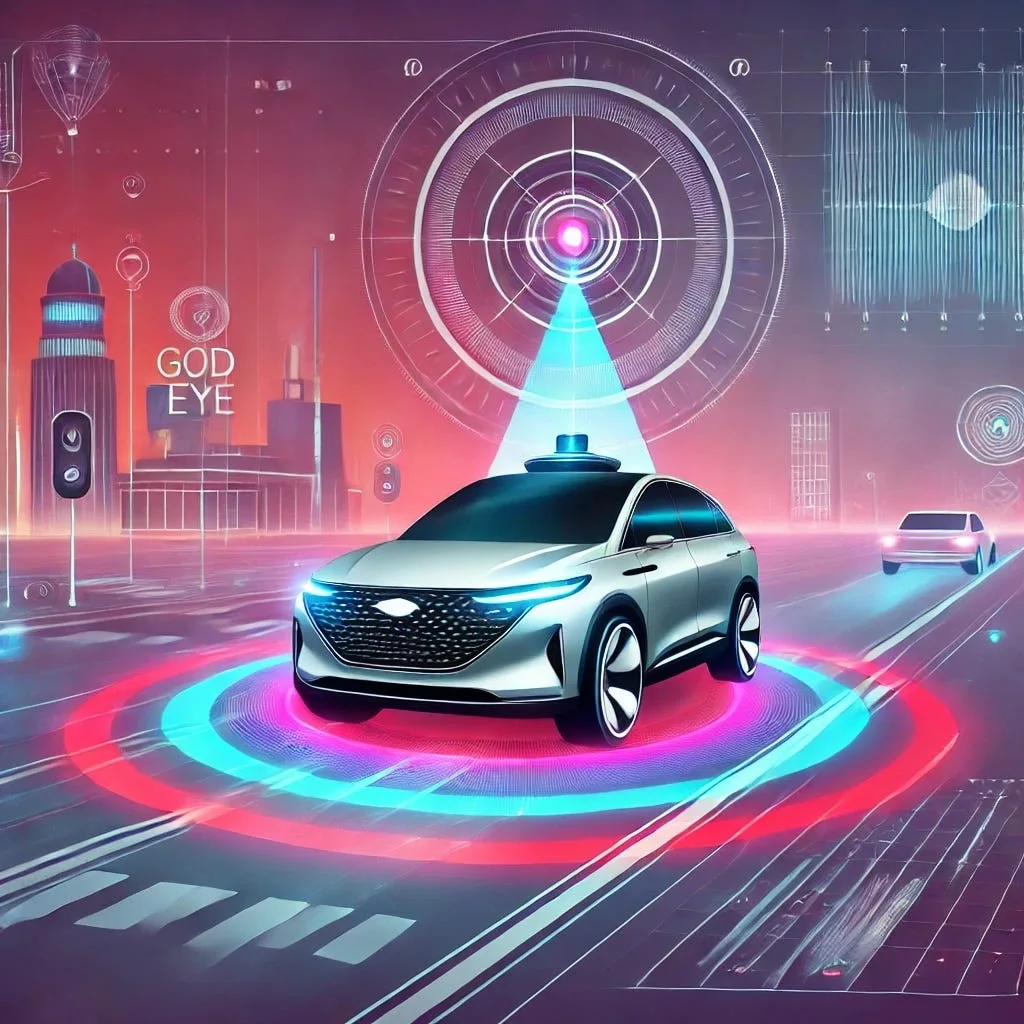
As electric vehicles continue to evolve, safety and intelligence have become just as important as range and performance. Drivers today expect their vehicles not only to respond quickly, but to anticipate risks and provide protective support in complex environments. BYD’s advanced intelligent driving system—widely known as “God’s Eye” (TianShen Zhi Yan)—is designed to meet that demand. More than a collection of sensors and software, it is a fully integrated perception and decision-making architecture engineered to improve confidence, reduce risk, and move mobility toward a safer and more autonomous future.
1. The Core Philosophy: Full-Scene, Real-Time Awareness
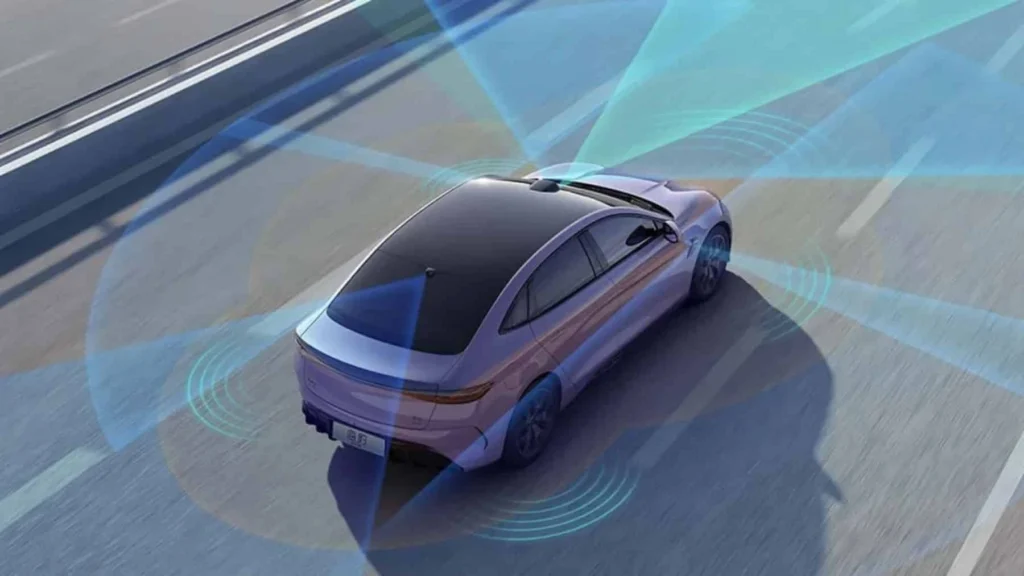
“God’s Eye” is built around the principle of holistic perception, meaning the vehicle must understand the world around it in 360 degrees and in real time. While many vehicles rely on a single dominant sensor type, BYD combines multiple layers of sensing to enhance reliability:
Multi-Sensor Fusion Architecture
| Sensor Type | Quantity (Example AWD Models) | Function |
| Cameras | Up to 11 | Lane, vehicle, pedestrian recognition |
| Millimeter-Wave Radar | Up to 5 | Distance, velocity detection in poor visibility |
| Ultrasonic Sensors | Up to 12 | Low-speed proximity detection |
| Lidar (Top Models*) | 1–2 units | 3D object identification, structural mapping |
| High-Precision Positioning | IMU + GNSS | Lane-level positioning and motion prediction |
*Deployed first in Yangwang U8 and Denza N7, and rolling out across more models.
Each sensor type offsets the limitations of another. Cameras excel at classification, radar performs well in fog or rain, lidar adds spatial geometry, and IMU provides stability in tunnels or high-speed maneuvers. Together, they allow the vehicle to “see” more accurately than the human eye in many conditions.
2. Powerful Computing for Intelligent Decision-Making
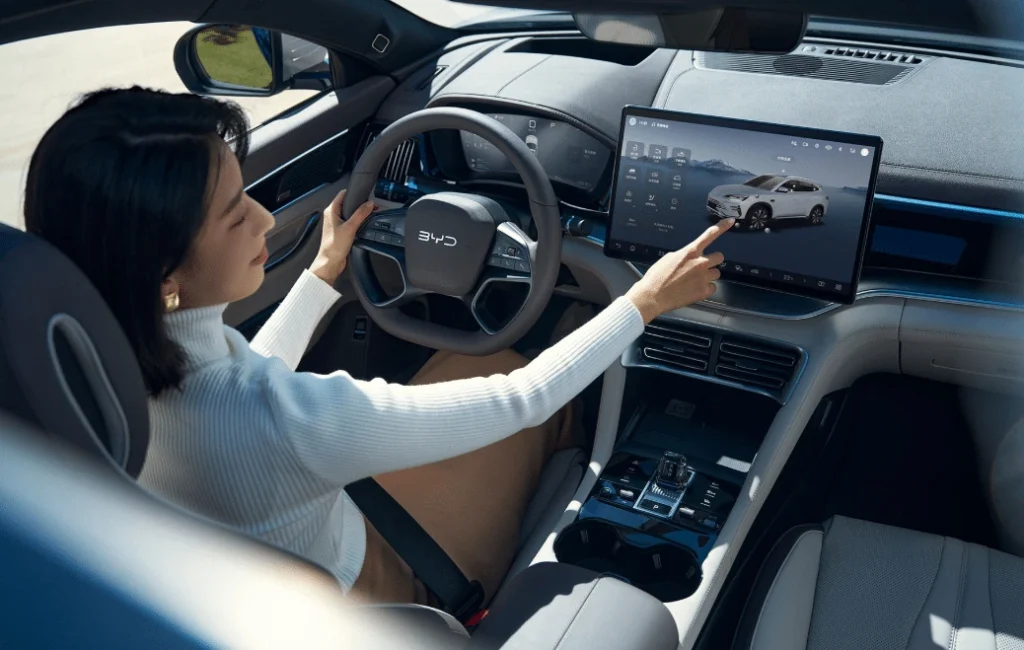
Perception is only one step. Real-time processing requires a fast and efficient computing brain.
BYD’s Central Domain Architecture
- High-performance processors from NVIDIA and Horizon Robotics
- Centralized decision-making for faster response versus distributed ECU structures
- Continuous OTA evolution to expand capabilities over the vehicle’s lifecycle
This vertical integration enables millisecond-level decision execution, crucial in emergency responses such as sudden pedestrian intrusion or unexpected lane changes by surrounding vehicles.
3. Full-Scenario ADAS: From Highways to Parking Lots
“God’s Eye” supports a wide range of assisted driving functions across everyday usage scenarios:
Highway Intelligent Assistance
- Adaptive Cruise Control (ACC-S & ACC-Stop&Go)
- Lane Keeping & Lane Centering Assistance (LKA/LCA)
- Automatic lane change (in supported markets)
- Ramp recognition and speed adaptation
Urban Intelligent Driving
- Traffic Jam Assist (TJA)
- Continuous pedestrian and cyclist recognition
- Smart intersection handling* (*launch markets vary by regulation)
Parking & Low-Speed Autonomy
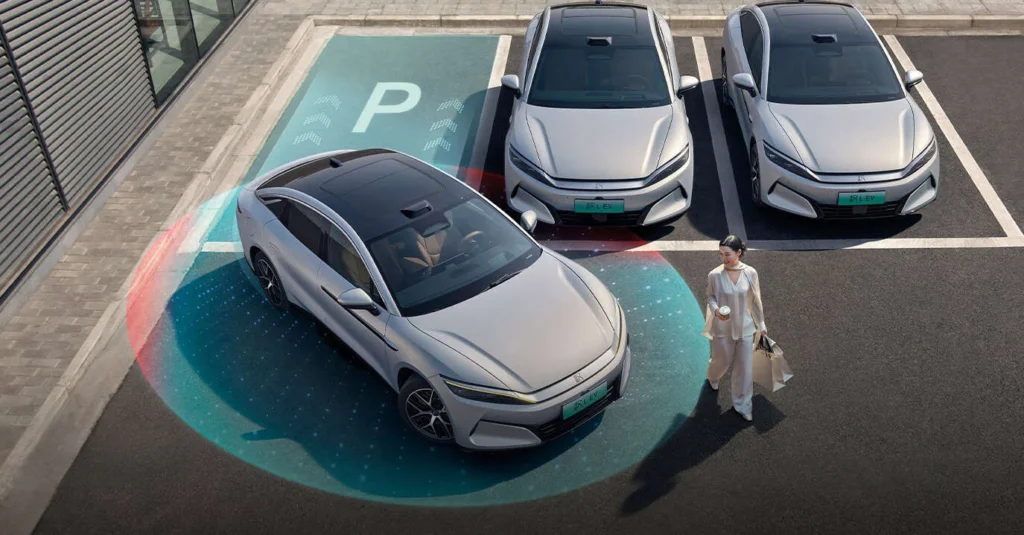
- Remote Smart Parking Assist (RSPA)
- Memory Parking for frequently used garages
- Integrated auto-park from parallel to narrow-space docking
Unlike earlier generations of driver assistance, these features emphasize predictive behavior—the system anticipates risk and adjusts before danger escalates.
4. Safety First: Redundancy Where It Matters Most
Intelligent driving should reduce risk, not introduce new ones. With that in mind, BYD adds multiple safeguards inside the system:
Redundant Protection Strategy
- Back-up steering and braking logic to prevent single-point failures
- Multiple perception sources verifying the same object before action
- Driver monitoring to ensure continued engagement
These measures ensure that even as automation increases, human safety remains the highest priority.
5. Advanced Algorithms: Understanding Complex Environments
What sets “God’s Eye” apart is not just the hardware, but the intelligence behind it.
Key Software Capabilities
- Semantic recognition: Identify vehicle types, lane edges, traffic signs, construction zones
- Trajectory prediction: Algorithm projects the motion of nearby vehicles and pedestrians up to several seconds ahead
- Environmental reconstruction: Builds real-time 3D maps using lidar + visual fusion
These features allow the system to handle rapidly changing road scenarios with confidence, from crowded city streets to high-speed lane merges.
6. Differentiation vs. Competitors
Below is a comparison across the market’s leading intelligent driving systems:
| Feature Category | BYD “God’s Eye” | Tesla Autopilot | Toyota Safety Sense |
| Sensor Fusion | Camera + Radar + Ultrasonic + Lidar* | Camera + Radar (no lidar) | Camera + Basic Radar |
| 3D Spatial Perception | Strong with lidar | Weaker in complex geometry | Limited |
| Local ADAS Tuning | Strong in China/global urban conditions | Strong highway performance | Primarily lane-keeping and alerts |
| OTA Evolution Rate | Rapid expansion due to domain-based architecture | Mature OTA system | Limited OTA on advanced features |
| Hardware Redundancy | High | Medium | Medium |
*For lidar-equipped models (e.g., Denza N7, Yangwang U8). Other trims support scalable upgrades depending on market position.
Conclusion: BYD takes a more balanced approach—leveraging multiple sensor types for stronger all-scenario reliability, especially in dense urban environments where EV adoption is rising fastest.
7. Not Just Technology — A Path Toward Safer Driving Culture
BYD’s intelligent driving strategy aims at democratizing safety. Instead of limiting advanced features to flagship models, BYD is rapidly expanding availability across mid-size sedans, SUVs, and even hybrid vehicles. This reflects a belief that security and intelligence are basic rights, not luxury additions.
Planned enhancements include:
- More urban-scenario automation
- Lane-level navigation assistance
- Full-stack OTA support for hardware-equipped models
- Wider use of lidar and next-gen neural processing units
Each step pushes everyday mobility closer to zero accidents, strengthening public trust in autonomous technologies.
Conclusion: A Clear View Toward the Future
BYD’s “God’s Eye” system represents significant progress in making smart driving more reliable, approachable, and widely accessible. By combining:
- Multi-sensor fusion
- High-speed computing
- Redundant safety architecture
- Predictive algorithmic intelligence
BYD is delivering an intelligent experience that increases driver confidence and reduces road risk—today, not years from now.
As continuous OTA updates expand capabilities and sensor architecture moves toward full L3/L4 readiness, “God’s Eye” stands as a powerful stepping stone toward a future where vehicles not only assist but actively protect every passenger.


 English
 Portuguese
 French
 Turkish
 Russian
 Arabic
 Spanish