

Electric mobility is expanding far beyond personal passenger cars. Heavy-duty transport—trucks, buses, port tractors, and logistics fleets—now sits at the forefront of carbon-reduction strategies worldwide. Yet these vehicles operate long hours under high loads, where downtime is costly and range expectations are demanding. To truly transform this sector, fast, scalable, and reliable charging technology is essential.
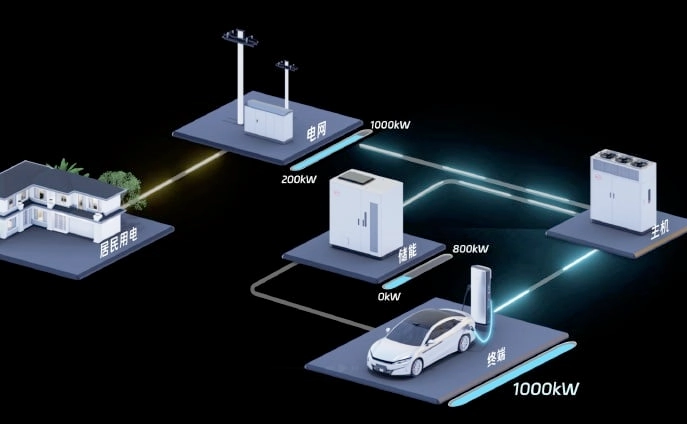
That is why BYD has developed its Megawatt Charging Technology — a next-generation high-power charging system designed specifically for commercial and high-capacity electric vehicles. Delivering up to 1 megawatt (1,000 kW) of power, it marks a major leap from current DC fast-charging standards.
With BYD’s deep integration across batteries, power electronics, and commercial EV platforms, megawatt charging is not simply a theoretical future — it is being engineered directly into real-world fleets.
1. Why Megawatt Charging Matters
Large commercial EVs require much more energy than passenger cars. For example:
- A long-haul electric truck may carry a 400–600 kWh battery
- A high-capacity electric bus may operate continuously throughout the day
Charging these vehicles with standard fast chargers (150–350 kW) often means:
- Long charging downtime
- Higher operational cost
- Limited fleet deployment flexibility
Megawatt charging solves these obstacles by enabling:
✔ Significant range added in minutes
✔ Higher daily mileage with fewer charging breaks
✔ Operational parity with diesel vehicles
In other words, fast-charging isn’t just a convenience — it is critical infrastructure for commercial electrification.

2. The Technical Foundation: High-Power, High-Safety Design
Delivering 1 megawatt of electric power requires advanced engineering at every level:
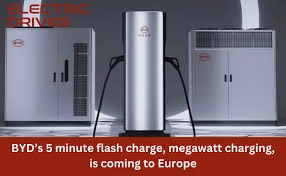
BYD Megawatt Charging Core Capabilities
| Specification | Value |
| Maximum Charging Power | Up to 1,000 kW (1 MW) |
| Peak Current | Up to 1,500 A (load-shared architecture) |
| Voltage Range | Up to 1,250 V |
| Communication Protocol | ISO 15118 ready (supports Plug&Charge) |
| Thermal Control | Liquid-cooled cable + connector |
| Compatibility | Heavy-duty trucks, port equipment, future e-coaches |
This charging platform is designed for heavy-duty electric trucks such as BYD’s E7 / E9 tractors, long-range logistics vehicles, and megawatt-level battery technologies now under deployment.
3. Battery Innovation That Enables It
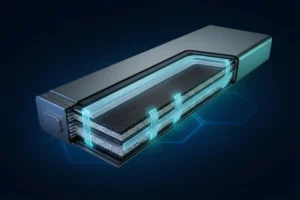
Megawatt charging would be impossible without a battery system capable of safely accepting such high power. Here, BYD’s Blade Battery evolution and battery thermal management play key roles:
- High-efficiency LFP chemistry supports high-current charging with minimal degradation
- Improved cell-to-pack layout enhances heat dissipation
- Proactive BMS control dynamically balances charge input and cell health
The result:
Even at 1 MW charging speeds, the battery remains within its optimal temperature envelope, protecting both safety and lifespan.
4. Thermal Engineering for Reliability
High-power charging can cause intense heat concentrated in cables and connectors. BYD uses:
Liquid-Cooled Charging Cables
- Efficiently extracts heat through internal cooling channels
- Reduces cable outer diameter for easier handling by operators
- Maintains stable performance during continuous high-power sessions
Connector Safety Technology
- Multi-point temperature sensors
- Arc-suppression during connection and disconnection
- IP-rated sealing for dust and water resistance (for ports/mines)
These engineering decisions support continuous, industrial-scale use without overheating or downtime.
5. Smart Charging Control & Fleet Energy Management
Megawatt charging isn’t simply more power — it is smarter power.
BYD integrates intelligent software systems to:
- Predict battery charging behavior dynamically
- Optimize power distribution across fleet charging stations
- Reduce peak-time energy cost with smart load shifting
- Prevent grid overload through energy dispatch algorithms
For fleets, these features translate to:
✔ Lower energy cost per kilometer
✔ Higher station utilization
✔ Data-driven maintenance planning
Charging becomes a strategic operational tool, not just a power supply.
6. Designed for Commercial Application Scenarios
BYD Megawatt Charging will support various mission-critical use cases:
| Scenario | Fleet Benefit |
| Long-Haul Logistics | Full recharge during mandated driver rest periods |
| Port Operations | High-power charging during cargo changeover |
| Mining & Construction | Reliable charging in remote, rugged environments |
| Public Transport | Extend route length without adding extra buses |
This ensures electrification does not limit productivity — instead, it enhances it.
7. Global Standards & Future Interoperability
The system is developed in alignment with:
- MCS (Megawatt Charging System) global standard direction
- Gigafactory-scale battery production for reliable supply
- Smart monitoring for over-the-air updates
This allows BYD megawatt infrastructure to scale with future EV technology instead of becoming outdated.
8. A Major Step Toward Zero-Emission Heavy Transport
Heavy vehicle fleets contribute ** disproportionately** to transportation emissions. With megawatt charging, BYD provides the missing link to make large commercial EV deployment practical and profitable for global operators.
Benefits for society:
- Lower carbon and noise pollution
- Cleaner ports, distribution centers, and urban corridors
- Reduced reliance on fuel imports
- Alignment with government decarbonization goals
Economic value and environmental sustainability advance together.
Conclusion: High-Power Charging for High-Impact Mobility
BYD’s Megawatt Charging Technology demonstrates that advancing EV infrastructure is just as important as advancing batteries and motors. With 1 MW charging capability, BYD enables:
- Faster fleet turnaround
- Longer operational reach
- True diesel-replacement potential
- A path to fully electrified logistics and industry
As BYD continues expanding commercial EV leadership worldwide, megawatt charging stands as a cornerstone technology that will accelerate the transition to clean transportation — not someday in the future, but starting now.



 English
 Portuguese
 French
 Turkish
 Russian
 Arabic
 Spanish