

405 km Range in a City EV, with a Strategic Twist on Driver Assistance
On June 30, fireworks lit up BYD’s Xi’an factory as the one-millionth BYD Seagull officially rolled off the production line. Reaching the million-unit milestone in just 27 months, the Seagull has set a new global speed record for A00-segment electric vehicles, cementing its position as one of the most successful small EVs on the market.
The celebration came with an important announcement. A new Seagull “Comfort” version was unveiled, extending driving range to 405 km, a figure that significantly reshapes expectations in the entry-level EV segment.
1. Range Anxiety? This Time, It’s Fully Addressed
The philosophy behind the new Seagull variant can be summed up in one word: practicality.
- 405 km of driving range means daily commuting without anxiety. Cross-city trips or charging only once every couple of weeks become realistic use cases.
- 40 kW DC fast charging allows the battery to recharge from 30% to 80% in just 30 minutes—short enough that a coffee break is often longer than the wait.
- Comfort features remain firmly in place, including front seat heating and six-way power adjustment for the driver’s seat, which significantly improve usability in cold climates and during longer drives.

Rather than chasing headline technology, this version focuses on what matters most to everyday users: usable range, fast charging, and real comfort.
2. Driver Assistance: Read the Fine Print Before You Choose
Despite being called the “Comfort” version, this model does not include BYD’s higher-level God’s Eye (Tianshen Zhijia) driver-assistance system. Instead, it is equipped with basic cruise control and rear parking sensors, keeping the focus firmly on essential driving needs.
For buyers seeking advanced features—such as highway navigation assist, automated parking, and a full suite of driver-assistance functions—other Seagull variants are the real targets. These versions offer up to 27 assisted-driving functions, enabled by an extensive hardware setup featuring 29 sensors, covering everything from the front bumper to the side mirrors.
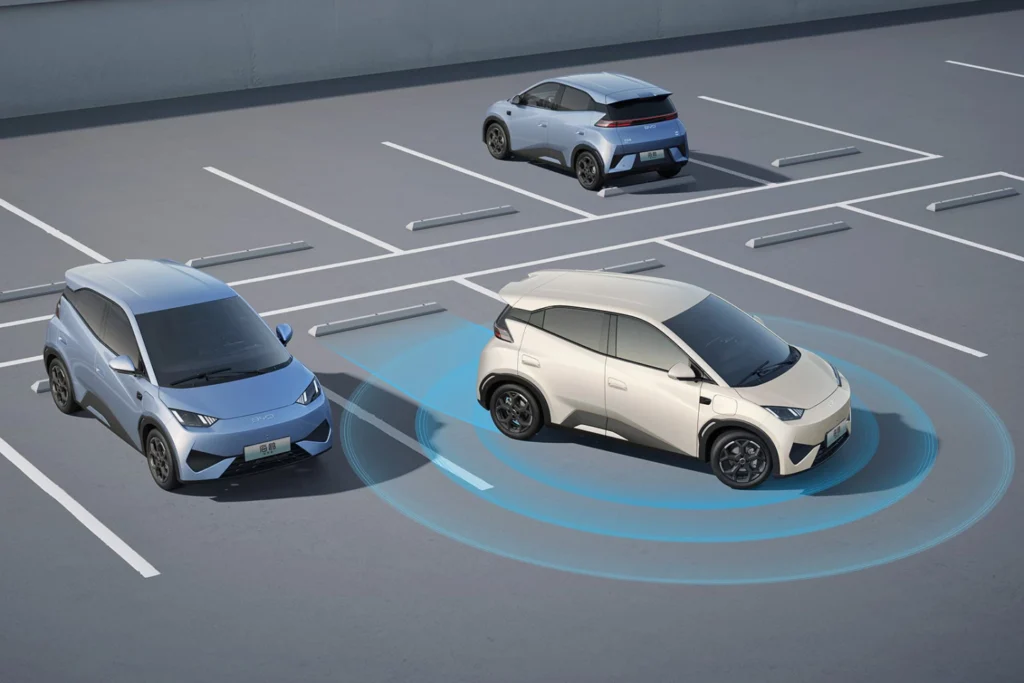
In other words, the driver-assistance capability of the Seagull lineup varies significantly by version, and understanding that distinction is critical before making a decision.
3. BYD’s Strategic Play: Precise Targeting, Not Contradiction
At first glance, BYD’s approach might seem contradictory—longest range on one version, most advanced technology on another. In reality, it is a highly deliberate product strategy.
- Practical users gravitate toward the Comfort version, prioritizing maximum range and essential comfort for pure daily transportation.
- Tech-focused buyers are drawn to the more advanced variants, accepting a shorter range in exchange for highway lane changes, remote parking via smartphone, and a richer assisted-driving experience.
- Safety is non-negotiable across the entire lineup. Every Seagull comes standard with six airbags and a body structure made of 61% high-strength steel, proving that small EVs do not need to compromise on fundamental protection.

BYD has effectively split user needs into clear profiles and addressed each one precisely, rather than forcing a one-size-fits-all solution.
Quick Take: Why This Move Matters
The real intelligence of the Seagull Comfort version lies in what it chooses not to do. Instead of piling on technology for its own sake, BYD focuses on long range, fast charging, and genuine cabin comfort—the features that matter most to drivers who simply want a reliable, stress-free electric car.
At the same time, advanced driver assistance is reserved for other versions in the same price band, creating a clear upgrade path for younger, tech-curious buyers. While competitors are still debating whether low-cost EVs should offer assisted driving at all, BYD has already solved the equation with a dual-track product strategy.
It is a confident, experienced move—and one that shows why BYD continues to set the pace in the small-EV segment.


 English
 Portuguese
 French
 Turkish
 Russian
 Arabic
 Spanish