
BYD has officially launched the Sealion 08 in China, a mid-to-large SUV offered in both PHEV and BEV versions, marking the first time the second-generation Blade Battery is available on both powertrain types. The model, which opened for pre-sale on August 13, is now on sale in eight variants with prices ranging from 229,900 yuan (33,800 USD) to 279,900 yuan (41,200 USD). This launch is significant for overseas buyers as it showcases BYD’s latest battery and intelligent driving technologies, which are expected to influence future export models. The Sealion 08 is built on the Ocean Aesthetics 2.0 design language and features advanced comfort and performance specs. For B2B buyers, understanding this launch provides insight into BYD’s product strategy and the technological direction of upcoming global models.
Design and Dimensions
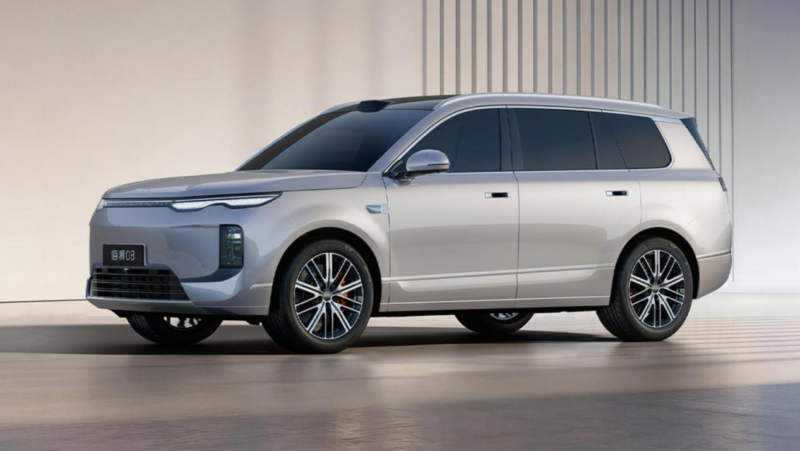
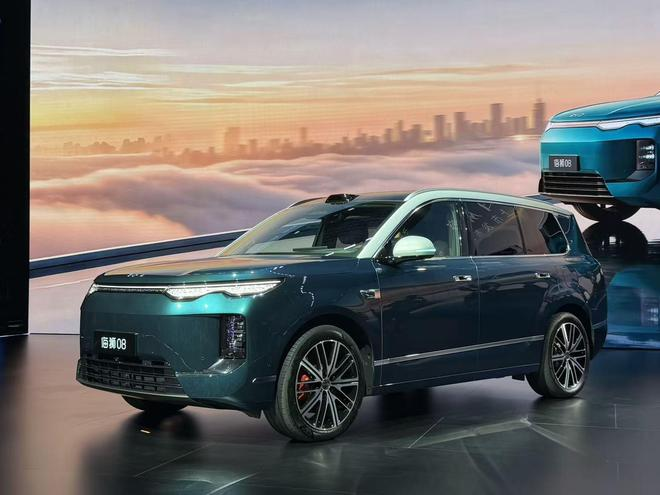
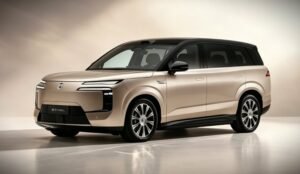
The Sealion 08 introduces BYD’s Ocean Aesthetics 2.0 design, available in six single-tone colors like Frost Jade Silver and Poseidon Green, plus two dual-tone options. The front features the Ice Eye daytime running lights with 132 high-power LED sources. The profile includes a sleek shoulder line and 20- or 21-inch wheels with floating hub caps. The rear has a 1,982mm gradient taillight. Dimensions are 5,115mm long, 1,999mm wide, 1,800mm tall, with a 3,030mm wheelbase.
Cabin and Space
The Sealion 08 offers five- and six-seat layouts. The cockpit includes a 17.3-inch central screen, 12.3-inch digital cluster, and 26-inch AR-HUD. Front seats have 8-way electric adjustment with heating, ventilation, and 10-point massage. Six-seat versions add zero-gravity seats for the driver and rear right passenger, with lateral movement. Entertainment includes a 21.4-inch ceiling screen and 25-speaker Devialet sound with Dolby Atmos. Cargo space: five-seat has 943L trunk and 201L front trunk; six-seat has 317L (expandable to 1,173L) and 201L front trunk.
Powertrain and Performance
The Sealion 08 is available as PHEV or BEV. PHEV uses a 1.5T engine (115 kW) with single-motor (200 kW) or dual-motor (200 kW each) options. It has a 55.843kWh second-gen Blade Battery, offering 350-400 km CLTC electric range and up to 1,650 km combined. BEV single-motor RWD delivers 370 kW, while dual-motor AWD adds a 215 kW front motor. Acceleration is 5.9-3.9 seconds (0-100 km/h). The BEV uses a 115.072kWh second-gen Blade Battery, achieving 800-900 km CLTC range.
Chassis and Intelligence
The Sealion 08 features double-wishbone front and five-link rear suspension, with DiSus-A intelligent air suspension enabling road preview, active rear-wheel steering, crab walk, and rollover prevention. Turning radius is 4.95m. It also includes the God’s Eye 5.0 intelligent driving system.
Pricing and Variants
The Sealion 08 is offered in eight variants. PHEV models include a 400km 6-Seat Honour Edition at 229,900 yuan and a 350km 5-Seat 4WD Flagship at 249,900 yuan. BEV models range from a 900km 5-Seat Honour Edition at 249,900 yuan to a 800km 6-Seat 4WD Flagship at 279,900 yuan. All prices are in yuan with USD equivalents.
Market Positioning and Competition
In the Chinese market, the Sealion 08 competes directly with other mid-to-large SUVs such as the Li Auto L8 and the NIO ES6, but it differentiates itself through its dual powertrain strategy and the inclusion of the second-generation Blade Battery across all variants. This battery technology offers enhanced safety and energy density, which is a key selling point for both domestic and international buyers. BYD’s pricing strategy places the Sealion 08 in a competitive bracket, undercutting many rivals while offering comparable or superior range and features. For instance, the top-tier BEV version with 900 km CLTC range is priced at 249,900 yuan, which is significantly lower than many Tesla Model Y configurations that offer less range. This aggressive pricing is expected to accelerate the adoption of EVs in China and could pressure other manufacturers to innovate and reduce costs. Additionally, the Sealion 08’s availability in both PHEV and BEV forms allows BYD to cater to a broader audience, including those who are not yet ready to commit to fully electric vehicles due to charging infrastructure concerns. This dual approach is part of BYD’s broader strategy to dominate the new energy vehicle market, which has seen the company become the world’s largest EV maker by volume.
Technological Advancements and Future Implications
The second-generation Blade Battery used in the Sealion 08 represents a significant leap forward in battery technology. It features a new cell-to-pack design that increases energy density by 15% compared to the first generation, while also improving thermal management and safety. This battery is not only lighter but also more cost-effective to produce, which could lead to lower vehicle prices in the future. The Sealion 08 also incorporates BYD’s latest God’s Eye 5.0 intelligent driving system, which includes lidar and high-definition cameras for advanced driver assistance features. This system supports highway and city navigation, automated parking, and remote summon, positioning BYD as a leader in autonomous driving technology. The implications of these advancements extend beyond the Sealion 08; they will likely be integrated into other BYD models, including those destined for export markets. For international buyers, particularly in Europe and Southeast Asia, the Sealion 08 could serve as a benchmark for what to expect from BYD’s global lineup in the coming years. As BYD continues to expand its manufacturing footprint, including plants in Thailand, Brazil, and Hungary, the technologies showcased in the Sealion 08 are expected to be transferred to these facilities, potentially lowering costs and increasing availability for overseas customers.
Battery Technology Deep Dive
Delving deeper into the second-generation Blade Battery, it uses lithium iron phosphate (LFP) chemistry, which is known for its stability and long cycle life. The new design eliminates the need for modules, integrating cells directly into the battery pack, which increases the packing efficiency from 60% to 75%. This allows for a higher energy capacity within the same physical footprint, contributing to the Sealion 08’s impressive range figures. The battery also supports faster charging, capable of going from 30% to 80% in just 15 minutes using a 500kW DC fast charger, although such chargers are not yet widely available. In terms of safety, the second-gen Blade Battery passes the nail penetration test without fire or explosion, and it has a thermal runaway propagation prevention feature that isolates any malfunctioning cell. These safety attributes are crucial for consumer confidence, especially in markets with stringent safety regulations. BYD has also announced that the battery’s residual value is higher due to its durability, which is a consideration for fleet operators and resale markets. The integration of this battery in both PHEV and BEV versions is a strategic move, as it allows BYD to streamline production and reduce costs through economies of scale. This technology is expected to be a key differentiator for BYD as it competes with other automakers like Tesla and Volkswagen in the global EV market.
What to Watch Next
With the Sealion 08 now on sale in China, overseas buyers should monitor whether BYD will export this model with the second-gen Blade Battery. The technology could appear in future global models, affecting import decisions. For B2B sourcing, staying updated on BYD’s China launches helps anticipate market trends and availability. Contact us for insights on exporting BYD vehicles.
I’m Lucian from BYD Sourcing. With more than 10 years in the automotive industry and hands-on experience with export procedures and customs clearance, I help overseas buyers source Chinese EVs – especially BYD models – through official, verified channels, for both retail and wholesale. Contact us for a competitive quote.


 English
 Portuguese
 French
 Turkish
 Russian
 Arabic
 Spanish