

BYD has rolled out a home charger sharing feature inside its owner app in mainland China, letting EV owners list their private home charging equipment for paid use by other BYD drivers nearby.
In plain terms: instead of relying only on public charging stations, BYD is trying to unlock unused time on chargers that are already installed—especially when owners are at work, travelling, or simply not charging.
citation from: Electrek , CarNewsChina.com
What BYD launched (and why it matters)
The new feature turns privately installed “home charging piles” into a neighbourhood-level resource. Owners can make their charger available for a set schedule, while nearby BYD drivers can locate it through the app and arrange a charging session.
This matters because home charging is often under-utilised: many people charge overnight and the charger sits idle for long stretches of the day. A sharing layer can help fill those gaps—without waiting for public networks or utilities to build new infrastructure.
How the BYD home-charger sharing works (step-by-step)
Based on reports of the feature’s current workflow, the process is designed around community / neighbourhood discovery:
- Owner registers the home charger in the BYD app’s home-charging service area.
- The owner sets the community / neighbourhood, which helps nearby users find it.
- Other BYD owners in the same area can browse available shared chargers and request a session.
- The owner and user can coordinate details (timing, access, pricing rules) through the app.
The key idea is simple: turn local, private charging into a predictable option—not a one-off favour.
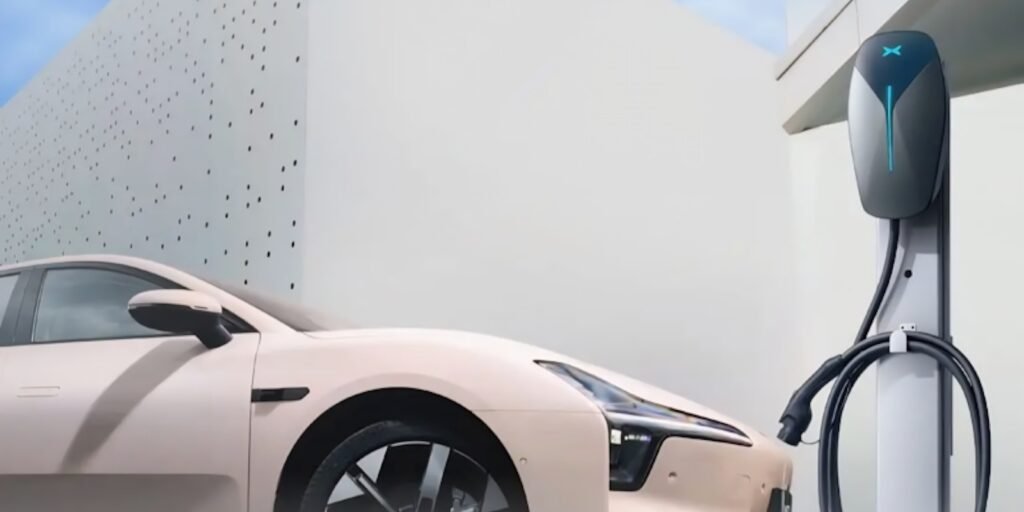
Payment and accessibility: the “card reader” detail
One notable detail in early coverage is that BYD’s implementation is described as more accessible than similar concepts because the hardware can include an integrated card reader, reducing reliance on app-only payment flows.
That matters in real-world use. App payments can be frictionless—until they aren’t (connectivity issues, account verification, user preference, etc.). A card option can make the experience more straightforward for occasional users.
How this compares to similar ideas from other EV brands
Other Chinese automakers have explored comparable “shared charger” concepts inside their owner apps, but the execution differs. For example, reporting notes XPeng has enabled owners to set time-based electricity pricing (e.g., cheaper off-peak rates) while typically relying on in-app automatic payment rather than card payment at the charger.
The main difference for drivers is practical: how easy it is to pay and start charging when you arrive.
Where shared home chargers can work best
This kind of feature tends to work best in places where:
- Public charging is inconvenient, busy, or poorly located
- Residential chargers exist but are gated behind private parking and access rules
- Drivers have predictable routines and can plan ahead
Potential high-fit scenarios include:
- Condo / apartment communities with assigned spaces
- Office-adjacent residential areas where owners are away during the day
- Schools, churches, or municipal lots that sit empty for long stretches (if they have a compatible private charger setup)
The “neighbourhood” structure described in BYD’s rollout is consistent with those use cases.
Practical considerations (before this scales)
If BYD wants this to become a meaningful supplement to public charging, a few issues will likely determine adoption:
- Access control: How drivers physically access the parking spot or charger safely and legally
- Trust and accountability: Clear rules around no-shows, overstays, damage, and disputes
- Pricing clarity: Transparent pricing (and whether it can reflect time-of-use electricity costs)
- Reliability signals: Ratings, verification, and clear “available now” status to avoid wasted trips
Early reports focus on the feature launch and workflow, but these operational details usually decide whether a sharing network becomes routine—or stays niche. autotechinsight
FAQ
Is BYD’s home charger sharing available globally?
Current reporting describes the rollout as a mainland China service inside BYD’s official app.
Can owners choose when their charger is available?
Yes. The feature is described as allowing owners to set availability and transaction details in the app so the charger is only shared at times the owner chooses.
How do drivers pay?
Coverage indicates BYD’s setup can include a built-in card reader (in addition to app coordination), which may make payment more accessible than app-only systems.
Bottom line: BYD’s new charger sharing feature is a practical attempt to increase charging access by tapping into chargers customers already own—especially at a local, neighbourhood level. If BYD can make access, pricing, and reliability frictionless, this could become a genuinely useful “in-between layer” while public charging continues to expand.


 English
 Portuguese
 French
 Turkish
 Russian
 Arabic
 Spanish