

As electrification becomes the defining direction of the global automotive industry, the performance of electric motors has emerged as a decisive factor influencing vehicle efficiency, driving refinement, and long-term durability. Modern EVs rely not only on high-capacity batteries, but also on advanced electric drive systems capable of delivering strong torque, high efficiency, and stable thermal performance across diverse road conditions. BYD, with nearly three decades of experience in electronics, semiconductors, and electric propulsion, has built a highly integrated electric motor ecosystem that places the company among the world’s leading EV manufacturers.
This article offers a comprehensive overview of BYD’s electric motor technology—its engineering principles, its performance characteristics, and how it compares with electric motors used by other major global brands.
1. A Fully Integrated Electric Drive System
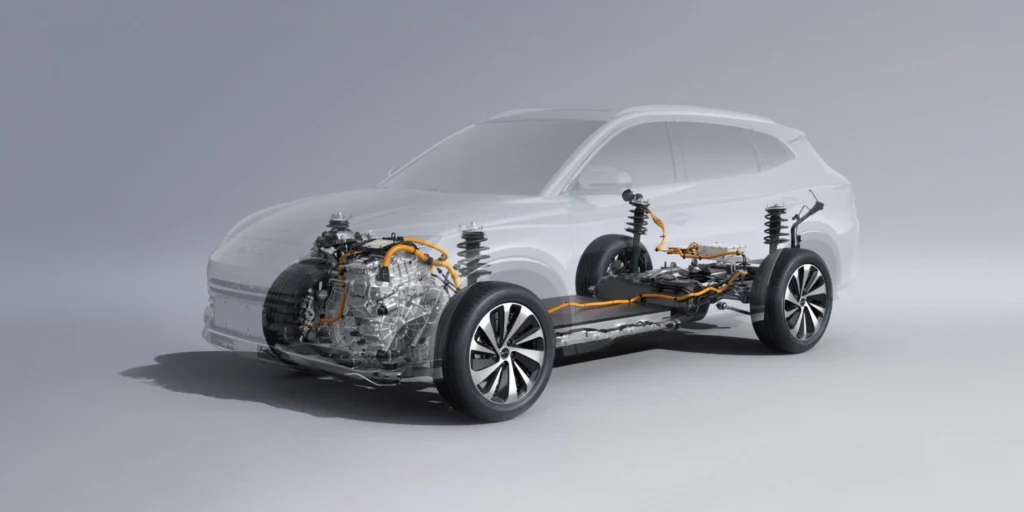
BYD is one of the few automakers in the world that independently develops and manufactures every major component of its electric drive system, including the motor, motor controller, reducer, silicon carbide (SiC) power modules, and thermal management architecture. This vertical integration allows BYD to optimize mechanical, electrical, and thermal performance as a unified system rather than as separate components.
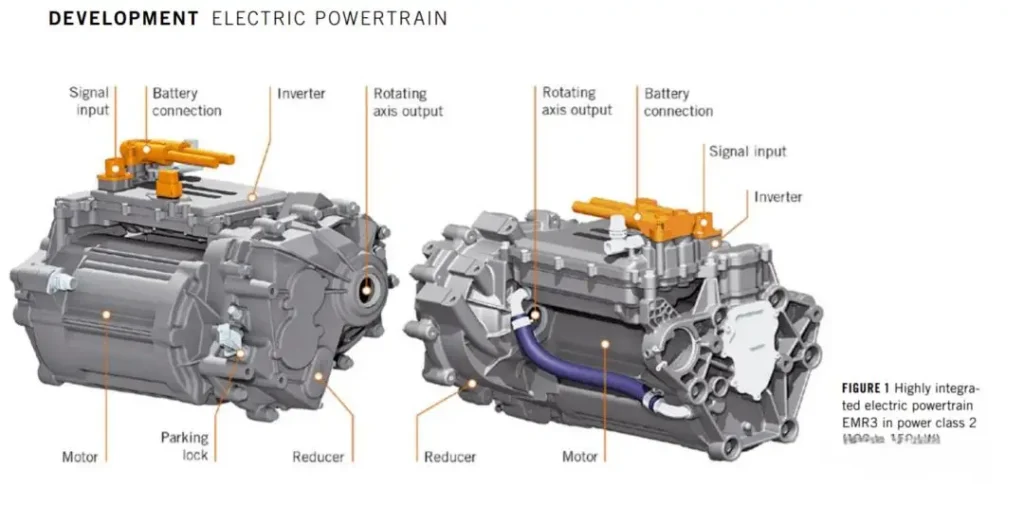
The latest-generation drive units used in e-Platform 3.0 and BYD’s next-generation AWD architectures adopt an 8-in-1 design, integrating:
- Traction motor
- Motor controller (MCU)
- Silicon carbide inverter
- Reducer
- Vehicle control unit (VCU)
- On-board charger (OBC)
- DC/DC converter
- Power distribution unit (PDU)
This degree of integration reduces component interfaces and wiring complexity, enabling:
- Higher system efficiency, often exceeding 89–91%
- Lower overall weight, contributing to improved range
- Smaller packaging, allowing more cabin and trunk space
- Higher long-term reliability due to reduced thermal and vibration stress
BYD’s ability to unify these components is a major differentiator in the global EV market.
2. Engineering Characteristics of BYD Electric Motors
BYD primarily uses permanent magnet synchronous motors (PMSMs), known for high torque density and strong efficiency across a wide operating range. Through continuous investment in manufacturing and materials engineering, BYD has refined its rotor and stator design to improve output without compromising energy consumption.
Key technical characteristics include:
High Power Density
Many BYD motors achieve 4.0–4.8 kW/kg, placing them on par with some of the industry’s highest-performing motors in mass production.
Wide Efficiency Plateau
Instead of optimizing for peak efficiency only, BYD designs its motors to maintain 85–90% efficiency across daily driving speeds. This directly reduces energy consumption in real-world conditions.
Hairpin Stator Winding
BYD employs multi-layer hairpin windings to increase fill factor and reduce copper loss, contributing to improved torque delivery and reduced heat generation.
Precision Rotor Cooling
Optimized cooling channels within the rotor and stator enable stable performance during sustained high-speed operation.
These engineering choices ensure that BYD motors remain efficient and responsive whether used in small compact EVs or large high-performance SUVs.
3. Power Electronics and SiC Semiconductor Advantage
A modern electric motor’s efficiency depends heavily on the performance of its motor controller. BYD develops its own MCUs and SiC power modules in-house, allowing more precise control algorithms and better thermal behavior.
Advantages of BYD’s SiC-based controllers include:
- Higher switching frequency for improved motor responsiveness
- Lower conduction losses
- Better thermal stability at high load
- Smaller and more compact cooling systems
Compared with traditional silicon-based IGBT controllers still used by several global automakers, BYD’s SiC modules deliver:
- 8–12% improvement in system efficiency under dynamic driving conditions
- Higher sustained power output
- Improved durability during prolonged acceleration or towing
This technology is especially important in high-performance models such as the Sea Lion 07 AWD and Denza Z9GT, as well as the four-motor e⁴ platform vehicles such as the Yangwang U8.
4. NVH Refinement and Smart Cooling Architecture
BYD applies advanced NVH engineering to ensure its electric motors deliver both strong performance and quiet operation.
NVH optimization techniques include:
- Multi-point rotor balancing
- Noise-reducing stator tooth geometry
- Optimized electromagnetic frequency tuning
- Active noise-reduction algorithms in the motor controller
Cooling is equally important. BYD uses a combination of oil-cooled stator channels, coolant jackets, and integrated thermal pathways to regulate temperature under high load. Stable cooling allows the motor to maintain consistent torque and prevents energy loss due to thermal derating.
5. Horizontal Comparison: BYD vs. Global Competitors
Below is a simplified chart comparing BYD’s electric motor performance with leading global OEMs:
Electric Motor Technology Comparison Chart
| Metric | BYD (2024–2025) | Tesla (Model 3/Y PMSM) | Hyundai/Kia (E-GMP) | Toyota (bZ series) |
| Power Density (kW/kg) | 4.0–4.8 | 4.7–5.0 | 3.8–4.2 | 3.0–3.5 |
| System Integration | 8-in-1 drive unit | 6-in-1 | 4–5 components | 3–4 components |
| Semiconductor Type | SiC across high-end models | Wide SiC adoption | Limited SiC deployment | Mostly silicon IGBT |
| Peak System Efficiency | 89–91% | 90–92% | 87–89% | 85–88% |
| Low-Speed Efficiency Advantage | Strong EV-first tuning | Strong | Moderate | Lower efficiency |
| Vertical Integration | Very high (in-house motor, MCU, SiC, software) | High | Medium | Low |
6. Real-World Vehicle Applications
BYD’s electric motors are calibrated differently depending on vehicle segment:
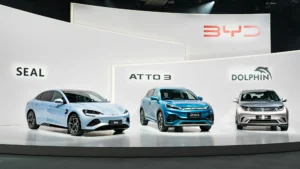
- Compact EVs (Dolphin, Seagull, Qin Plus EV)
Optimized for efficiency and smooth daily driving.
- Mid-size sedans and SUVs (Seal 07, Seal 06, Sea Lion 05)
Balanced between performance and efficiency.
- High-performance AWD models (Sea Lion 07 AWD, Denza Z9GT)
Dual-motor systems with high output and dynamic torque distribution.
- Yangwang e⁴ Platform
Independent four-motor system enabling tank turns, floating control, and high-agility emergency maneuvers.
This scalability demonstrates BYD’s ability to deploy a unified electric motor strategy across diverse markets and vehicle categories.
Conclusion: A Technical Foundation for BYD’s Global Expansion
BYD’s electric motors represent the company’s deep understanding of electrification engineering. With advanced materials, high-power-density PMSM design, SiC semiconductor integration, precise NVH refinement, and the industry’s highest level of system integration, BYD has positioned itself as one of the world’s leading electric-drive innovators.
Compared with other global brands, BYD consistently delivers:
- Strong real-world efficiency
- Advanced semiconductor adoption
- Superior system integration
- A complete supply chain from semiconductor to final assembly
As global markets continue to move toward electrification, BYD’s electric motor technology remains a critical pillar supporting the brand’s rapid international growth and its leadership in the next generation of sustainable mobility.



 English
 Portuguese
 French
 Turkish
 Russian
 Arabic
 Spanish