

As the global automotive industry accelerates toward electrification, few companies have reshaped the landscape as profoundly as BYD. Founded in 1995 and entering the automotive sector in 2003, BYD has grown into the world’s largest manufacturer of new energy vehicles (NEVs), combining deep expertise in batteries, power electronics, semiconductors, and complete vehicle design. Its leadership is built on four core pillars—technology, safety, quality, and market presence. Together, these pillars form an integrated system that supports BYD’s continuous growth and its role in driving global electric mobility.
1. Technology Leadership: Full Vertical Integration and Original Innovation
BYD’s most defining advantage lies in its vertically integrated technology ecosystem. Unlike traditional automakers that rely heavily on external suppliers, BYD independently develops and manufactures key components including batteries, electric motors, drive units, power semiconductors, electronic control systems, and software architecture. This comprehensive control over core technologies enables faster innovation, stronger cost efficiency, and consistent performance across vehicle platforms.
Blade Battery and Lithium Iron Phosphate (LFP) Evolution
One of the most widely recognized breakthroughs is the Blade Battery. Introduced in 2020, it optimized LFP chemistry through long-cell design and an advanced cell-to-pack structure, significantly improving volumetric efficiency and energy density while maintaining the intrinsic stability of LFP. This architecture has since become an industry benchmark for structural safety and lifecycle durability.
e-Platform 3.0 and Integrated Powertrain Systems
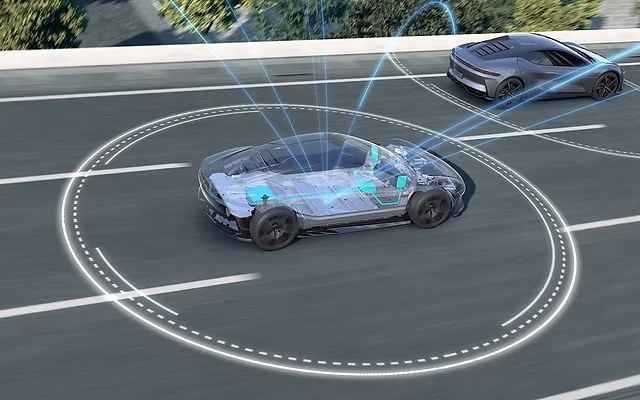
BYD’s e-Platform 3.0 further demonstrates its engineering capabilities through an optimized EV architecture that integrates the battery pack, high-efficiency electric drive system, heat pump technology, and domain-based electronic control logic. This platform enables:
- Higher driving range with lower energy consumption
- Faster charging performance
- Improved thermal efficiency across extreme climates
- A more streamlined chassis layout for enhanced cabin space
DM-i and DM-p Super Hybrid Systems
In the hybrid segment, BYD’s DM-i system emphasizes ultra-low fuel consumption, high motor-driven operation, and smooth transitions between EV and hybrid modes. Meanwhile, the DM-p performance hybrid offers enhanced acceleration and dynamic control for flagship and all-wheel-drive models. These systems deliver efficient and refined driving characteristics tailored to diverse global markets.
Through independent R&D, high-level engineering integration, and continuous iteration, BYD has established itself as one of the world’s most innovative EV technology companies.
2. Safety Leadership: Battery Security and Holistic Vehicle Protection
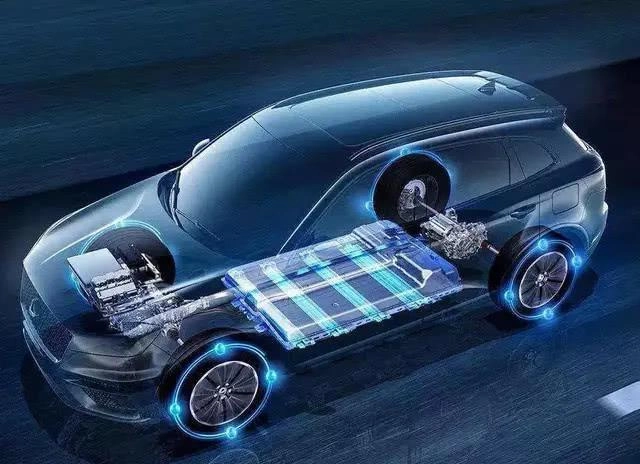
Safety has long been positioned at the core of BYD’s new energy strategy. The company approaches safety from two angles: intrinsic battery safety and complete-vehicle safety engineering.
Blade Battery Safety Testing
The Blade Battery’s design provides excellent resistance to thermal runaway. It performs strongly in the most rigorous industry tests, including:
- Nail penetration
- Crush and extrusion
- Overcharge
- High-temperature durability
- Puncture and drop impact
During nail penetration testing—one of the most aggressive assessments—the Blade Battery remains stable without smoke or fire, a level that surpasses conventional NCM and traditional LFP cells.
Vehicle-Level Safety Systems
Beyond the battery, BYD emphasizes advanced active and passive safety designs:
- High-strength steel and aluminum hybrid body structure
- Multipoint load-path crash design
- Intelligent driving assistance systems (ADAS) supported by proprietary sensors and controllers
- Sophisticated thermal management systems for battery pack stability
BYD vehicles sold in various markets have received strong ratings from international safety authorities, reflecting the company’s strict adherence to global standards and market-specific regulatory requirements.
3. Quality Leadership: Global Manufacturing Standards and Long-Term Reliability
BYD’s quality reputation is built on modern intelligent manufacturing, strict process control, and vertically integrated supply management. The company operates multiple global production hubs, each implementing standardized quality systems covering stamping, painting, final assembly, battery production, and semiconductor fabrication.
Precision Manufacturing and Process Control
Key aspects of BYD’s quality system include:
- Digitized manufacturing lines with high automation
- In-house development of power semiconductors and controllers to ensure reliability
- Lifecycle monitoring of batteries, motors, and high-voltage components
- Multi-layer inspection standards during assembly and end-of-line testing
Durability and Real-World Validation
Vehicles undergo comprehensive durability cycles covering extreme temperatures, humidity conditions, high-altitude environments, long-distance endurance, and corrosion testing. This large-scale validation ensures stable performance throughout the vehicle’s life cycle, meeting the demands of private consumers, fleet operators, and government procurement programs.
BYD’s consistent quality performance has enabled the company to expand rapidly across regions with stringent regulatory requirements, including Europe, the Middle East, and ASEAN countries.
4. Market Leadership: Global Scale and Strong Brand Momentum
In recent years, BYD has become one of the most influential players in the global NEV market. The company achieved the world’s highest annual NEV sales in 2022 and 2023, and continues to expand its presence across over 70 countries with a diverse line-up of passenger and commercial vehicles.
Extensive Global Footprint
BYD’s global ecosystem includes:
- Passenger vehicle sales in Asia, the Middle East, Europe, Latin America, and Africa
- Local partnerships for assembly and distribution
- Manufacturing facilities in China and overseas markets
- Large-scale commercial EV deployments in public transportation systems
Brand Growth and Consumer Acceptance
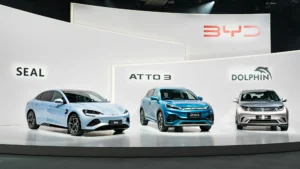
The brand has become increasingly recognized for its advanced technology, stable product quality, and strong value proposition. Models such as the Song Plus, Qin Plus, Dolphin, Seal, Tang, and Sea Lion series have gained traction in multiple regions, supported by competitive pricing and strong after-sales networks.
As global governments accelerate electrification and emission reduction policies, BYD’s competitive advantage in cost structure, supply chain stability, and diverse product offerings positions the company strongly for sustained international growth.
Conclusion: A Complete Leadership System Built for the Future of Mobility
BYD’s rise is supported not by isolated achievements, but by a comprehensive system of advantages built over two decades. Its leadership in technology, safety, quality, and global market presence reflects the company’s long-term investment in R&D, manufacturing, and sustainable innovation.
As the world continues its transition to clean-energy transportation, BYD’s integrated approach ensures it remains at the forefront of the industry—delivering reliable, safe, and efficient mobility solutions for a rapidly changing world.



 English
 Portuguese
 French
 Turkish
 Russian
 Arabic
 Spanish