

When the Denza N8L DM officially entered the market on October 28, one of the most common questions from potential buyers was whether the Prestige or the Flagship trim makes more sense. On paper, the difference in price appears significant, and the configuration lists look complicated. To understand what truly separates these two versions, I spent time driving both and evaluating them from a real user’s perspective—focusing on daily usability rather than marketing bullet points.
Exterior: Similar Design, Subtle but Meaningful Details
Visually, the two trims are nearly identical at first glance. Both follow Denza’s latest design language, with daytime running lights shaped like a traditional Chinese character and an animated welcome lighting sequence that adds a sense of ceremony when unlocking the vehicle at night. The long, imposing body, blacked-out pillars, and floating roof effect give the N8L a commanding presence on the road, especially with its 5.2-meter body length and 3,075 mm wheelbase.
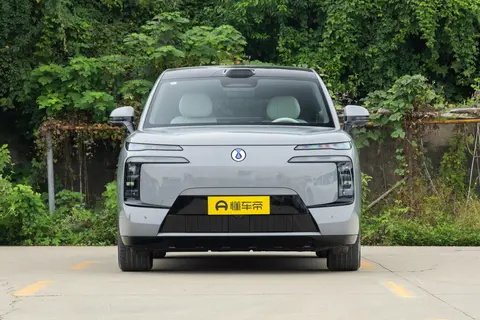
Color options are shared across both trims, including six finishes, two of which are dual-tone paint schemes. While the dual-tone options are visually striking, they come with additional costs and higher repair complexity. The most visible hardware difference lies in the wheels. The Prestige version rides on 20-inch wheels, while the Flagship upgrades to 21-inch six-spoke wheels paired with Bridgestone tires. The larger wheels undeniably enhance the visual presence, though they partially obscure the bright brake calipers and will increase replacement costs over time.
The Flagship version also introduces a welcome light projection on the ground when the doors open, which adds a premium touch, especially in low-light environments. However, both trims share the same limitation—no roof rails, and no possibility of aftermarket installation, which could be inconvenient for outdoor enthusiasts who rely on roof-mounted cargo solutions.
Interior: Comparable Materials, Clear Technology Gap
Inside, the two versions share the same cabin architecture and interior color options. The symmetrical dashboard design looks mature and premium, although some may find it conservative compared to more futuristic competitors. Material quality is solid in the front and second rows, though the felt material used under the third-row armrest cup holder area feels slightly less premium—a detail that affects both trims equally.
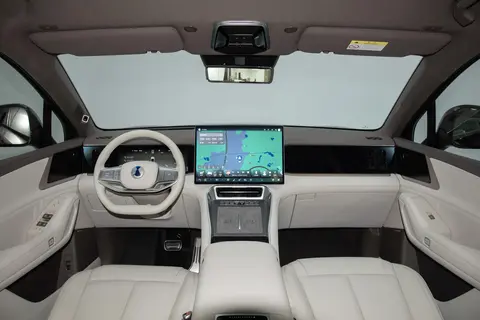
Both versions are equipped with a 17.3-inch central touchscreen and a 13.2-inch passenger display, along with a digital instrument cluster. They also share an 11-liter onboard refrigerator capable of cooling down to –6°C and heating up to 50°C, which is genuinely useful for family trips, although it does sacrifice some center storage space.
The Flagship trim distinguishes itself with a more advanced display ecosystem. It offers an AR head-up display that projects navigation and driving data onto the windshield, allowing drivers to keep their eyes on the road rather than glancing down at the cluster. It can also be configured with a digital rearview mirror, which significantly improves rear visibility in poor weather or when the rear cabin is heavily loaded.
Seating Comfort and Space: Both Spacious, Flagship Feels First-Class
Space is identical between the two trims, as both use a 2+2+2 six-seat layout. For a 178 cm adult, the second-row legroom is generous, and the central aisle provides adequate access to the third row, although it is not perfectly flat and includes a small step that elderly passengers and children should be mindful of.
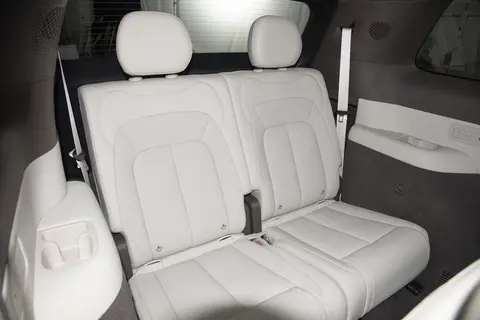
The third row is better than expected for a vehicle of this size. Seats can slide and recline electrically, and legroom remains usable even for adults, though moving the seats rearward will reduce cargo space. Fortunately, the lowered trunk floor partially offsets this trade-off.
Where the Flagship version truly differentiates itself is in seat functionality. While both trims offer heated, ventilated, and massaging front seats with memory and active bolsters, the Flagship introduces a zero-gravity front passenger seat with a leg rest and one-touch relaxation mode. This feature dramatically improves comfort during long trips and is something that Prestige buyers will likely miss once experienced.
Second-row passengers are well cared for in both trims, but the Flagship adds a large 17.3-inch ceiling-mounted entertainment screen, which is invaluable for families traveling with children. Additionally, the Flagship offers heating for the third-row seats, further improving all-row comfort in colder climates.
Powertrain and Driving Dynamics: Identical Engineering, Strong Performance
Mechanically, the two trims are identical and share the same advanced hybrid powertrain. The system combines a 2.0T turbocharged engine producing 152 kW with a tri-motor electric system delivering a combined output of 560 kW. This translates to a 0–100 km/h acceleration time of around 3.9 seconds, which is impressive for a vehicle approaching three tons in weight.
In daily driving, acceleration feels immediate and effortless, even in Comfort mode. Highway overtaking is particularly confident, and the transition between electric and combustion power is smooth and well-calibrated.
Both trims feature the YunNian-A dual-chamber air suspension, which significantly alters the driving character depending on the selected mode. In Comfort mode, road imperfections are absorbed with remarkable smoothness, while Sport mode tightens body control for more confident cornering. The system also supports advanced maneuvering features such as tank turns and crab walk, and despite the vehicle’s size, the turning radius can be as low as 4.58 meters, making urban driving surprisingly manageable.
Range and Energy Efficiency: No Differences in Real Use
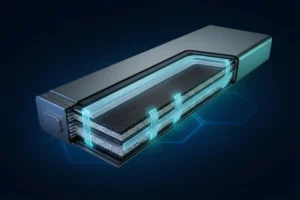
Range and charging capabilities are identical across both trims. Each uses a 46.99 kWh lithium iron phosphate battery, delivering a CLTC-rated pure electric range of 230 km and a combined driving range of around 1,300 km.
In real-world highway testing at around 120 km/h, electric range efficiency reached roughly 70%, which is respectable for a large luxury SUV. With the battery depleted, fuel consumption measured approximately 6.95 L/100 km—reasonable given the vehicle’s weight and performance capabilities. For most users, a weekly charging routine will cover daily commuting needs, making the N8L a practical hybrid for both city and long-distance use.
Infotainment and Driver Assistance: Flagship Feels More Future-Oriented
Both trims use a high-performance 4 nm chipset for the infotainment system, resulting in smooth operation and minimal lag. Core functions such as navigation, entertainment, vehicle controls, and smartphone mirroring work reliably and quickly. Audio is handled by a 20-speaker Devialet system, complemented by a built-in karaoke function, which adds a fun element for family and social use.
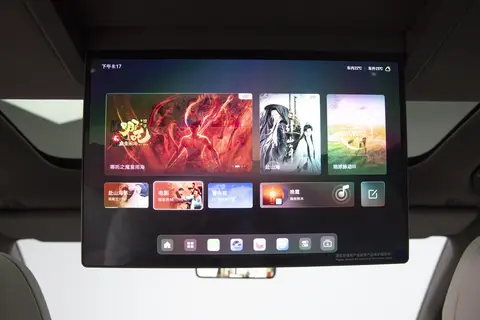
The Flagship version further enhances the digital experience with its rear entertainment display and AR-HUD, making it feel significantly more advanced and immersive, particularly for rear passengers.
In terms of driver assistance, both trims are exceptionally well equipped. The Eye of the Gods B LiDAR-based system includes an NVIDIA Orin processor with 254 TOPS of computing power, supported by a roof-mounted LiDAR unit, multiple cameras, and millimeter-wave radars. Features such as highway and urban navigation assistance, automated lane changes, and valet parking are available on both trims, significantly reducing driving fatigue in real-world conditions.
Which Trim Makes More Sense?
In practical terms, the Prestige version already delivers the full Denza N8L experience in terms of performance, suspension technology, and intelligent driving. For buyers who prioritize core driving capability and spacious comfort, it represents a highly rational choice.
The Flagship version, however, clearly focuses on elevating the ownership experience. Zero-gravity seating, rear entertainment, AR-HUD, and enhanced convenience features transform the N8L from a high-tech SUV into a true luxury family vehicle. For buyers who frequently travel with family or value premium comfort, the upgrade is genuinely noticeable.
Final Thoughts
Both Denza N8L DM Prestige and Flagship trims are well-rounded products with no obvious weaknesses. The Prestige version offers strong value and comprehensive functionality, while the Flagship delivers a more luxurious, technology-forward experience that will appeal to buyers seeking maximum comfort and sophistication.
Ultimately, the choice comes down to how much you value experiential features. If you are budget-conscious and focused on performance and practicality, the Prestige version will satisfy you fully. If comfort, entertainment, and advanced display technologies matter to you, the Flagship version justifies its premium.
Either way, the Denza N8L DM stands out as one of the most advanced large plug-in hybrid SUVs currently available, combining performance, intelligent driving, and family-friendly luxury in a compelling package.


 English
 Portuguese
 French
 Turkish
 Russian
 Arabic
 Spanish