

Resumen del editor
La importación del BYD Song Plus DM-i es un tema que merece una lectura más pausada que el habitual revuelo del mercado. Para los comerciantes en Sudamérica, el punto no es solo si el BYD Song Plus DM-i atrae atención, sino si puede explicarse con claridad, pedirse en la especificación correcta, recibir soporte después de la entrega y convertirse en negocio recurrente. Desde el escritorio de un distribuidor, el modelo se trata menos de una cifra titular única y más de qué tan bien se puede explicar, almacenar, dar servicio y revender el vehículo.
El artículo que figura a continuación mantiene la idea original orientada a la exportación, pero la aborda más bien como una nota propia de una revista especializada en automoción: en parte, una interpretación del producto; en parte, un resumen del mercado; y en parte, una lista de verificación para la compra. Está dirigido a personas que deben tomar decisiones sobre el stock, no a lectores que solo buscan una impresión rápida tras una prueba de conducción.
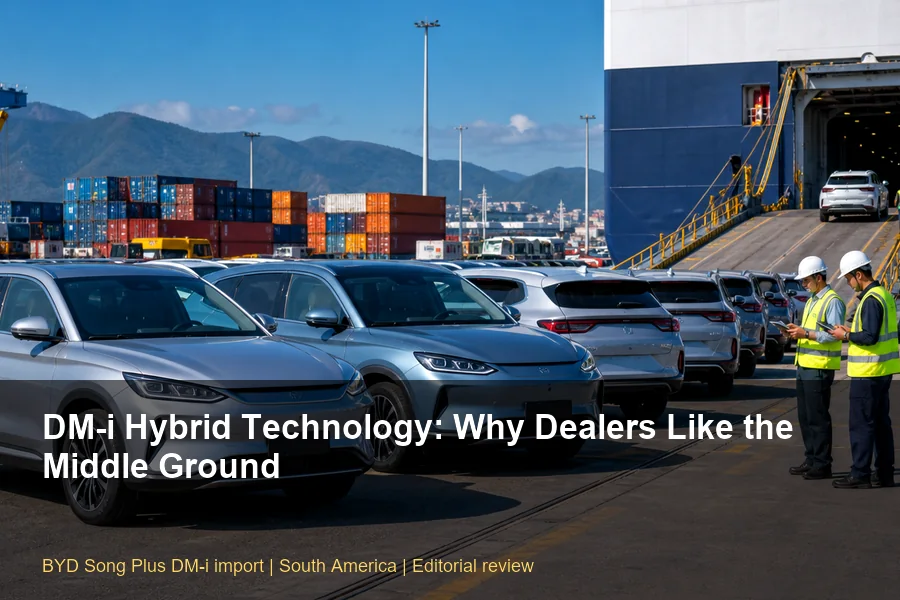
Notas técnicas y de mercado verificadas
Los siguientes puntos constituyen los fundamentos objetivos en los que se basa esta revisión. Deben mantenerse visibles en la formación comercial, en las notas de los presupuestos y en la formación sobre los productos de WordPress, ya que ayudan a evitar que las afirmaciones relativas a la gama, los acabados y la tecnología se alejen de la información pública contrastada.
- BYD Uruguay incluye en su lista la batería Blade, DM-i, e-Platform 3.0, Super e-Platform, e4, DMO, DiSus, CTB, más de 112 países y unas ventas acumuladas de vehículos eléctricos nuevos (NEV) superiores a 11,9 millones hasta abril de 2025.
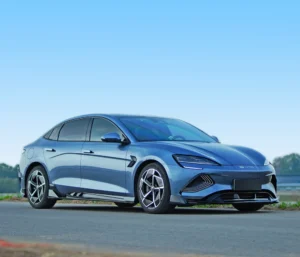
- BYD Colombia detalla que el Song Plus DM-i cuenta con un sistema 1.5T, una autonomía eléctrica de hasta 105 km según el ciclo NEDC, una autonomía combinada de hasta 1.105 km, una batería Blade de 18,3 kWh, llantas de 19 pulgadas, seis airbags, una cámara de 360 grados y funciones de asistencia al conductor.
- BYD ha informado de un envío a Colombia de 1.200 unidades, entre las que se incluyen 1.000 Song Plus DM-i y 200 Qin Plus DM-i, con Motorysa como socio local.
Estos datos no hacen que un mercado sea automáticamente adecuado para todos los modelos de BYD. Sin embargo, sí proporcionan a los importadores una base fiable para la comparación. Cuando en una ficha técnica se mencione el NEDC o el WLTP, debe indicarse el ciclo correspondiente. Cuando en la ficha de un producto se enumeren equipamientos como airbags, sistemas de asistencia al conductor, pantallas giratorias o la batería Blade, la información debe estar vinculada al material de mercado correspondiente.
Cómo encaja el vehículo o el tema con los compradores profesionales
El Song Plus DM-i resulta muy interesante porque da respuesta a un término medio: los compradores quieren conducir un vehículo eléctrico, pero también quieren tener la libertad de salir de la ciudad sin tener que planificar cada kilómetro en función de los puntos de recarga.
En el día a día de un concesionario, el comprador suele plantear preguntas básicas antes de pasar a las cuestiones técnicas más complejas. ¿Qué autonomía tiene en condiciones normales de uso? ¿Es segura la batería? ¿Qué ocurre si el punto de recarga público está ocupado? ¿Pueden los técnicos realizar el mantenimiento? ¿El acabado se corresponderá con el presupuesto? Un buen artículo y una buena conversación de venta responden a esas preguntas con paciencia, en lugar de ejercer presión.
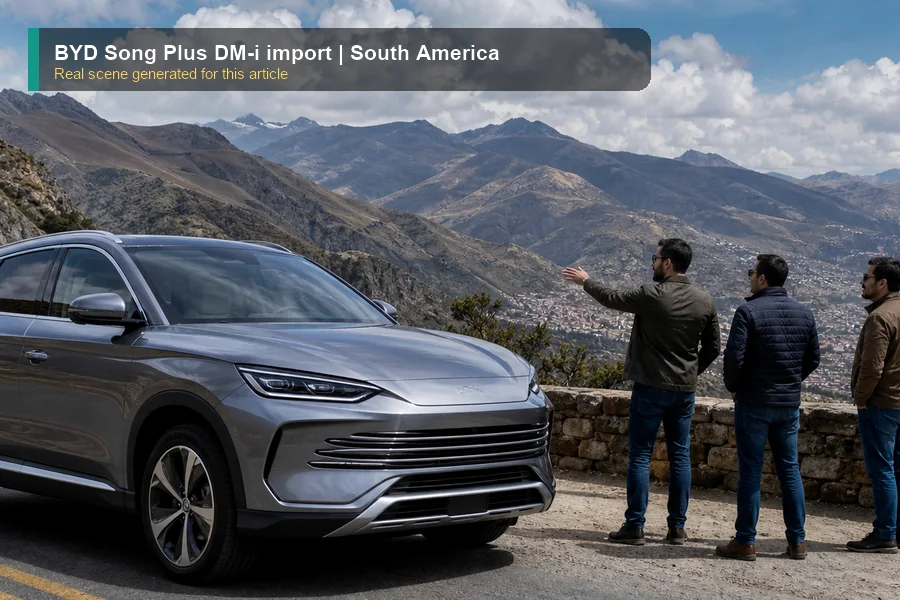
Puntos fuertes que merece la pena explicar
- Un posicionamiento claro del modelo ayuda a los importadores a decidir si el artículo encaja en una conversación sobre vehículos de entrada, SUV, camionetas, flotas o exportación de gama alta.
- El lenguaje tecnológico de BYD resulta útil cuando se traduce en ventajas comerciales concretas: confianza en las baterías, menores costes de funcionamiento, una conducción urbana más suave y una mayor variedad de productos.
- En el caso de Sudamérica, el mejor argumento suele ser la adaptación al mercado local, no el bombo publicitario a nivel mundial. El tipo de carretera, la longitud del trayecto, el acceso a las estaciones de recarga y los hábitos de los compradores son tan importantes como la marca.
- Un concesionario bien preparado puede utilizar el modelo como herramienta formativa, mostrando cómo se pueden vender los vehículos de nueva energía sin que el comprador tenga la sensación de estar participando en un experimento.
La ventaja comercial más importante es la coherencia. Los comerciantes que utilicen las mismas especificaciones en el texto de la página web, la hoja de presupuesto, la factura proforma y la lista de comprobación de entrega resultarán más creíbles que los vendedores que se limiten a repetir datos como la aceleración, la autonomía o el precio.
Aspectos a tener en cuenta antes de importar
Hay que tener cuidado con la precisión en las especificaciones. Los importadores deben indicar claramente la autonomía según el ciclo NEDC, la capacidad de la batería y los detalles del acabado, ya que los compradores de vehículos híbridos enchufables suelen comparar el modelo tanto con los SUV de gasolina como con los vehículos totalmente eléctricos.
Los importadores también deben comprobar el conector de carga, la configuración del idioma, las condiciones de la garantía, la gestión de las llaves de repuesto, la asistencia técnica para el diagnóstico, las especificaciones de los neumáticos, el paquete de accesorios y los requisitos documentales locales antes de realizar el pago. Estos aspectos son menos llamativos que el propio vehículo, pero determinan si la primera entrega se realiza sin contratiempos o si da lugar a una larga gestión posventa.
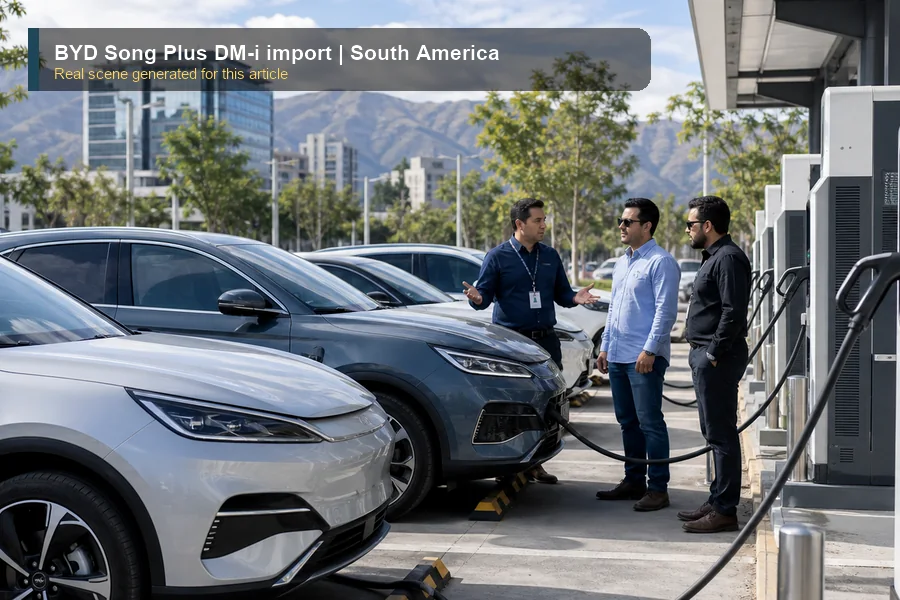
Lista de comprobación para concesionarios y exportadores
Antes de dar a conocer este tema en una página web local o en una presentación comercial, un operador debería preparar lo siguiente:
- Una ficha técnica de una página en la que se indiquen claramente la autonomía, la capacidad de la batería o las características del sistema de propulsión.
- Una tabla comparativa con las alternativas de gasolina, híbridas o eléctricas más habituales del mercado.
- Nota sobre recambios y disponibilidad de servicio técnico dirigida al personal de ventas y a los compradores de flotas.
- Una escala de precios que explica por qué es más fácil tener en stock primero un acabado concreto.
- Una lista de comprobación para la entrega que incluye fotografías, la verificación del número de bastidor (VIN), los documentos de envío y los plazos previstos en el puerto.
Aquí es también donde el contenido de una página web adquiere utilidad comercial. Una entrada de blog no solo debe atraer tráfico de Google, sino que también debe reducir el número de preguntas que surgen por falta de información antes de que un comprador envíe una consulta.
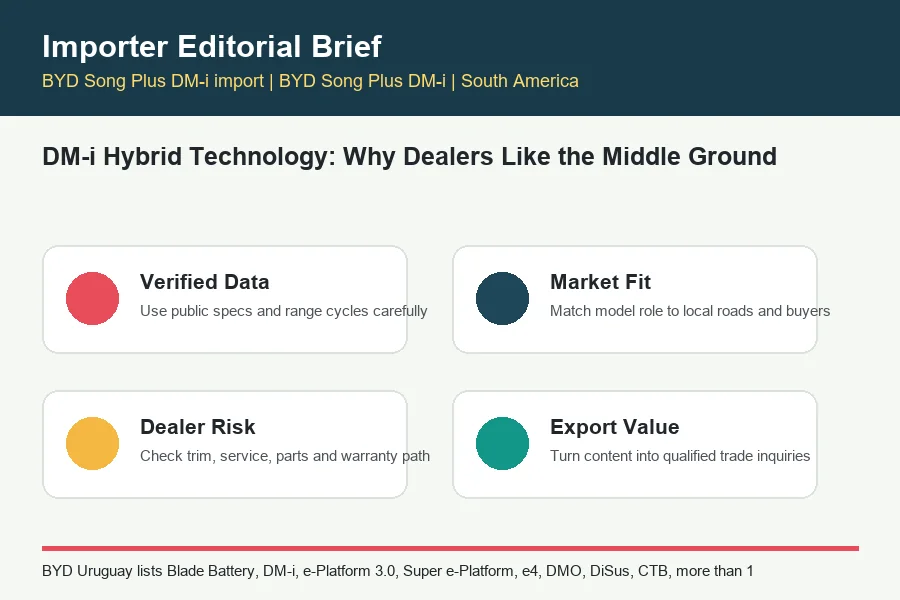
Resumen infográfico para importadores
La infografía que aparece a continuación resume la lógica comercial: en primer lugar, las especificaciones verificadas; en segundo lugar, la adecuación al mercado; en tercer lugar, la preparación del servicio; y, por último, el flujo de exportación. Esa secuencia es sencilla, pero es precisamente así como se protegen los compradores con experiencia.
Veredicto editorial equilibrado
El BYD Song Plus DM-i y el resto de la gama de BYD merecen atención porque ofrecen a los concesionarios más de una vía de acceso a las ventas de vehículos de nueva energía. Los vehículos eléctricos compactos pueden dar pie a conversaciones centradas en el precio; los híbridos enchufables pueden reducir la ansiedad por la autonomía; las camionetas pueden ser una opción para el uso laboral; y los vehículos de gama alta pueden despertar el interés por la marca.
La conclusión más acertada no es que todos los importadores deban encargar inmediatamente todos los productos de BYD. La conclusión más acertada es que merece la pena estudiar detenidamente la importación del BYD Song Plus DM-i y, a continuación, adaptarla a un perfil de comprador realista, un plan de servicio y un calendario de envíos. Para bydcarchina.com, ese es también el argumento promocional más sólido: ayudar a los compradores profesionales sudamericanos a conocer el producto antes de solicitar un presupuesto.
PREGUNTAS FRECUENTES
¿Es el BYD Song Plus DM-i adecuado para los importadores sudamericanos?
Sí, siempre que la configuración se ajuste a los hábitos de conducción locales, al rango de precios y a la capacidad de servicio posventa. El mejor punto de partida no es el acabado más llamativo, sino la versión que el concesionario pueda explicar y respaldar de forma coherente.
¿Qué deben comprobar los compradores antes de realizar un pedido?
Confirma los datos relativos al acabado, el ciclo de autonomía, la batería o el sistema de propulsión, el equipo de recarga, la configuración del idioma, la gestión de la garantía, las piezas de recambio y los documentos de envío antes de realizar el pago.
¿Por qué este artículo se centra en los comerciantes en lugar de en los conductores particulares?
Porque los importadores y mayoristas necesitan un tipo de información diferente. Deben evaluar el riesgo de existencias, la disponibilidad del servicio, la documentación, el posicionamiento del modelo y el potencial de pedidos recurrentes, y no solo la experiencia de conducción.

 English
 Portuguese
 French
 Turkish
 Russian
 Arabic
 Spanish