
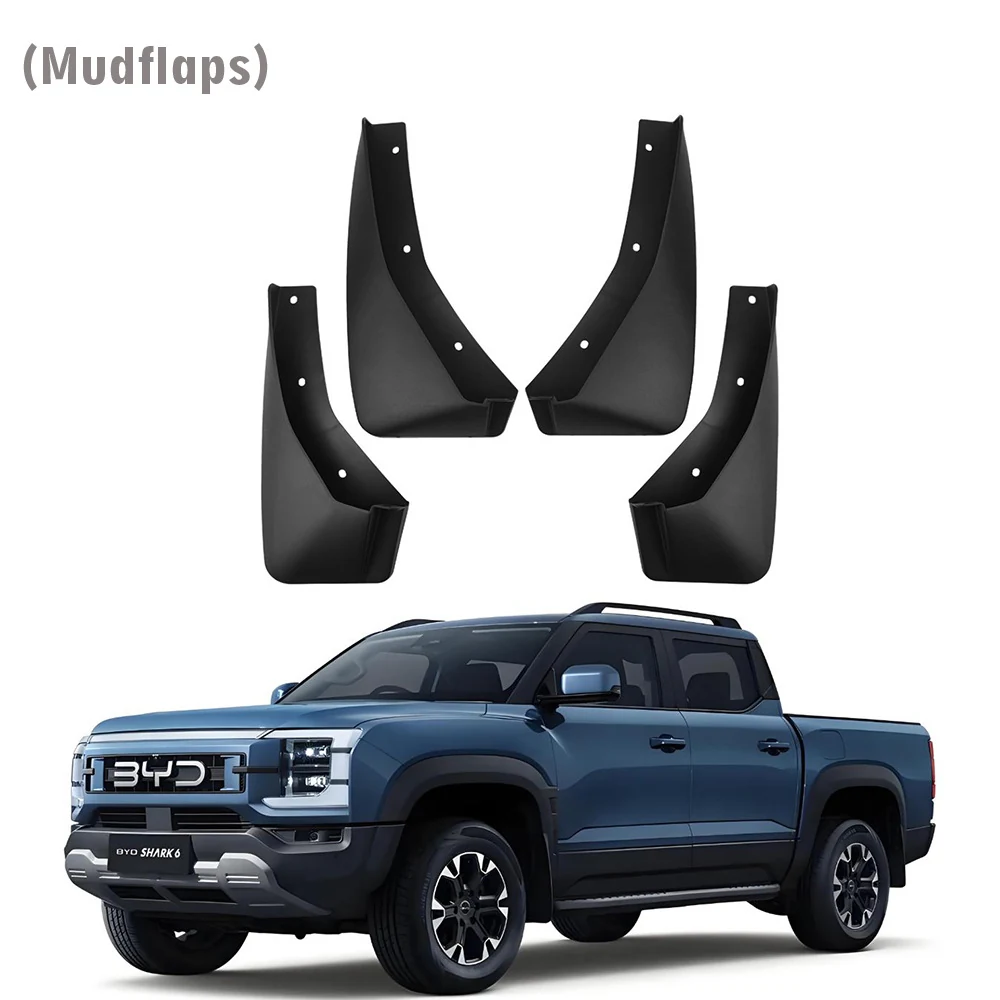
Universal and vehicle-specific mud flaps are different products, but the title wording is not what decides the fit. A vehicle-specific (custom-fit) set is moulded for a named body, with separate left and right pieces and a hole pattern intended for that arch. A universal (cut-to-fit) set is a generic panel, or a short size range, that you trim, slot or bracket to the car in front of you. Compare the outline and the mounting points with your own wheel arch before you order. The photographs below are from published Marvix BYD listings; Tesla’s official Model 3 procedures show why a model name still has to be checked against the actual version.
Identify the panel, not just the title
Look at the loose parts in the listing.
| What you can see | What that identifies | What to do next |
|---|---|---|
| Four (or more) moulded panels with different outlines and mirrored left/right shapes | A vehicle-specific set for a named body | Compare those outlines and hole positions with the corresponding corners on your car |
| A flat sheet, a short size range “for many cars”, or elongated slots instead of a fixed hole map | A universal or cut-to-fit panel | Read whether the kit uses existing holes, a bracket, or new holes, and whether you are expected to trim the edge |
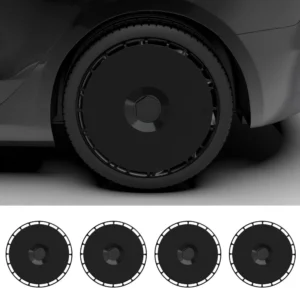
| A car photograph with the loose set floating above it | A product layout, not a fitted photograph | Look for, or ask for, a photograph of the part against the arch and at the fixing points |
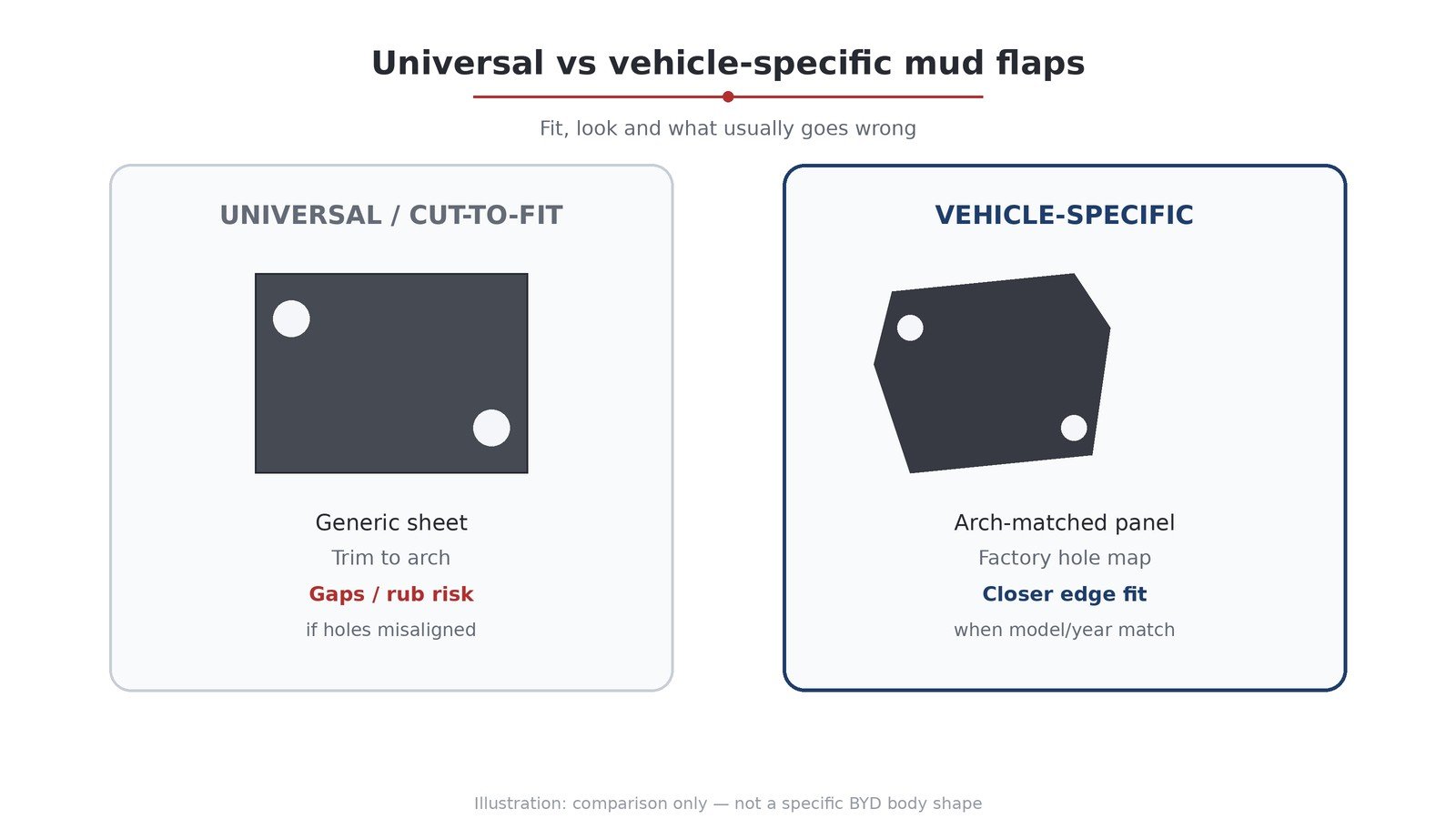
If the title says “for your model” but the photographs show four identical flat sheets, treat it as a blank until the outline and holes are shown.
Read the outline and the holes on a real set
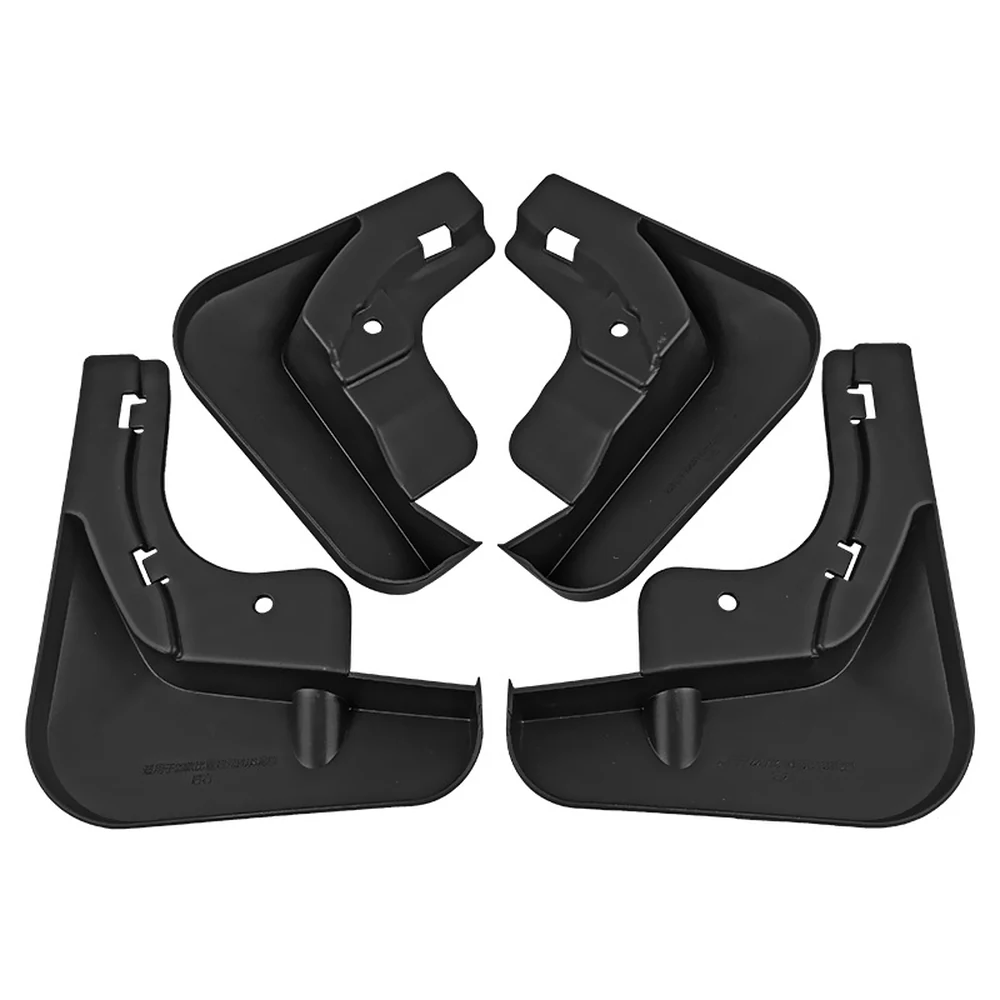
The Atto 3 listing describes a four-piece set moulded for that model, with pre-drilled holes matched to factory mounting points on the listed models. Mounting screws are shown included on the supplier listing. Those statements apply to this set; they do not make every similarly titled kit interchangeable.
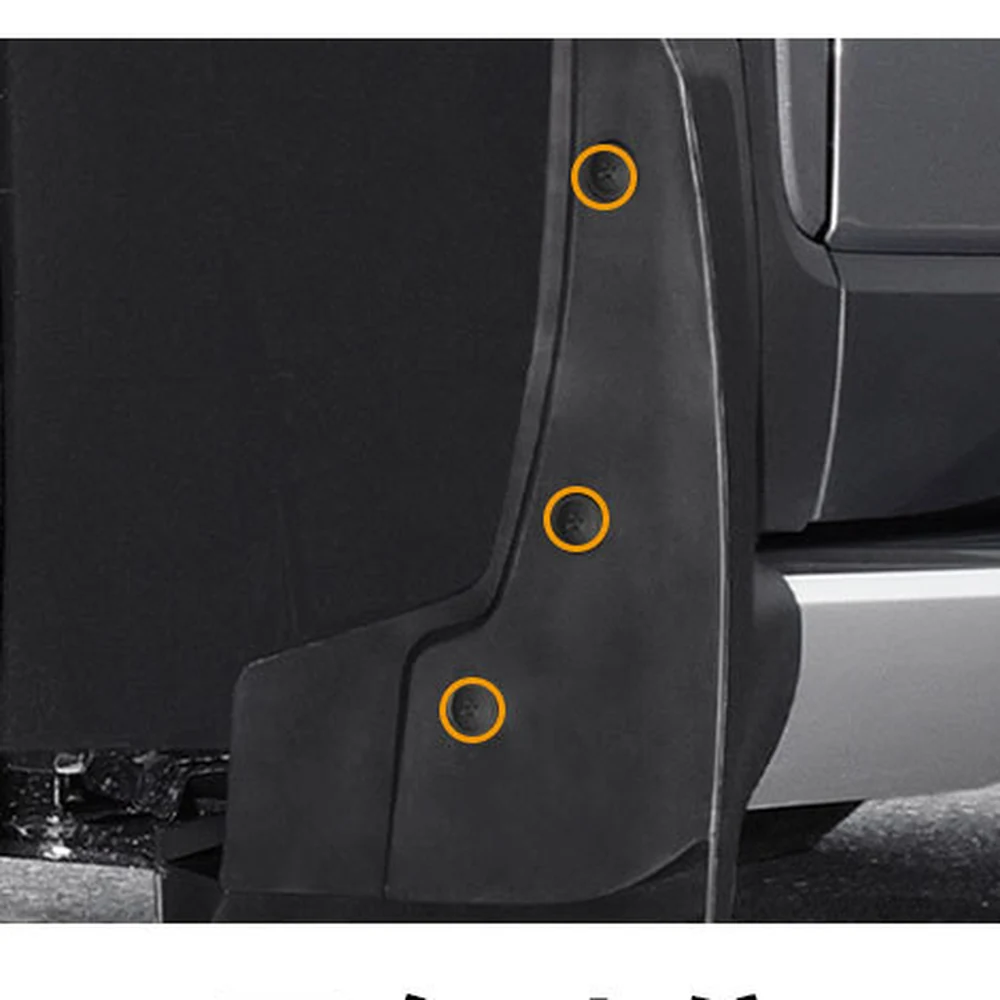
If the holes in a “for Atto 3” panel do not line up with the existing fixings on your arch, or the mounting face stands away from the body, that is a mismatch. Do not drill new holes to rescue a model-specific set that does not line up; the installation checks start from a part that already matches the mounting face.
A model name is not a substitute for the version and the hole map
Even an official, vehicle-specific kit depends on the exact version. Tesla publishes separate Model 3 mud-flap procedures for cars built before approximately January 2024 and for cars built from that date. The rocker-panel bolt is tightened to 5 Nm in the 2017–2023 procedure and to 2.5 Nm in the 2024+ procedure. The earlier document also distinguishes first-generation kits (screws into U-nuts) from second-generation kits (push clips in existing liner holes), and both official procedures include cutting off a rocker access cover. A “Model 3” label alone would not tell you which of those connections you have. Those figures and fasteners are Tesla’s, not a specification for a BYD kit.
The same check applies to a BYD listing. Match the year, the market body, and any equipment that changes the arch. The Leopard 5 listing, for example, is intended for models that use electric running boards and asks you to compare the photographs with your own side-step layout; it is not specified for Leopard 8. A correct model name with the wrong equipment is still a mismatch.
If your wheels, tyre size or ride height no longer match the stock setup the kit was shaped around, a correctly holed panel can still sit too close to the tyre or leave the outer tread uncovered. That is a clearance question for a dry-fit, not a reason to ignore a hole mismatch.
When a universal panel is still a reasonable choice
If no model-matched set exists for your body, or you are prepared to adapt a blank yourself, a universal panel can be the practical route. Typical market designs are flat rubber or plastic sheets, sometimes with elongated slots so the height can be shifted, and you may need to trim the edge to the arch. Some kits use existing holes plus a bracket; some require new holes. The listing has to say which. Coverage and clearance then depend on the position you choose, so check the outline against your arch and the tyre before you make a permanent hole.
A universal panel is not automatically better value, and a model-matched title is not automatically a perfect fit. The deciding evidence is whether the outline and the mounting points match—or whether you are knowingly starting from a blank.
What to send before you order
Take one photograph of your wheel arch that shows the existing fixing points, and compare it with the listing photograph that shows the panel’s outline and holes or slots. Note the model, year and market name, and whether the wheels or ride height differ from stock. If left and right or front and rear pieces are shown, check that you are ordering the corners you need.
If those photographs do not line up, do not rely on the title wording. Send both photographs through the contact form and ask the seller to identify the match—or the mismatch—before you buy.
If you still need to tell a wheel-behind flap from a liner or a door-gap panel, start with the guide to mud flaps, splash guards and mudguards.


 English
 Portuguese
 French
 Turkish
 Russian
 Arabic
 Spanish