

A cloisonné-style car emblem is a decorative vehicle badge made with fine wire and coloured details arranged into a personalised design. Inspired by traditional Chinese *qiasi* wirework, modern versions can use adhesives and protective coatings to create the look without kiln-firing the badge.
That distinction matters when you are choosing one for your car. A handmade emblem may look like traditional enamel, but the base, colour materials, coating and production process can be different. Knowing what you are ordering helps you choose a suitable design and set realistic expectations for its finish.
From mountain scenery to a portrait of your dog, the idea is to turn a familiar vehicle badge into something personal. Here is how the craft works, what to ask before ordering and how to plan your design.
What does cloisonné-style mean?
*Cloisonné* describes a decorative technique in which thin strips or wires form separate areas for colour. In traditional Chinese cloisonné, artisans create the design on a metal body, fill the spaces with coloured glass paste and fire the piece. The Metropolitan Museum of Art explains the process in its introduction to Chinese cloisonné.
A cloisonné-style car emblem borrows the visual language: fine outlines, individual areas of colour and intricate patterns. It adapts that look to a vehicle emblem using a different process. Depending on the design, wire and coloured materials may be secured with adhesive and covered with a protective coating.
Cloisonné-style does not automatically mean kiln-fired enamel. Ask your maker which materials and methods are used for your particular badge. That is especially useful if you want to know how the finish should be cleaned or maintained.
Traditional cloisonné vs a modern car emblem
| Feature | Traditional cloisonné enamel | Modern cloisonné-style car emblem |
|---|---|---|
| Design | Wire partitions form a pattern on a metal body | Fine wire creates outlines on a badge or emblem base |
| Colour | Coloured glass paste is applied in the partitions | Colour materials and their binders depend on the maker |
| Setting | The object is fired | Adhesives and coatings can be used without kiln-firing |
| Main purpose | Decorative objects, jewellery and art | Personalised decorative vehicle badges |
Neither a photo nor the word “enamel” tells you everything about a product. A feature on handmade qiasi-style car badges describes one maker’s cold-process method; materials vary between makers, so those details should not be assumed for every emblem.
How is a handmade car emblem made?
The exact steps depend on the emblem and design, but a custom order usually begins with a photo and an idea rather than a finished catalogue item.
1. The emblem and design are confirmed
First, share the vehicle brand, model, year and the position of the emblem. A clear photo and measurements help the maker check the shape and available design area. The front badge and rear lettering on the same vehicle may differ, so specify which one you want to personalise.
A digital proof then shows how the chosen pattern can be arranged inside the badge. This is the best time to discuss the subject, background, colours and level of detail. A photo of a pet, a hand-drawn image or a landscape reference can help communicate your idea.
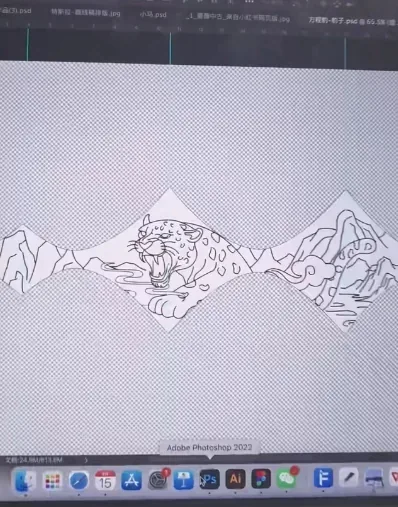
2. Fine wire outlines the artwork
The maker shapes and places fine wire to define the design. On a landscape, that might mean mountain ridges and clouds; on a pet portrait, it might outline the face and markings. Fine wire is part of the visual effect, so its colour can change the character of the finished piece.
Marvix offers gold, silver and coloured wire options for its custom handmade car emblems. The available choice should be confirmed with the design before work starts.
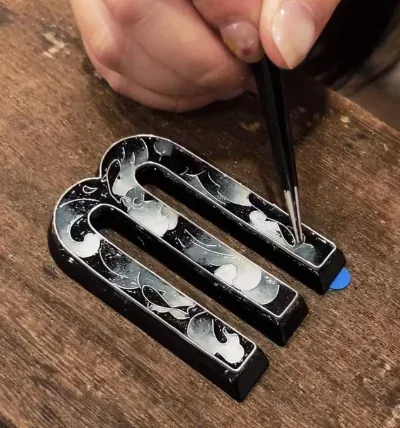
3. Colour and protective finish are added
The outlined areas are filled or decorated with colour. The result may be restrained and monochrome, or it may use several shades to create contrast. After the artwork is complete, the maker applies the agreed sealant or coating.
For Marvix orders, options may include sand-fixing sealant, UV resin or two-part AB resin, depending on the design and agreed specification. A glossy or matte appearance can be discussed before production. Ask which option is appropriate for your design instead of assuming every finish has the same properties.
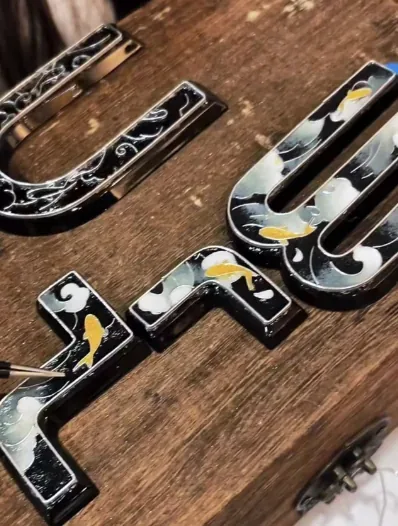
4. The finished piece is reviewed
Because the work is handmade, the physical emblem will not be identical to a screen image. On Marvix custom orders, colours and details may differ from the approved digital artwork by up to 20%, and small bubbles may occur in the coating. Review the finished piece before dispatch and raise any concerns with the seller at that stage.
What designs work well on a small badge?
A car emblem has much less room than a poster or a phone screen. A strong central subject, clear shapes and a limited palette usually give the artist more room to create a readable composition.
- Mountains and clouds: Use sweeping lines across a wide emblem to create a landscape.
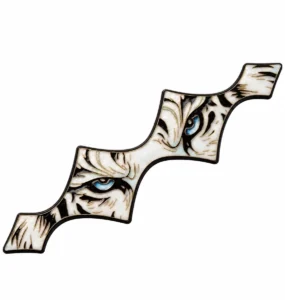
- Animals and eyes: A tiger or another animal can become the focal point of the badge.
- Pet portraits: Send a clear photo showing the face and distinctive markings. The artist can simplify the image to suit the available space.
- Floral patterns: Flowers, leaves and flowing lines work well when arranged around lettering or a border.
- Personal colours and symbols: Share the colours or motifs that matter to you and ask how they could fit the shape.
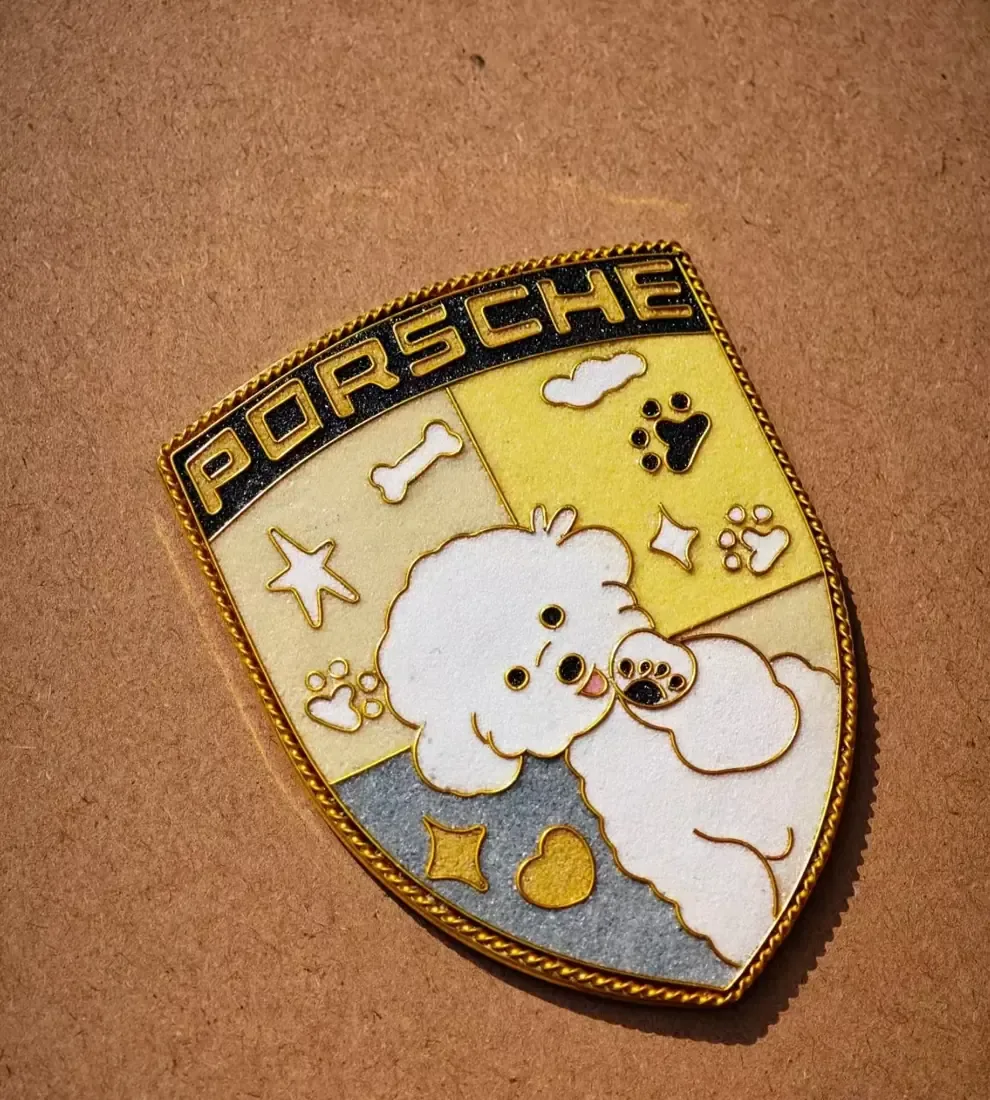
For a pet portrait, it helps to send more than one well-lit reference photo. Explain which markings are essential and whether you prefer a realistic or illustrated look. Fine details may need to be simplified for a small emblem; the artwork proof gives you a chance to review that choice.
How to choose a cloisonné-style car emblem
Check the vehicle and badge location
Start with the exact vehicle and badge, not the artwork. Send the model, year, market if relevant, and a clear image of the original emblem. Measure the available width and height, and include a close-up showing the surrounding panel or grille.
Do not assume that front and rear emblems are interchangeable. Ask whether the order is a replacement badge, an overlay or a custom piece made for a supplied base, and confirm how it will attach before ordering.
Agree on the materials and finish
Ask which wire and coating options are available, what the base is made from, and whether the finished surface will be glossy or matte. If you expect heavy sun, frequent washing or harsh weather, tell the supplier and ask for care guidance and any available performance information. Do not assume a handmade coating has a particular outdoor lifetime without test evidence.
Review the proof at actual scale
A detailed design may look excellent when enlarged but become difficult to read on a small emblem. Compare the artwork with the actual badge dimensions. Check the direction of any lettering, the colour of the wire and the placement of the main subject before approving it.
If you are considering other additions to your car, the BYD accessories guide explains why model and market details matter when choosing vehicle accessories.
Confirm the timetable and quote
For Marvix handmade custom emblems, the stated production time is approximately 7–10 days before dispatch. Shipping time is additional, and a larger wholesale order may follow a different schedule. Confirm the quote, delivery destination and artwork approval process before production starts.
For bulk projects, ask separately about tooling, product cost, shipping, OEM packaging and whether stock storage or dropshipping is available. Marvix can discuss DDP delivery to selected destinations, subject to confirmation.
How should you care for a handmade emblem?
Ask your supplier for instructions for the exact coating and mounting method. Until those are confirmed, avoid treating it like an unpainted factory badge or assuming it can withstand every cleaner, polishing compound or automatic car wash.
Inspect the piece and its attachment regularly. If the coating, edges or mounting show damage, ask the supplier or an experienced installer for advice before attempting a repair. Never cover a camera, sensor or lighting element without confirming that it will remain functional.
Frequently asked questions
Is a cloisonné-style car emblem real fired enamel?
Not necessarily. Traditional cloisonné enamel uses coloured glass and firing, while a modern cloisonné-style vehicle emblem can use adhesives and a protective coating. Ask the maker to specify the process and materials.
Can I use a picture of my pet?
Yes. Marvix accepts pet photos or hand-drawn references for a custom design. The artist may simplify fine details so the portrait remains clear at the actual emblem size.
Can I choose gold or silver wire?
Gold, silver and coloured wire options can be discussed for Marvix custom orders. Confirm your preferred wire colour when reviewing the digital artwork.
How long does a custom emblem take?
Marvix’s stated production time is approximately 7–10 days before dispatch for a handmade custom order. Shipping is additional; check the timetable for complex or bulk projects.
Will the finished emblem look exactly like the digital proof?
A digital proof is a guide, not a photograph of the finished item. Marvix advises that handmade colours and details may vary by up to 20%, and small bubbles can occur in the coating.
Create a handmade emblem for your car
A good custom emblem begins with the right shape and a design that fits it. Send Marvix a clear photo of your existing badge, your vehicle details and the artwork you have in mind. You can explore the handmade cloisonné-style emblem and request a quote for your own design.
Brand names identify intended vehicle compatibility and do not imply manufacturer affiliation or endorsement.
References
- Chinese Cloisonné — The Metropolitan Museum of Art.
- A look at handmade qiasi-style car emblems — Top Gear Philippines.
- Custom Car Emblems: A Practical Ordering Guide — Rimrock Labs.

 English
 Portuguese
 French
 Turkish
 Russian
 Arabic
 Spanish