

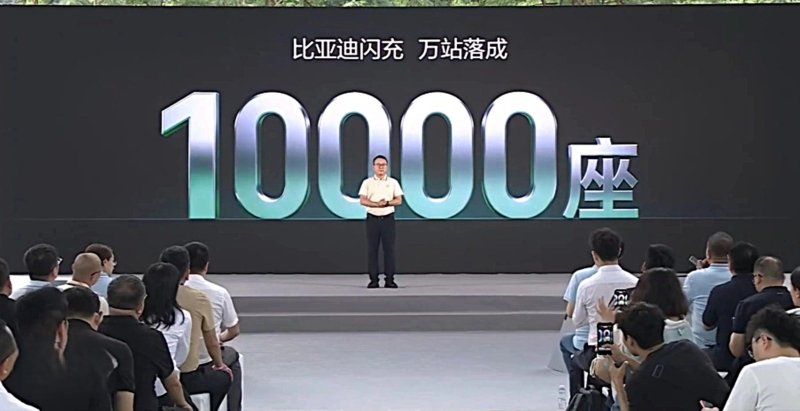
BYD ha alcanzado un hito significativo en su infraestructura de carga rápida: la red de Carga Flash de la compañía ahora opera 10,000 estaciones en toda China, abarcando 325 ciudades, solo seis meses después del lanzamiento de la tecnología. El anuncio se produjo el 28 de agosto de 2026, en la inauguración de la Estación Insignia de Carga Flash de Shenzhen Longhua, que marcó la ubicación número 10,000 de la red. El Vicepresidente Ejecutivo de BYD, He Zhiqi, reveló que el despliegue promedió 55 estaciones por día desde el lanzamiento del 5 de marzo, con una entrega acumulada de electricidad que alcanzó los 210 millones de kWh. Notablemente, la red ha atraído a más de 1.83 millones de usuarios registrados, con casi un tercio (33%) conduciendo vehículos de otras marcas. Esta rápida expansión subraya el agresivo impulso de BYD para dominar el panorama de carga de vehículos eléctricos en China, con el objetivo de 20,000 estaciones para fin de año.
El Hito de las 10,000 Estaciones: Un Sprint de Seis Meses
La red de Carga Flash de BYD ha crecido de cero a 10,000 estaciones en menos de seis meses, un ritmo que destaca las capacidades de ejecución de la compañía. He Zhiqi confirmó que la tasa de despliegue promedio fue de 55 estaciones por día, reflejando el período desde el anuncio de la tecnología del 5 de marzo hasta la inauguración del 28 de agosto. La red ahora abarca 325 ciudades en China continental, con la estación más al norte en Hulunbuir (Mongolia Interior), la más al sur en Sanya (Hainan), la más al este en Shuangyashan (Heilongjiang), y la más al oeste en Kashgar (Xinjiang). BYD también citó estaciones en Turpan y cerca de la base del Monte Everest, mostrando el alcance geográfico de la red.
Socios y Cobertura
La red incluye asociaciones con actores importantes como Sinopec, PetroChina, CNOOC, TELD, JD.com, Alipay, AutoNavi (Amap) y Ucar. Sin embargo, BYD no ha divulgado el desglose de estaciones por socio ni ha publicado una lista completa estación por estación. Esta opacidad podría ser un punto de interés para los compradores B2B que buscan entender la confiabilidad y accesibilidad de la red.
Adopción de Usuarios: 1.83 Millones de Usuarios Registrados
BYD informó que más de 1.83 millones de usuarios se han registrado en su red de Carga Flash, con 33% de ellos usando vehículos de otras marcas. Esta adopción entre marcas es significativa, ya que indica el atractivo de la red más allá de la propia base de clientes de BYD. Sin embargo, los vehículos que no son BYD pueden no alcanzar las mismas velocidades de carga que los modelos BYD compatibles. Por ejemplo, el Lynk & Co 10 alcanzó un máximo de 430 kW en una estación de Carga Flash de BYD, en comparación con aproximadamente 1,100 kW en un cargador de 1,500 kW de la marca Zeekr. Esta diferencia subraya que la potencia de salida de la estación y la potencia de carga del lado del vehículo son parámetros separados, una consideración crítica para los operadores de flotas.
Objetivo de Fin de Año: 20,000 Estaciones
El anuncio de BYD en marzo estableció un objetivo de 20,000 estaciones de Carga Flash en China para finales de 2026, comprendiendo 18,000 estaciones urbanas y 2,000 en autopistas. El hito del 28 de agosto representa 50% de ese objetivo. Para cumplir con la fecha límite del 31 de diciembre, BYD necesitaría desplegar otras 10,000 estaciones durante los 125 días restantes, promediando aproximadamente 80 estaciones por día. La cifra de 55 estaciones diarias citada por He Zhiqi es un promedio desde marzo, no un pronóstico para el resto del año. Este ritmo ambicioso sugiere que BYD confía en su cadena de suministro y capacidades de instalación.
Expansión Global y el Impulso Europeo de Denza
Más allá de China, BYD planea desplegar 6,000 estaciones de Carga Flash en el extranjero, incluyendo 3,000 en Europa. Las estaciones europeas utilizarán el estándar de carga CCS2, en comparación con GB/T en China, lo que podría afectar la compatibilidad para vehículos importados. Denza, la submarca premium de BYD, también se está expandiendo a más de 30 países europeos, con el objetivo de más de 150 puntos de venta minorista para finales de 2026. Esta estrategia global se alinea con las ambiciones de exportación más amplias de BYD, convirtiéndola en un actor clave en el mercado internacional de vehículos eléctricos.
Hongqi Incorporará la Batería Blade de Segunda Generación de BYD
En un desarrollo notable, Hongqi se convertirá en la primera marca que no es BYD en incorporar la Batería Blade de Segunda Generación y la tecnología de Carga Flash de BYD. FAW-FinDreams ha nominado la tecnología para la plataforma totalmente eléctrica de próxima generación de Hongqi, aunque los modelos específicos y el momento de producción permanecen sin divulgación. Esta adopción entre marcas podría acelerar la estandarización de la tecnología de carga de BYD.
Impacto en el Mercado de Vehículos Eléctricos y la Infraestructura
El rápido despliegue de las estaciones de Carga Flash de BYD está remodelando el panorama de carga de vehículos eléctricos en China. Con más de 10,000 estaciones, BYD es ahora un actor importante en el sector de infraestructura de carga, compitiendo con redes establecidas como State Grid y TELD. La inclusión de 33% de usuarios que no son de BYD indica que la red se percibe como confiable y accesible, potencialmente impulsando más adopción de vehículos eléctricos entre marcas. Esto también podría presionar a otros fabricantes de automóviles a invertir en sus propias redes de carga o asociarse con BYD, como se vio con la adopción de la batería y tecnología de carga de BYD por parte de Hongqi. Para los consumidores, la amplia disponibilidad de carga rápida reduce la ansiedad por la autonomía, una barrera clave para la adopción de vehículos eléctricos. La expansión de la red a áreas remotas como Turpan y el campamento base del Everest demuestra el compromiso de BYD con la cobertura nacional, lo que podría impulsar las ventas de vehículos eléctricos en regiones desatendidas.
Tecnología y Experiencia del Usuario
La tecnología de carga rápida de BYD utiliza capacidades de carga de alta potencia (HPC), con estaciones diseñadas para entregar hasta 1.000 kW en algunas ubicaciones, como lo evidencia la comparación con Zeekr. La red se integra con aplicaciones móviles como Alipay y AutoNavi para facilitar el acceso y el pago, mejorando la comodidad del usuario. BYD también ha implementado gestión de red inteligente para equilibrar la carga y reducir los costos de energía, lo cual es crucial para operaciones sostenibles. La experiencia del usuario mejora aún más gracias a las asociaciones con JD.com para la integración de comercio electrónico, permitiendo a los conductores comprar mientras cargan. La confiabilidad de la red se ve respaldada por su rápido crecimiento, pero BYD debe garantizar un tiempo de actividad y mantenimiento consistentes para mantener la confianza del usuario. A medida que la red escale a 20.000 estaciones, BYD probablemente invertirá en mantenimiento predictivo impulsado por IA para minimizar el tiempo de inactividad y optimizar las sesiones de carga. Para las empresas, la disponibilidad de herramientas de gestión de flotas y datos de uso detallados podría hacer de BYD Flash Charging una opción atractiva para flotas comerciales que hacen la transición a eléctrico.
Perspectivas futuras e implicaciones estratégicas
El objetivo de BYD de 20.000 estaciones para finales de 2026 es ambicioso pero alcanzable dado su ritmo actual. La capacidad de la compañía para desplegar 55 estaciones por día desde marzo sugiere una fuerte ejecución y preparación de la cadena de suministro. Si BYD cumple su objetivo, tendrá la red de carga rápida más grande de China, superando a competidores como la red Supercharger de Tesla, que tiene alrededor de 10.000 puestos a nivel mundial. Esto podría dar a BYD una ventaja competitiva en el mercado de vehículos eléctricos, ya que la infraestructura de carga es un factor crítico para los consumidores. Además, la adopción de la tecnología de BYD por parte de Hongqi y potencialmente otras marcas podría conducir a un ecosistema de carga estandarizado en China, afianzando aún más la influencia de BYD. Para los mercados internacionales, el estándar CCS2 en Europa garantizará la compatibilidad con vehículos europeos, pero BYD enfrentará la competencia de redes locales. El éxito de la expansión global de BYD dependerá de asociaciones con servicios públicos y gobiernos locales, así como de adaptarse a los requisitos regulatorios. En general, la red de carga rápida de BYD es un activo estratégico que podría impulsar tanto las ventas de vehículos como el bloqueo del ecosistema.
Qué ver a continuación
Mientras BYD corre hacia su objetivo de 20.000 estaciones, los observadores de la industria deberían monitorear el ritmo de las nuevas instalaciones y el rendimiento de la red en áreas rurales versus urbanas. La adopción por marcas no pertenecientes a BYD como Hongqi podría señalar un cambio en el mercado, potencialmente haciendo de BYD Flash Charging un estándar de facto en China. Para los compradores en el extranjero, la expansión europea y la compatibilidad con CCS2 serán cruciales. Manténgase atento a las actualizaciones sobre la red de carga de BYD y su impacto en el ecosistema global de vehículos eléctricos.
Soy Lucian, de BYD Sourcing. Con más de 10 años de experiencia en el sector de la automoción y conocimientos prácticos sobre trámites de exportación y despacho de aduanas, ayudo a los compradores extranjeros a adquirir vehículos eléctricos chinos —especialmente modelos de BYD— a través de canales oficiales y verificados, tanto para venta al por menor como al por mayor. Contáctanos para obtener un presupuesto competitivo.



 English
 Portuguese
 French
 Turkish
 Russian
 Arabic
 Spanish