

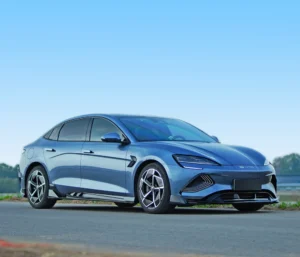
You have seen them on everything from a BYD Seal on the school run to a Le Mans prototype, and you have probably heard two opposite stories about them. One says a spoiler adds real grip. The other says it is pure decoration that only slows the car down.
A rear spoiler is an aerodynamic device fitted at the back of a car to manage the airflow leaving the roof and rear glass. By spoiling that flow it reduces lift at the rear and helps the car feel planted at speed. On a road car, the most useful spoiler is rarely the biggest one — it is the one that fits your bodywork and matches the way you actually drive.
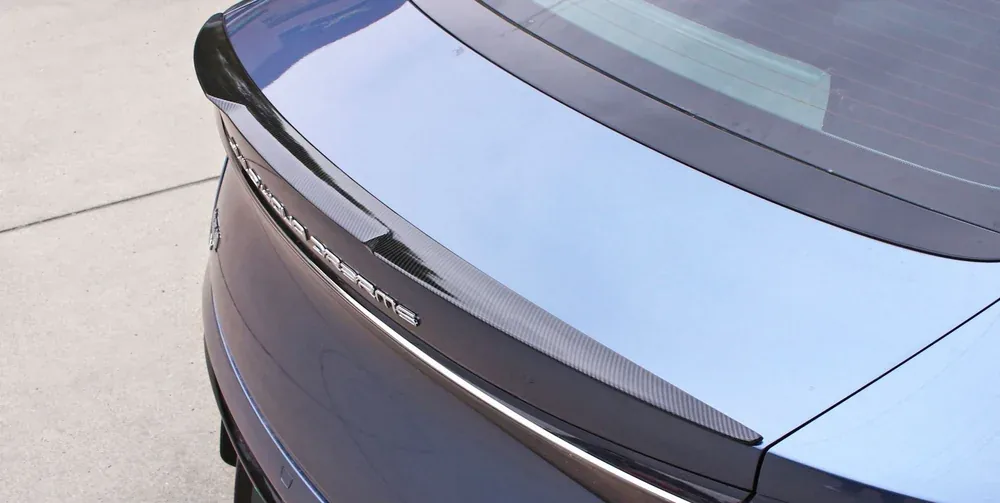
The short answer: what is a rear spoiler for?
Bodies are shaped to cut through air, and air moving over a car creates pressure differences. The roof is curved, so the air above it speeds up and drops in pressure, while the air underneath is slower and higher in pressure. That difference pushes up. It is small at town speeds and grows quickly.
The job of a rear spoiler is to spoil that pattern at the back of the car. It breaks up the smooth airflow leaving the roof and rear glass, redirecting it so the rear of the car does not lift as much. That is where the name comes from, and it is why a spoiler is usually described as reducing lift rather than creating downforce.
In plain terms, a rear spoiler does three things:
- It reduces rear lift at speed. Less lift means the rear tyres stay loaded, so the car feels steadier in fast lane changes and long sweeping bends.
- It cleans up the airflow leaving the back of the car. A carefully shaped part can guide air so it leaves the body with less turbulence.
- It changes how the car looks. On most road cars this is the honest headline benefit, and it is a completely legitimate reason to buy one.
Why it is called a spoiler, and what it actually spoils
The word is older than the car. It comes from aviation, where a spoiler is a plate that disrupts airflow over a wing to kill lift. Engineers borrowed the idea for cars in the 1960s, once road cars became fast enough for the rear end to feel light at speed.
What a spoiler “spoils” is smooth, attached airflow. Instead of letting air glide down the rear glass and leave the body cleanly, a spoiler introduces a deliberate disturbance. In the right place, that disturbance breaks the low-pressure pocket sitting over the boot lid, and the rear of the car stops being pushed upward.
This is why two spoilers of the same size can behave completely differently. Position, angle and how the shape meets the bodywork matter more than the amount of material on the boot. A part that looks aggressive but sits in dead air is styling. A modest lip that sits exactly where the airflow separates can genuinely change stability.
Lift, drag and downforce without the physics lecture
Three words come up in every spoiler conversation. Here is what they mean when you are standing next to the car.
Lift is the upward force that makes the rear feel light. It is the problem a spoiler is usually fitted to reduce.
Drag is the resistance the car pushes through. Anything you bolt to the outside of a car adds some drag, even when it is working well. A tall, angled wing adds more than a low lip.
Downforce is the opposite of lift — a downward push that increases tyre load. A wing generates downforce; a spoiler mainly reduces existing lift.
A useful rule to remember is that these forces grow with the square of speed. Double your speed and the aerodynamic forces roughly quadruple. That is why a spoiler feels irrelevant around town and strangely noticeable on a fast motorway slip road, and why a part that behaves well at 60 mph can hum or flex at 100 mph.
It is also why the honest answer on road cars is that a spoiler is a stability and styling part, not a performance upgrade. Wikipedia’s entry on car spoilers puts it plainly: many spoilers are fitted primarily for styling and either add little aerodynamic benefit or slightly worsen it. Recognising that up front saves money and disappointment.
Spoiler or wing? The difference in one minute
The two terms get used interchangeably by sellers, but they are not the same device.
A spoiler sits close to the bodywork and disturbs airflow that is already there. It reduces lift. A wing stands off the body on uprights, is shaped like an upside-down aircraft wing, and generates downforce by creating a pressure difference across its own surfaces. A wing usually adds more drag than a spoiler, and it does its best work at higher speeds.
Most parts sold for everyday cars — including the lip, blade and roof pieces we supply for BYD models — are spoilers in the strict sense, even when a listing calls them a wing. That is why we check the shape and mounting position of each part against your exact model rather than relying on the label.
The main types you will see on a BYD
Spoiler designs split into a handful of families, and each one suits a different body shape.
| Design | Where it sits | Typical use |
|---|---|---|
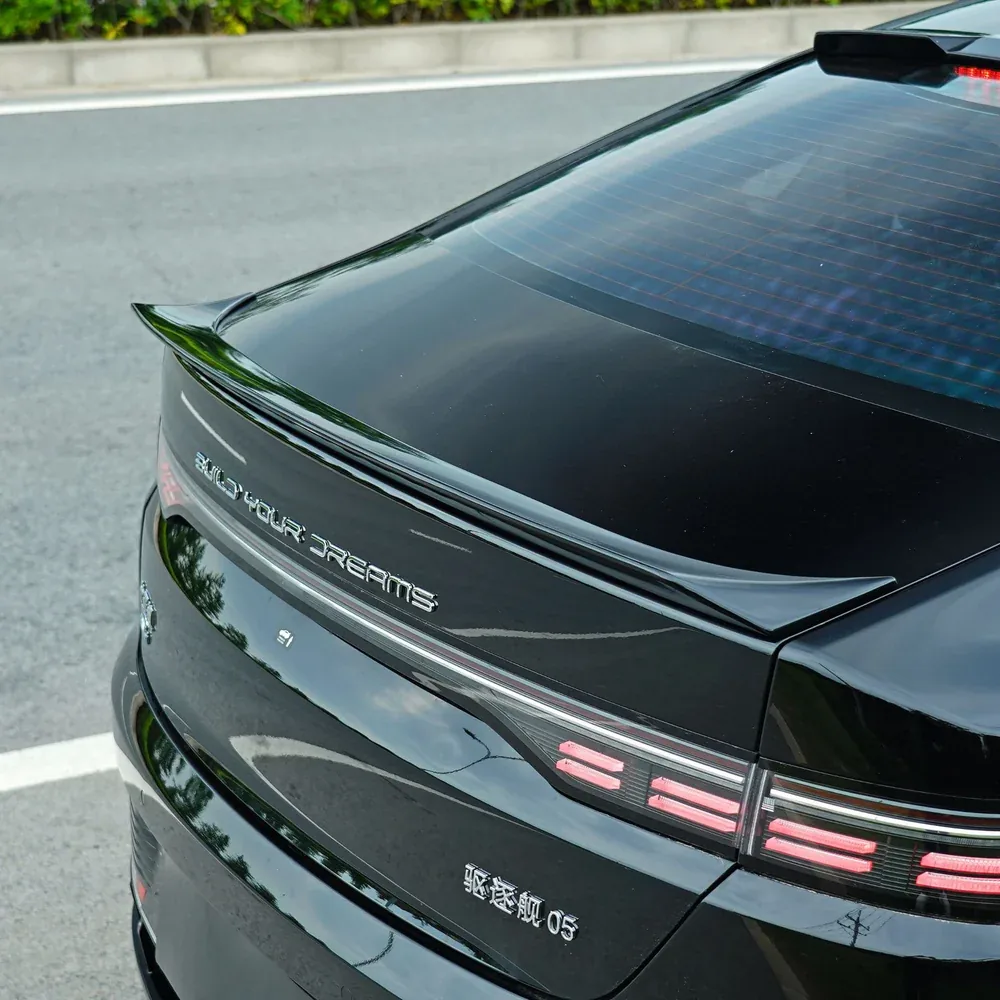
| Lip or blade | Along the very edge of the boot lid | Sedans and fastbacks; the subtle OEM-plus look |
| Ducktail | Upturned at the rear edge of the deck lid | Classic sports-car proportions, more visible than a lip |
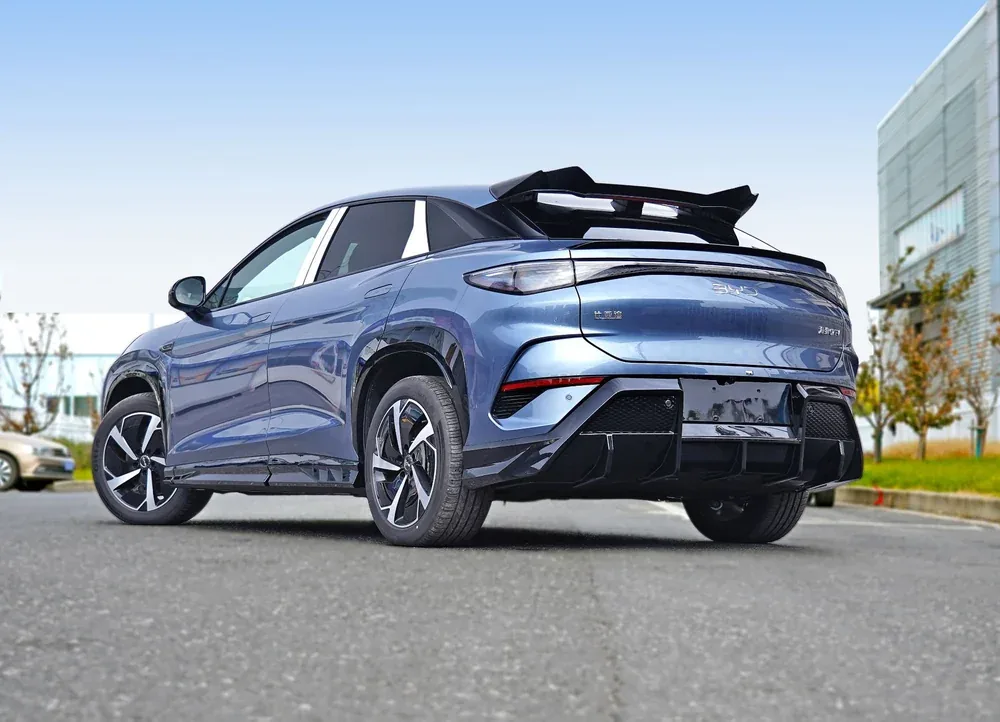
| Roof or roof-end | At the top of the tailgate or above the rear glass | Hatchbacks and SUVs, where there is no separate boot lid |
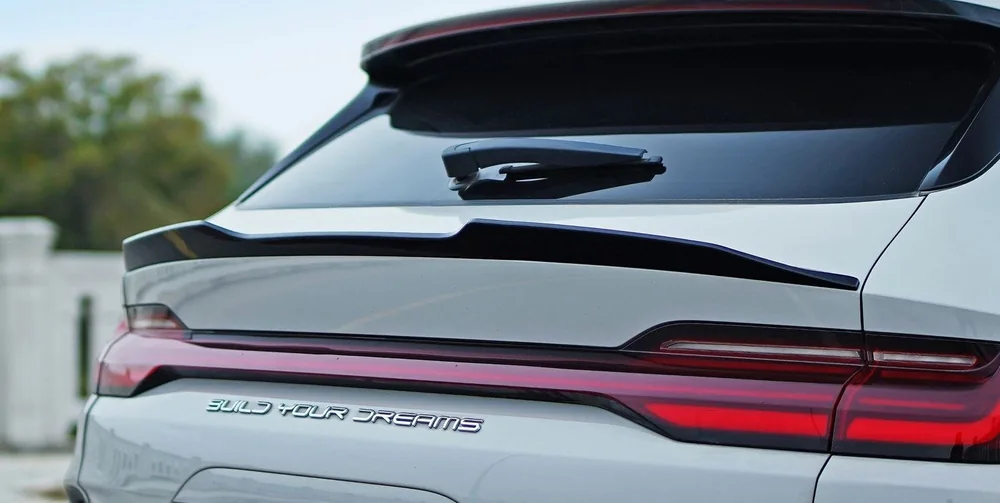
| Mid spoiler | On the tailgate below the rear glass | SUVs and crossovers, adds a second horizontal line |
| Pedestal or wing-style | Raised on uprights above the deck | Track-inspired builds and larger sedans |
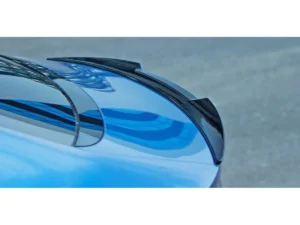
On the BYD range this maps neatly onto real cars. The Rear Spoiler Wing for BYD SEAL is a deck-lid piece in the lip family and works with the Seal’s fastback roofline. The Roof Spoiler Wing for BYD SEALION 7 sits at the top of the tailgate, which is where an SUV can actually use a spoiler. The Blade Trunk Spoiler for BYD SEAL 5 DM-i does the same job in a slimmer profile.
What is a rear spoiler made of? The four materials explained
Four materials cover almost the whole market: ABS plastic, polyurethane, fiberglass, and carbon fiber or carbon-fiber-reinforced plastic.
ABS is a thermoplastic that is tough, rigid and easy to mould, which is why it dominates mass-produced spoilers. It resists impact well and can be finished gloss black or paint-matched, though it softens with age and heat. Fiberglass is a glass-fibre-reinforced plastic — cheap, strong for its weight and easy to repair, but heavier and more labour-intensive to finish. Carbon-fibre-reinforced plastic is the lightest and stiffest of the group and the most expensive, and its strength is directional, meaning the weave layout matters. A large part of what is sold as “carbon fibre” is really a carbon-look overlay or a dipped finish over a plastic base.
The practical takeaway is simple: for a road car, choose the material that matches your budget and finish preference, not the one with the most impressive name. A well-finished ABS part that fits perfectly will look better in three years than a rough carbon part that never sat flat.
Fitment and installation: the two steps that decide the outcome
Fitment is where most spoiler projects are won or lost. Year, model and generation are only the start; body style, trim level, whether the car left the factory with a spoiler, and whether an older part left holes behind all change the answer. A universal spoiler is not a universal fit — treat it as a fabrication project, not a bolt-on promise.
Before you buy, check four measurements against the car: the width of the mounting surface, the flat width available under each mounting foot, the front-to-back depth available before you meet the rear glass, and the height and angle needed to keep the boot lid opening freely. Then confirm how the part is fixed. Small lips are usually taped and may add studs; taller, heavier parts should be bolted, with backing plates or reinforcement where the panel needs it, and many vehicle-specific spoilers use tape and bolts together.
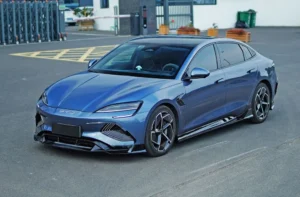
We supply spoilers for a wide set of BYD models, and each listing is matched to the actual body rather than a generic size chart. If you want to see the full spread, the Spoilers & Wings range covers deck-lid, roof and mid designs, and sits inside the wider BYD exterior accessories group alongside lips, side skirts and diffusers.
What a spoiler will and will not do
It will steady the rear of the car at speed, clean up the look of an empty boot lid or tailgate, and finish off a build that already has skirts and a diffuser.
It will not add meaningful power, make the car faster in a straight line, or improve fuel economy. Drag is drag, and any add-on part costs you a little of it. It also will not fix a car with tired dampers or worn tyres — mechanical grip always comes first, and aerodynamic parts only work on top of a healthy chassis.
If your goal is a sharper-looking daily driver, choose a lip or roof design in a finish that suits the car. If you are building something track-inspired, plan the mounting properly and expect to reinforce the panel. Either way, buy for your car, not for the photo on the listing.
Frequently Asked Questions
What does a spoiler do on a car?
A rear spoiler disrupts the airflow leaving the roof and rear glass so the rear of the car generates less lift. That keeps the rear tyres loaded and makes the car feel more stable at higher speeds. On most road cars the visible change to the car’s appearance is a bigger part of the benefit than the aerodynamic effect.
What is the point of a spoiler if it does not make a car faster?
Stability and appearance. Reducing rear lift helps the car track straight in fast corners and crosswinds, and a spoiler also finishes the rear of a car that looks unfinished without one. Straight-line speed is not usually part of the deal, and a poorly chosen part can cost you a little top-end drag.
Why is it called a spoiler?
The name comes from aviation. A spoiler “spoils” smooth, attached airflow over a wing to reduce lift. Automotive engineers borrowed the term for the plates that do the same job at the back of a car, breaking up the airflow over the boot lid so the rear end stays planted.
Is a spoiler the same as a wing?
No, even though sellers mix the words. A spoiler sits close to the body and reduces existing lift. A wing stands off the body on uprights, has a proper aerofoil section, and generates downforce — usually with more drag. Many parts sold as “wings” for road cars are spoilers in the technical sense.
Can a spoiler go on any car?
Almost any car can take some form of spoiler, but not every part fits every car. Body style, trim, the shape of the boot lid or tailgate, and whether the car already has a factory spoiler all change what will fit. Universal parts need measuring, drilling and bracket work, so they behave more like a small project than a bolt-on upgrade.
Does a rear spoiler improve fuel economy?
Generally no. A spoiler that reduces lift usually adds a small amount of drag at the same time, and drag is what costs fuel. Some factory aero packages help overall efficiency, but that depends on the whole design of the car, not on adding a part to a vehicle developed without one.
Get a spoiler matched to your BYD
Spoilers are one of those parts where the listing photo tells you almost nothing about whether it will fit. We would rather you send us the details first.
Tell us your model, year and trim — a BYD Seal, a Seal 5 DM-i, a Seal U DM-i, a Dolphin, a King, a Sealion 7, a Seagull, an Atto 2 or Atto 3 — and we will confirm which designs actually match your body, in gloss black, paint-matched or carbon-texture finish. Our parts ship from China with MOQ 1 piece, and we also handle bulk orders and dropshipping for accessory shops, installers and resellers.
We specialise in BYD, so that is where our fitment data is deepest, but you do not have to drive one to ask. If you are sourcing for another brand, send the model and we will tell you honestly whether we can help — and if we can, we will quote it. Start with the Spoilers & Wings range or browse the full BYD model list and then request a quote.
Looking for a spoiler that fits your BYD? See our BYD spoilers and wings collection for model-matched options. If your model or preferred style is not listed, contact us with your model year and photos — we can help source the right part.
References
- Spoiler (car) — Wikipedia — https://en.wikipedia.org/wiki/Spoiler_(car)
- Downforce — Wikipedia — https://en.wikipedia.org/wiki/Downforce
- Automotive aerodynamics — Wikipedia — https://en.wikipedia.org/wiki/Automotive_aerodynamics
- Rear Wing Vs. Spoiler: What’s The Difference And What Are They For? — SlashGear — https://www.slashgear.com/1860131/rear-wing-vs-spoiler-difference/
- What Does a Spoiler Do? — Cars.com — https://www.cars.com/articles/what-does-a-spoiler-do-424902/
- 19 Different Types of Spoilers — Auto Trends Magazine — https://www.autotrends.org/types-of-spoilers/
- Acrylonitrile butadiene styrene (ABS) — Wikipedia — https://en.wikipedia.org/wiki/Acrylonitrile_butadiene_styrene
- Fiberglass — Wikipedia — https://en.wikipedia.org/wiki/Fiberglass
- Carbon-fiber-reinforced polymers — Wikipedia — https://en.wikipedia.org/wiki/Carbon-fiber-reinforced_polymers
- Aftermarket Spoiler Fitment Guide for a Clean Build — My Pro Street — https://my.prostreetonline.com/2026/09/04/aftermarket-spoiler-fitment-guide/


 English
 Portuguese
 French
 Turkish
 Russian
 Arabic
 Spanish