

The difference between a spoiler vs wing comes down to where each one sits and how it works. A spoiler sits close to the body and disrupts airflow that is already there, mainly to reduce lift at the rear. A wing stands clear of the body on uprights, uses an aerofoil section, and generates downforce by creating a pressure difference across its own surfaces. For a road car, a spoiler is usually the smarter buy. A wing makes sense when the car, the mounting and the driving all support it.
Search for "spoiler vs wing" and you will find two confident answers that disagree with each other. Some sources say they are the same part with two names. Others say they are completely different devices. Both are describing real products, which is why the confusion survives.
That confusion has a cost. Buy a low lip expecting the grip of a race wing and you will be disappointed. Bolt a tall wing to a daily driver and you inherit extra drag, more wind noise, a heavier boot lid and a set of mounting holes you cannot undo. The wrong choice is expensive in both directions.
For the basics, see what a rear spoiler is. For the full range of shapes, from lips to pedestal designs, see our guide to the types of car spoilers.
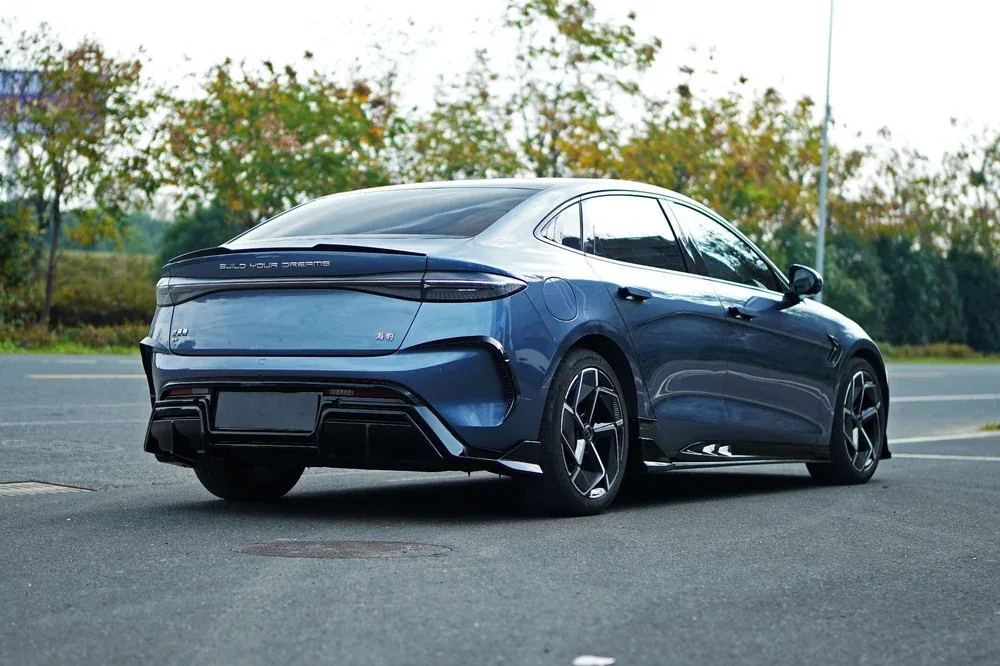
The short answer: spoiler vs wing
Both devices exist to stop the rear of the car feeling light at speed, and they work in different ways to get there.
The spoiler is a disruptor. The roof of a car curves, so air accelerates over it and loses pressure, while slower, higher-pressure air passes underneath. The result is lift. A spoiler interrupts the smooth flow leaving the roof and rear glass, breaking up the low-pressure area over the boot lid so the rear of the car is not pushed upward as strongly.
The wing is a generator. Shaped like an inverted aircraft wing and mounted above the body, it forces air to travel more slowly underneath than over the top, which creates a pressure difference and presses the car down. That downward force is downforce, and it is worth having when a car is fast enough and well enough set up to use it.
In one line: a spoiler takes lift away, a wing adds downforce, and the second one usually costs you more drag.
How each device handles air
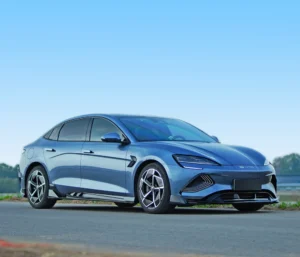
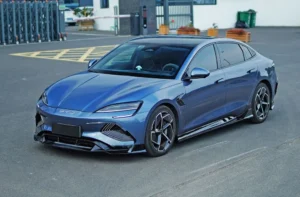
Picture the airflow leaving the back of the car. On a fastback like a BYD Seal, the roof line runs down into the boot lid and the air separates somewhere along that curve. That separation point is where a rear lip or blade spoiler earns its place — it sits right at the edge and tidies the flow as it leaves.
An upright wing changes the picture entirely. It is not reacting to airflow that already exists; it is creating a new, controlled pressure difference of its own. Because it stands in clean air above the body, it can be more effective than a spoiler at generating downforce, and because it is an obstruction, it also adds more drag. That trade-off is the whole story of wing design. Racing teams spend fortunes chasing downforce while trying to give away as little straight-line speed as possible.
Wikipedia’s entry on car spoilers is blunt about the street versions: spoilers are frequently fitted to road cars primarily for styling and either deliver little aerodynamic benefit or slightly worsen it. The exception is a factory-designed package where the spoiler, the underbody and the body shape were developed together.
Why the words get mixed up in the aftermarket
Marketing is most of the problem. "Wing" sounds faster and more technical, so it gets attached to parts that are architecturally spoilers. A flat blade that bolts flush to a boot lid does not become a wing because a listing says so, and a raised part with small uprights is not necessarily generating meaningful downforce either.
There is a genuine middle ground too. Many vehicle-specific parts use a short pedestal or a low stance that sits somewhere between the two extremes. On a road car this is often the best compromise — a little more visual presence than a lip, without the drag and the mounting demands of a full wing.
| Spoiler | Wing | |
|---|---|---|
| Where it sits | Close to the body, usually on the boot lid or tailgate edge | Raised above the body on uprights or pedestals |
| How it works | Disrupts existing airflow to reduce lift | Aerofoil creates a pressure difference to generate downforce |
| Typical effect | Less rear lift, steadier high-speed feel | More downforce and more grip at speed |
| Drag | Small increase | Larger increase |
| Best speed range | Noticeable from motorway speeds upward | Most useful at higher speeds |
| Mounting | Often tape, sometimes tape plus bolts | Almost always bolted, sometimes with reinforcement |
| Typical buyer | Daily driver, showroom finish or OEM-plus look | Track-inspired build, larger sedan or coupe |
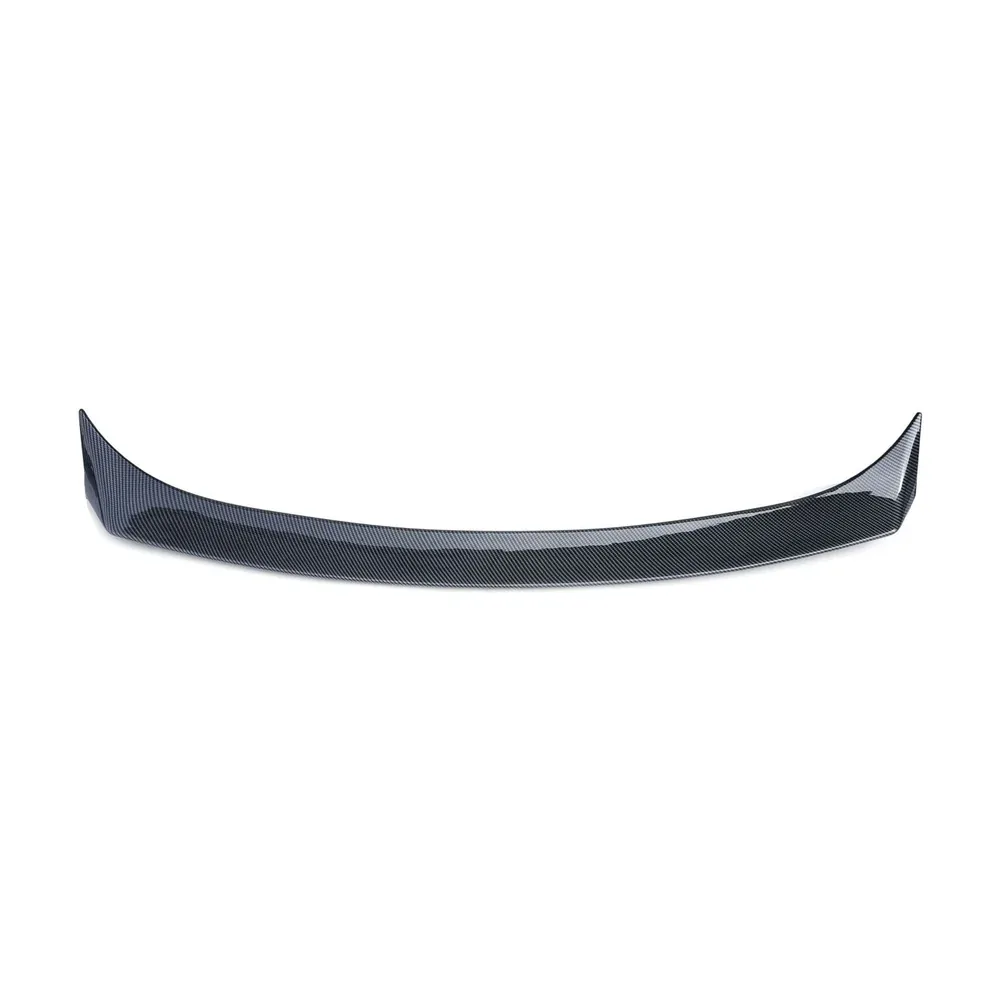
Spoiler vs wing: which one should you choose?
Work backwards from how the car is used rather than from which part looks better in a photo.
Choose a spoiler if the car is a daily driver. A lip, blade, roof or mid spoiler adds presence without asking much of the rest of the car. It does not need special hardware, it will not dominate the rear view, and it keeps the boot lid light enough to open normally. This is the right answer for almost every everyday BYD, from a Dolphin hatchback to a Seal fastback.
Choose a wing if the car is being built for something. That usually means track days, a dedicated project, or a big sedan or SUV where the visual mass at the rear can carry a raised part. Be honest about the supporting cast: a wing works best on a car with healthy suspension, good tyres and a body that can take the mounting loads. Fitting one to a tired daily driver adds drag, noise and holes without unlocking the benefit.
There is a third, very common answer. If the car already has a factory spoiler or an active rear element, the smartest move is often to keep the original mounting points and upgrade the finish rather than change the architecture. That preserves resale value and keeps the boot lid working exactly as designed.
Mounting: the difference that decides whether it lasts
Mounting hardware is where spoiler and wing projects part company.
Lip and blade spoilers are usually fixed with automotive-grade double-sided tape, sometimes with small studs for extra security. That is a legitimate method when the surface is properly cleaned and primed and the part was designed for it. What tape is not is a universal answer: it works because the part is light and sits flat, not because adhesive is strong enough for anything you bolt to a car.
Wings and taller pedestal designs put real leverage on the panel. A boot lid is thin sheet metal over an inner structure, and a raised wing acts like a lever on it at speed. Those parts should be bolted, using quality hardware and backing plates or reinforcement where the panel needs the support. Many vehicle-specific spoilers use both — bolts for mechanical retention, tape to seal the edge and hold the part flush.
If the car has a rear wiper, an integrated brake light, a reversing camera or a powered tailgate, the mounting position has to leave all of them working. On a hatchback or SUV that means cycling the tailgate with the part fitted and checking that nothing touches the roof line or the rear glass.
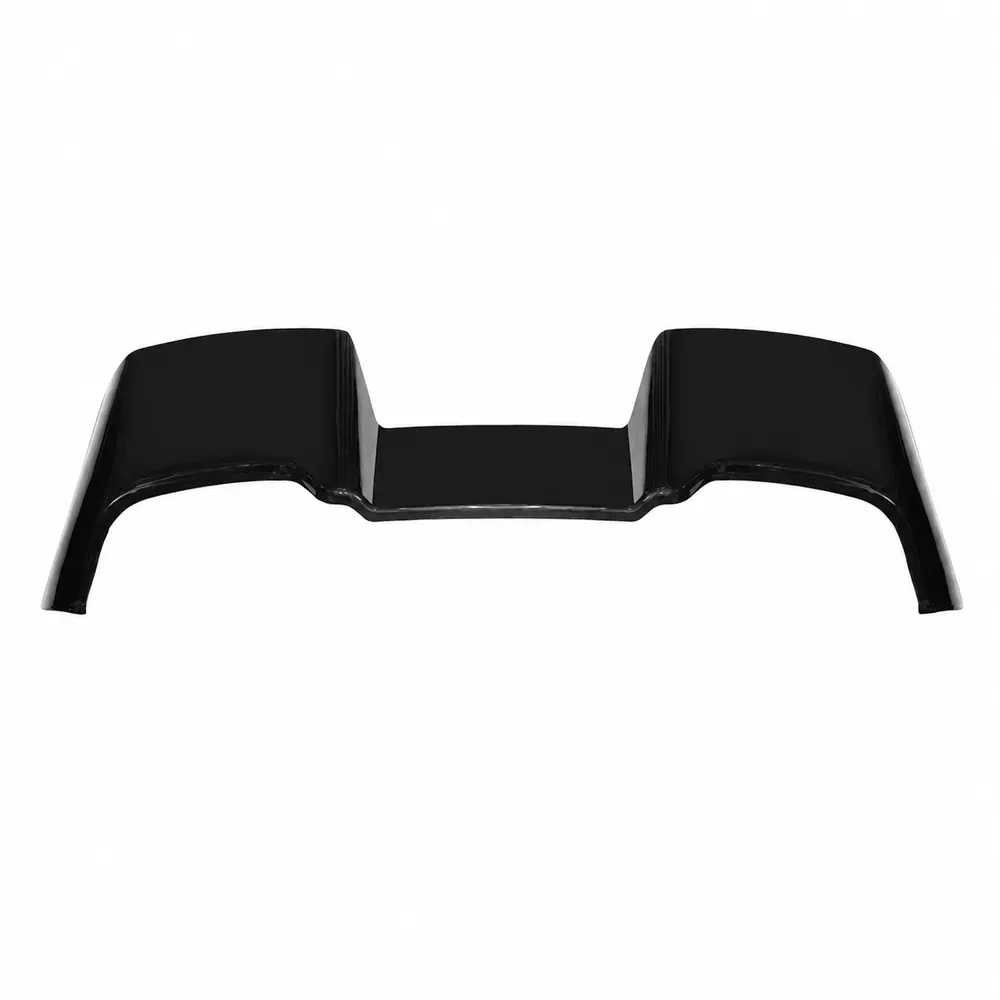
What this looks like on BYD models
The BYD range shows both approaches clearly, and they suit different cars.
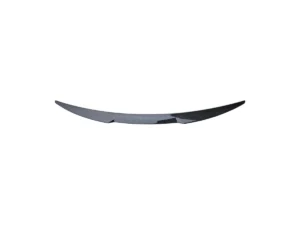
The Seal is a fastback with a long, falling roofline, which is exactly the shape a deck-lid spoiler suits. A low blade or lip finishes that line without fighting it. See the Rear Spoiler Wing for BYD SEAL and the Gloss Black Rear Spoiler for BYD SEAL.
The SUV and crossover models are the opposite case. A Sealion 7 or a Seal U DM-i has a tall tailgate and a rear glass that air leaves almost vertically, so the useful position is at the top of the tailgate rather than on a boot lid. That is why the Roof Spoiler Wing for BYD SEAL U DM-i and the Seal U mid spoiler exist as separate designs — one for the roof line, one for the panel below the glass.
The BYD King sits between the two. Our catalogue lists both a deck-lid rear spoiler wing and a roof spoiler for it, and the two can be fitted together for a more complete rear-end look. Because the same car can take either, this is where the spoiler versus wing question stops being academic and becomes a choice about the look you want and how much hardware you are willing to fit.
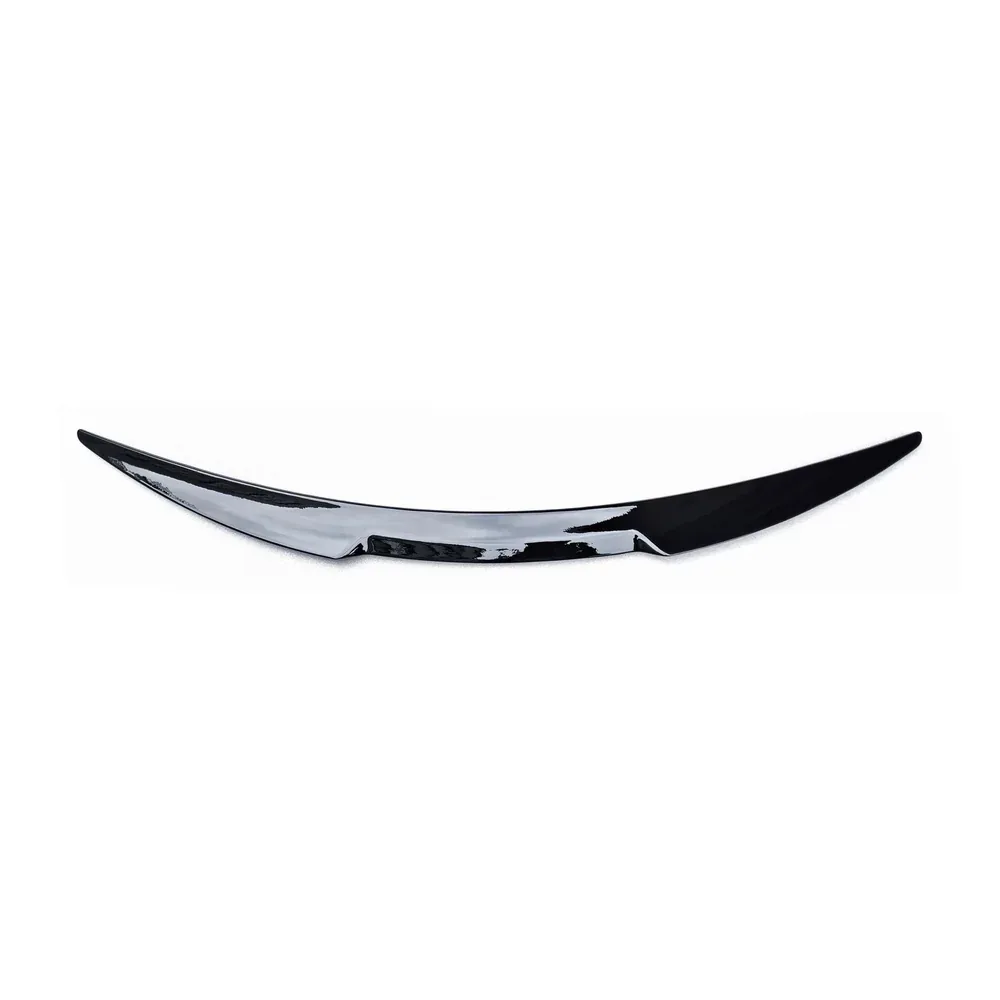
Mistakes that cost money
Buying by photo is the first one. Product images are shot on a white background at whatever angle flatters the part; they tell you nothing about whether the foot positions clear your boot springs or whether the ends sit past the body lines.
Assuming a spoiler makes the car faster is the second. On a road car, the honest gains are stability, a cleaner rear profile and a firmer feel in fast sweepers. If a listing promises a big jump in top speed from a bolt-on part, treat that with suspicion.
Believing a universal part fits anything is the third. Universal spoilers can look excellent, but in practice they mean measuring, drilling, bracket positioning and sometimes reinforcing the panel. A vehicle-specific part has the mounting locations, curve and width worked out already — which is why we would rather match a part to your exact model and generation than sell you something that needs to be made to fit.
Frequently Asked Questions
What is the main difference between a spoiler and a wing?
A spoiler is mounted close to the body and reduces lift by disrupting the airflow that is already passing over the car. A wing is mounted on uprights and uses an aerofoil shape to generate downforce. Different mechanism, different mounting, different amounts of drag.
Which is better, a spoiler or a wing?
For a road car, a spoiler is usually the better buy: it improves high-speed stability, looks finished and does not demand reinforcement or hurt fuel economy as much. A wing makes more sense on a track-inspired build or a large car where the extra downforce and visual presence justify the drag and the mounting work.
Is a rear wing the same as a rear spoiler?
Technically no, even though many sellers use the terms interchangeably. If a part bolts flat to the boot lid or tailgate, it works as a spoiler. If it stands off the body on uprights with a wing-shaped section, it is a wing — regardless of what the product listing calls it.
Does a wing make a car faster?
It can make a car faster through corners by increasing grip, and it usually costs a little top speed on the straight because it adds drag. On a low-powered daily driver that trade is rarely worth it. On a track car with the suspension and tyres to use the extra load, it is a real gain.
Will a wing fit my BYD?
It depends on the model and the mounting design, not on the car brand alone. A deck-lid wing suits a fastback sedan; a tailgate or roof design suits an SUV. Send us the model, year and trim and we will tell you which spoiler and wing listings match your car.
Can I swap a factory spoiler for a wing?
Sometimes, but check what is underneath the original part first. Removing a factory spoiler can leave exposed holes, faded paint or clips that need replacing, and a wing will usually need different fixing points. Where the original mounting can be reused, that is almost always the cleaner route.
Which one fits your BYD? Ask before you buy
If you are close to buying, send us the car first. The model, model year, market version and a photo of the rear (or the VIN) are enough for us to tell you which of our listings suit that body: a low lip where the roofline calls for one, a roof or mid spoiler for a tall tailgate, or a raised rear spoiler wing if that is the look you are building towards. Finish options vary by part, so check the listing photos and confirm the finish you want when you ask.
For trade buyers: MOQ is 1 piece, and pricing is tiered, so the unit price keeps falling as quantity rises, with no upper limit. We ship on FOB or EXW terms, or DDP/DAP to some countries. Parts are usually in stock unless the order is a new ODM design, and orders under 100 sets ship directly with no production lead time.
Start with the Spoilers & Wings range, add matching side skirts and lips if you are building the whole rear, then request a quote.
References
- Spoiler (car) — Wikipedia — https://en.wikipedia.org/wiki/Spoiler_(car)
- Rear Wing Vs. Spoiler: What’s The Difference And What Are They For? — SlashGear — https://www.slashgear.com/1860131/rear-wing-vs-spoiler-difference/
- Spoiler vs. Wing: Which Is Better for Your Vehicle? — CarParts.com — https://www.carparts.com/blog/spoiler-vs-wing-which-is-better-for-your-vehicle/
- Downforce — Wikipedia — https://en.wikipedia.org/wiki/Downforce
- 19 Different Types of Spoilers — Auto Trends Magazine — https://www.autotrends.org/types-of-spoilers/
- Aftermarket Spoiler Fitment Guide for a Clean Build — My Pro Street — https://my.prostreetonline.com/2026/09/04/aftermarket-spoiler-fitment-guide/

 English
 Portuguese
 French
 Turkish
 Russian
 Arabic
 Spanish