

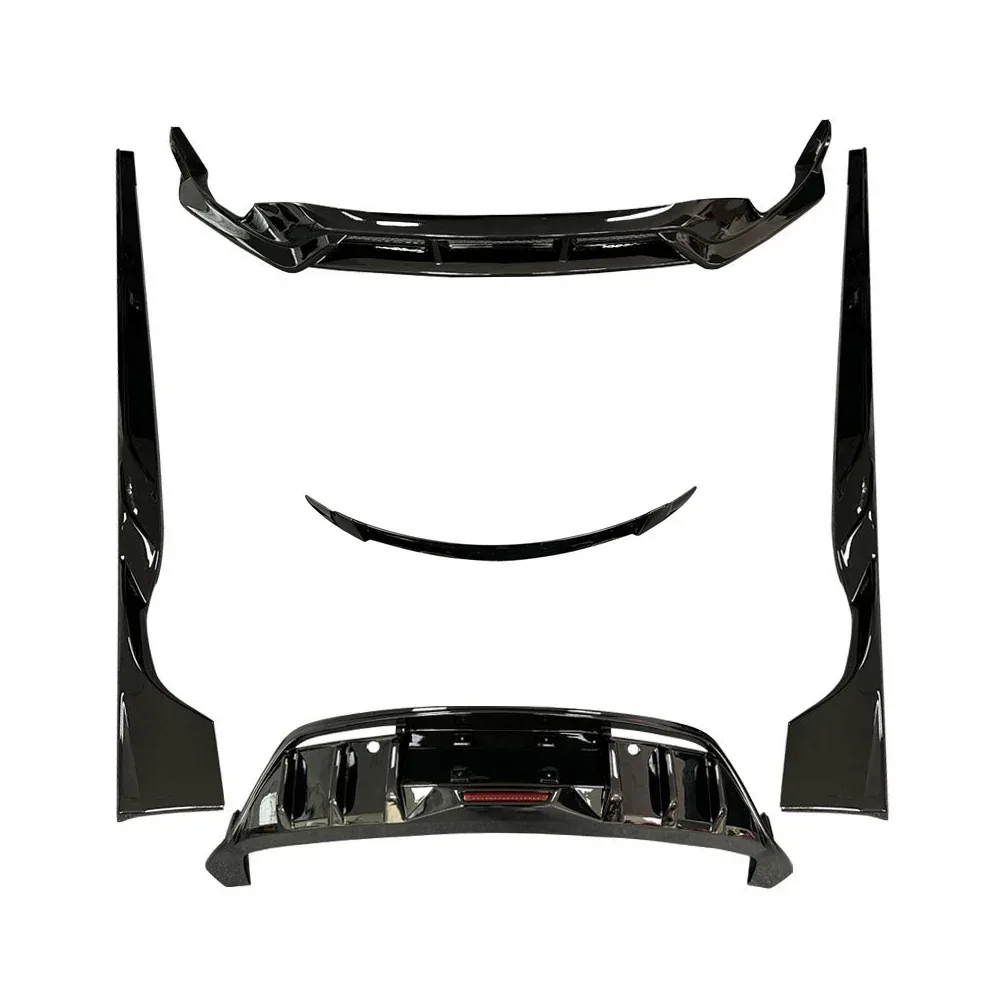
A car body kit is a set of exterior parts that bolt, clip or tape onto a car’s existing bodywork to change how it looks. A typical kit includes a front lip, side skirts, a rear diffuser and a rear spoiler. Most road-car body kits are mainly about styling. On a daily driver they add little or no real aerodynamic performance.
This guide explains what a body kit in a car actually is and which parts it usually includes. It also compares the main kit types, the materials they are made from and what drives the total cost. If you own a BYD, or you buy parts for customers who do, the last sections show how this applies to the Seal, Sealion 7, Dolphin, Seagull and other models we supply.
Short on time? The table below summarises the parts. The FAQ near the end answers the questions we hear most often from owners and trade buyers.
What is a car body kit, in simple terms?
Think of a body kit as an add-on shell for the lower edges and rear of the car. The factory bumpers, sills and boot lid stay in place. The kit parts attach to them, using clips, screws, automotive double-sided tape or a mix of all three, depending on the design. Some kits instead replace a complete bumper. Those are bigger jobs, and they are covered under kit types below.
People fit a body kit for three main reasons:
- Appearance. A lower, wider and sportier look, often with a contrasting gloss-black finish.
- Personalisation. Popular EVs such as the BYD Seal or Dolphin are everywhere, and a kit makes one stand out.
- Some protection. A front lip or side skirt takes scrapes from kerbs, ramps and speed bumps before the painted bumper does. Bear in mind that a lip also lowers your ground clearance.
Performance gains are the reason people mention least, and that is the honest order. Race cars use splitters, skirts and diffusers as a complete aero system with a flat floor. A bolt-on styling kit on a road car does not do that. We come back to this below.
The main parts of a body kit
Every kit is different, but most are built from the same five building blocks. Here is what each part is and what it realistically does.
| Part | Where it fits | What it does on a road car | Shop the category |
|---|---|---|---|
| Front lip / splitter | Under the front bumper | Makes the nose look lower. Takes first contact with kerbs and ramps | Front Bumpers & Lips |
| Side skirts | Along the sills, between the wheels | Visually lowers the side profile. Shields the sill from stone chips | Side Skirts |
| Rear diffuser | Under or within the rear bumper | Sporty rear styling. Any aero effect on a road car is modest | Rear Bumpers & Diffusers |
| Rear spoiler / roof spoiler | Boot lid or top of the tailgate | Finishes the rear line. Can tidy airflow off the back of the car | Spoilers & Wings |
| Replacement bumpers | Replace the factory front or rear bumper | A bigger visual change. Usually needs professional fitting | Body Kits |
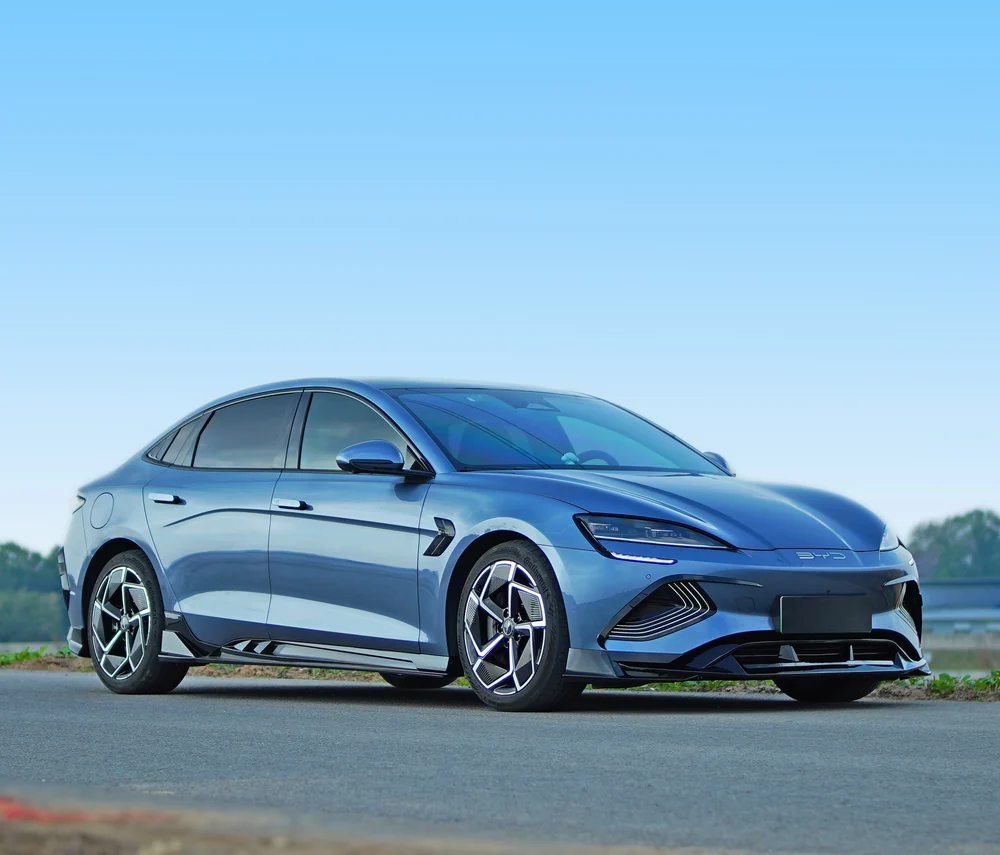
Front lip
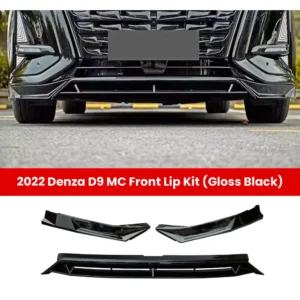
The front lip is the most popular single upgrade. It is a thin extension that runs along the bottom edge of the front bumper. It changes the whole stance of the car for a modest outlay. Many owners start here and add the rest of the kit later. We cover lips, splitters and air dams in more detail in a separate guide.
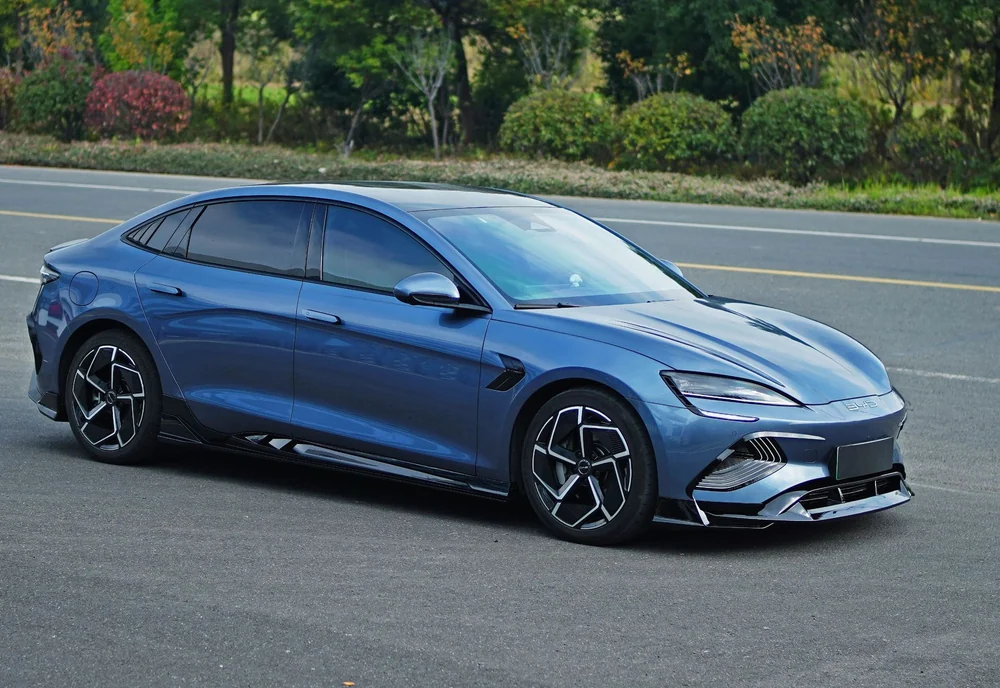
Side skirts
Side skirts bridge the gap between the front and rear wheels. Without them, a car with a front lip and rear diffuser can look unfinished from the side. They also take most of the stone chips and grit thrown up by the front wheels.
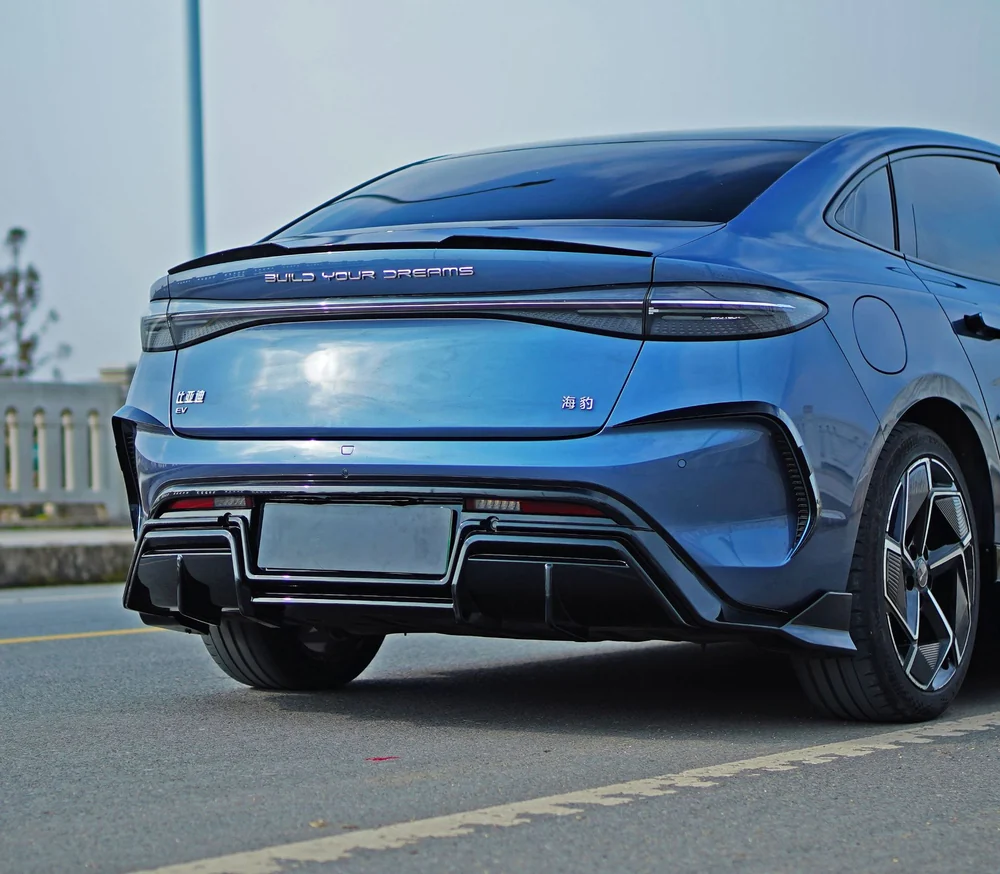
Rear diffuser
On race cars, a diffuser shapes the air leaving a flat underbody, and that creates real downforce. A road car’s underbody is not flat or sealed, so a bolt-on rear diffuser is mostly a styling piece. Some designs add fins or a centre brake-light look. Choose one for how it looks, not for lap times.
Rear spoiler
A rear spoiler is part of many full kits. It is also the part with the most variety in shape and mounting. If you are deciding on that part specifically, start with our guide to what a rear spoiler is and how to choose one and the overview of types of car spoilers.
Types of body kits
“Body kit” covers everything from one bolt-on lip to a car whose wheel arches have been cut and widened. Most kits fall into four broad groups.
1. Lip kits (add-on kits)
Lip kits are add-on pieces (lip, skirts, diffuser, sometimes a spoiler) that attach to the factory bumpers. They are the most common type for modern EVs. They are usually the least invasive and the easiest to remove later. Most of the kits in our BYD body kits range are this style.
2. Full bumper-replacement kits
With these, the original front and/or rear bumper is taken off and a new, differently shaped bumper goes on. The change is much bigger. The job usually needs professional fitting and, often, paint. Sensors, fog lights and number-plate mounts must all be transferred.
3. Wide body kits
Wide body kits use flared arches to make the car wider, normally with wider wheels and offsets to match. Some bolt over the factory arches, while others require cutting the bodywork. They are expensive, permanent in many cases, and in some countries they bring extra inspection or registration rules. We do not sell wide body kits, and they are rarely a sensible first step on a daily-driven EV.
4. OEM-style (OEM+) styling
OEM-style kits are subtle parts designed to look as if the factory could have fitted them, often in gloss black to match window trims. This is the most popular look on cars like the BYD Seal and Sealion 7. It suits owners who want an upgrade that still looks clean.
The trade-off is simple. The further you move down that list, from lip kit to wide body, the bigger the visual change, and the higher the cost, the fitting work and the paperwork. For most BYD owners, a lip kit or a few individual parts is the right place to start.
What are body kits made of?
The material decides how a part copes with knocks, cold weather and paint. These are the common options:
| Material | Strengths | Watch-outs |
|---|---|---|
| PP (polypropylene) | Flexible, so it copes with kerb knocks and cold weather. The same family of plastic used for many factory bumpers | Needs the right primer (adhesion promoter) if you paint it |
| ABS plastic | Rigid, holds crisp shapes, smooth finish, widely used for gloss-black add-on parts | Less forgiving than PP in a hard or cold impact |
| Fibreglass (FRP) | Low tooling cost, so it suits custom and low-volume shapes | Brittle. Usually needs fitting work and full paint prep |
| Carbon fibre | Light, stiff, premium look | Expensive, and damage is costly to repair. “Carbon-look” or carbon-texture parts are a printed or textured finish, not real carbon |
Always check the material stated on the specific listing. Some of our kits name it in the product title, for example the PP Exterior Full Body Kit for BYD Dolphin. If you are choosing a spoiler, our comparison of carbon fibre vs ABS vs fibreglass spoilers goes deeper on that part.
Do body kits improve performance?
On a road car, usually not in any way you would notice. Downforce rises with the square of speed, so at urban and motorway speeds the forces from bolt-on styling parts are small. Without a flat floor, a diffuser has little to work with. A large rear wing, by contrast, can add drag.
What a well-designed kit can do:
- tidy airflow slightly at the front and rear of the car
- protect painted bumpers and sills from chips
- make the car look the way you want, which is the reason most people buy one
What to watch on an EV:
- Parts that hang lower reduce ground clearance on ramps and speed bumps.
- Anything near a parking sensor, radar or camera must leave it clear and unobstructed.
- Heavy or draggy additions can nibble at range at higher speeds.
If a listing promises dramatic downforce or efficiency gains from a styling kit, treat the claim with caution.
How much does a body kit cost?
Prices vary too widely for one honest number. The total bill is built from five things:
- The parts. One front lip costs far less than a full kit with bumpers. Material and finish matter too (gloss black, matte, carbon-look or primed for paint).
- Paint. Pre-finished gloss-black parts can go straight on. Colour-matched parts need prep, primer and paint from a body shop.
- Installation. Tape-and-clip lips and skirts are often DIY-friendly. Replacement bumpers, sensor transfers and anything that needs drilling are better left to a professional.
- Shipping and import. Body kit parts are long and bulky, so volumetric weight, packaging, duties and taxes all add up. Check whether a quote is EXW, FOB, DAP or DDP (delivered with duties and taxes paid).
- Paperwork. In some countries, bigger changes need an inspection, a registration update or a note to your insurer.
Buying individual parts over time spreads the cost. A full matched kit, on the other hand, gives a consistent finish in one go.
Will a body kit fit my car?
Fitment is where most body kit problems start. Before you order, confirm:
- Exact model and market version. BYD sells some cars under different names in different countries. Always match the model named on the listing.
- Model year and facelift. Bumper shapes can change between versions. Only trust the years stated on the listing.
- Trim details. Sensors, fog lights, tow bars, number-plate position and factory aero pieces can all affect fit.
- Mounting method. Tape-on, clip-on, screw-on or bumper replacement. The listing should say.
If in doubt, send the seller your VIN or photos of the bumper before you buy. We check fitment this way for every quote.
Are body kits legal?
In most countries, bolt-on styling kits are legal as long as they are securely fixed and have no sharp or dangerous edges. They must also leave lights, number plates, sensors and the driver’s view unobstructed. Rules on bigger changes such as wide body conversions, structural modifications and registration updates differ by country. Insurers almost always want to be told. See our country guides, for example body kit rules in the UK and body kit rules in Australia.
Body kits for BYD models
BYD’s newer models have clean, smooth bodywork, which suits subtle gloss-black lip kits well. Below are the model pages where we group compatible exterior parts. Each listing states its own fitment.
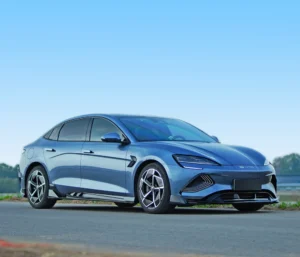
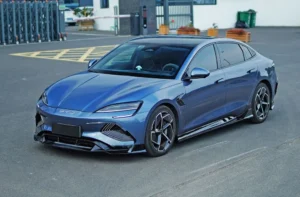
- BYD Seal: front lips, side skirts, rear diffusers, spoilers and a complete gloss black body kit.
- BYD Sealion 7: front lip, side skirts, rear diffuser, roof spoiler and a gloss black kit.
- BYD Dolphin: bumper kits, a PP full kit and several roof spoilers.
- BYD Song Plus DM-i / SEAL U DM-i: front lip, rear diffuser and spoilers.
- BYD Seagull and BYD Yuan Up / ATTO 2: model-specific kits. These are different cars, so their kits are not interchangeable.
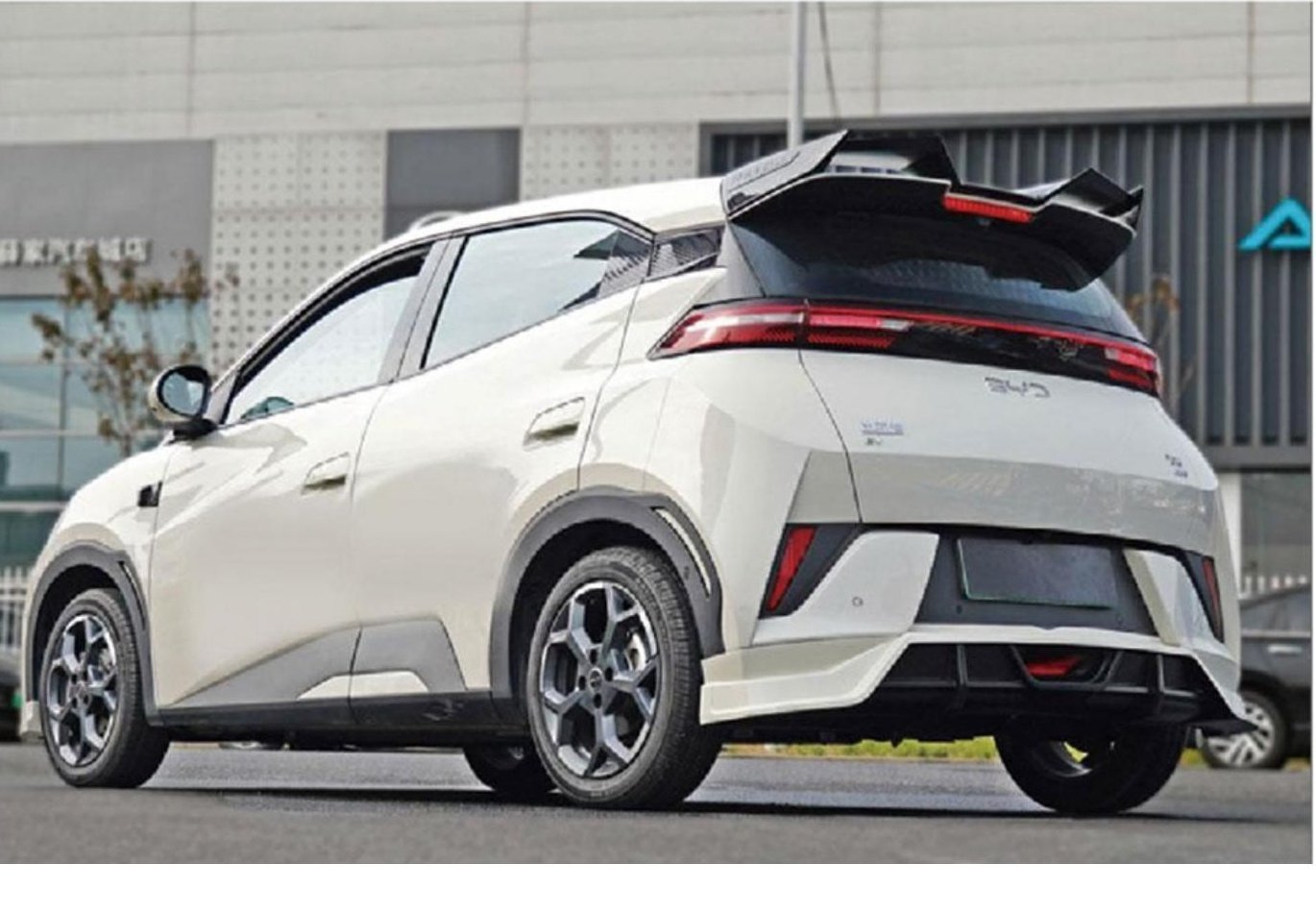
You can browse everything in one place in Body Kits or the wider BYD Exterior Accessories range.
Frequently Asked Questions
What is a body kit on a car?
It is a set of exterior add-on parts, usually a front lip, side skirts, a rear diffuser and a spoiler. They attach to the factory bodywork to change the car’s look. Some kits replace whole bumpers instead.
What is a full body kit?
A full body kit covers the front, sides and rear of the car in one matched set, rather than a single part. “Full” does not have to mean wide body. Most full kits for modern EVs are add-on lip kits.
Do body kits damage your car?
Not if they are fitted correctly. Clean surfaces, use the right tape or fixings, and don’t drill into areas you might regret later. Leave sensors and drainage clear, and check the ground clearance on steep ramps.
Can you remove a body kit later?
Tape-and-clip lip kits can usually be removed, although adhesive residue needs careful cleaning. Kits that need drilling or cutting, or that replace the bumper, are harder to reverse. Keep the original parts if you can.
Do I need to paint a body kit?
Not always. Many parts come pre-finished in gloss black or a textured finish. Parts sold primed or unfinished need professional paint to match your car.
Buying body kits for a shop, installer or online store?
Marvix is a one-stop BYD partner: a BYD vehicle-export background combined with exterior parts, accessories and export logistics. Wholesale orders are welcome, and we also accept 1-piece samples and retail orders, with tiered pricing as quantities grow. We ship large parts worldwide on EXW, FOB or DAP terms. Outside Brazil, Colombia and Mexico, DDP (door to door, duties and taxes paid) is also available for samples, retail orders and dropshipping. For Brazil, Colombia and Mexico, the buyer handles customs clearance and import taxes. Most listed parts are usually in stock (new ODM designs excepted), and orders under 100 sets ship directly with no production lead time. Mixed-SKU orders, dropshipping and OEM/ODM work are also available.
Send us the model, year, parts and quantity, or photos of the car, and we will confirm fitment and quote. See our BYD exterior accessories wholesale page for trade terms and supply details, request a quote, or browse the BYD body kits range.

 English
 Portuguese
 French
 Turkish
 Russian
 Arabic
 Spanish