

A front lip protector is a strip, guard or set of skid pads that takes the hit when the lowest edge of your front bumper or lip touches a kerb, ramp or speed bump. You need one if your car sits low or you have fitted a deeper lip and regularly scrape it. On a standard-height car with a slim lip, careful parking and clear protection film are usually enough.
Scrapes under the nose are one of the most common complaints after fitting a front lip or splitter. The damage is rarely serious, but repeated contact wears through the finish, loosens fixings and, eventually, cracks the part.
This guide explains the main types of lip protection, how splitter guards differ from simple edge strips, how to decide whether you need either, and how to fit them without creating new problems.
What is a front lip protector?
“Front lip protector” covers several different products. They all aim to stop the lowest point of the car from grinding on the ground, but they work in different places:
| Type | Where it goes | What it protects against | How it fits | Trade-offs |
|---|---|---|---|---|
| Rubber or flexible edge strip | Along the front edge of the lip or bumper | Kerb nudges and light scuffs when parking | Adhesive backing or a U-channel that clips over the edge | Visible from the front; cheap strips can fade or peel |
| Splitter guards (skid pads, sliders) | Underneath the lip or splitter | Scraping on ramps, speed bumps and steep driveways | Usually screwed or bolted through the lip; some stick on | Need a lip thick enough to hold fixings; hidden but add a few millimetres |
| Clear paint protection film (PPF) | On the painted bumper and the top of the lip | Stone chips and fine scratches | Applied wet, ideally by an installer | Does not stop impact damage from kerbs |
| Replaceable lip | The lip itself acts as the sacrificial part | Protects the bumper behind it | Replace the lip when it wears out | Costs more each time, but cheaper than a bumper |
If you are still choosing between a lip and a splitter, start with our guide What is a front lip? Front lip vs splitter vs air dam. Whichever you have, the advice below helps you protect it.
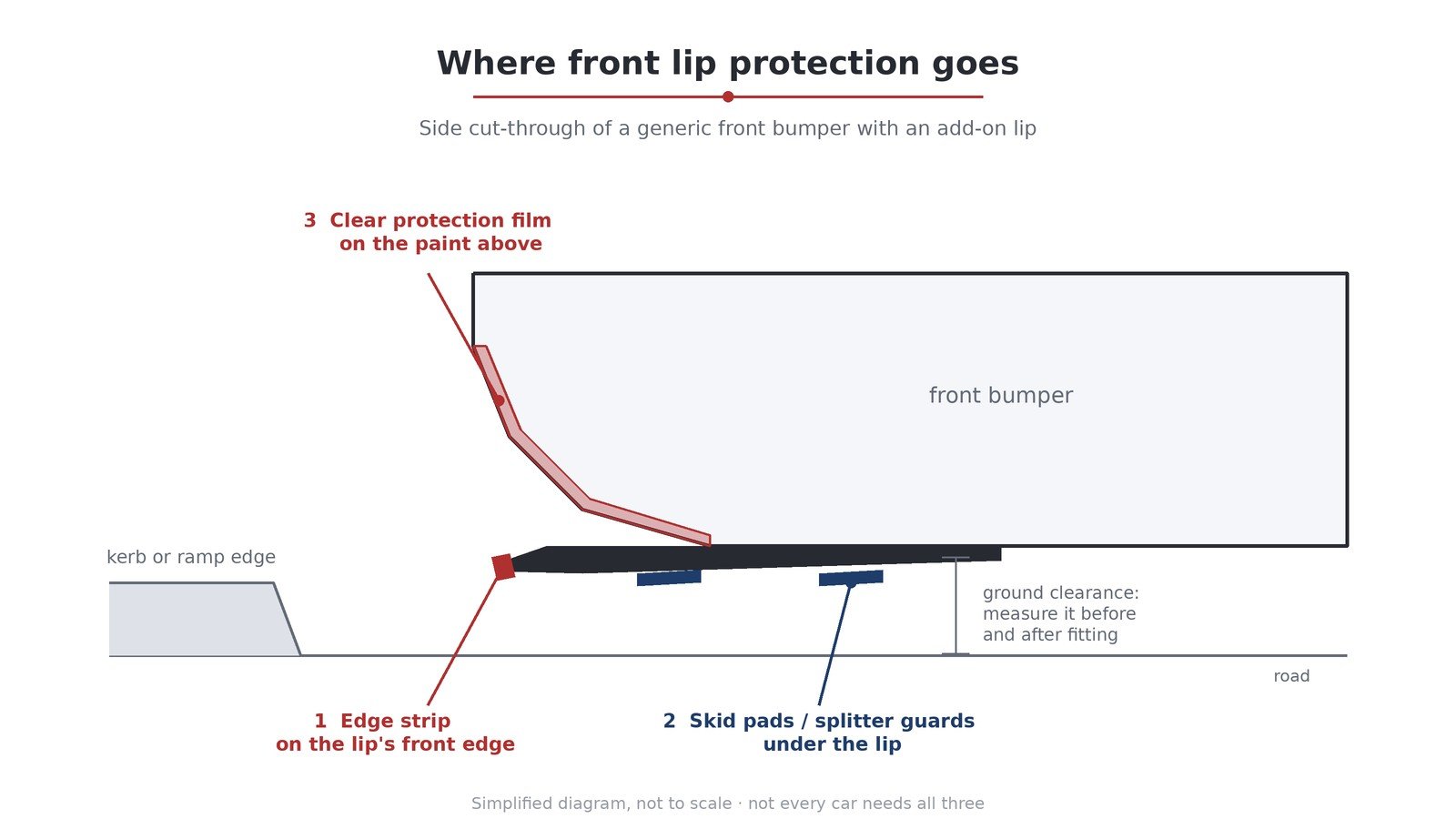
Do you need a front lip protector?
Answer these questions about your car and your daily routes:
- Do you hear scraping on ramps or speed bumps? If yes, splitter guards under the lip are worth fitting before the damage spreads.
- Do you park nose-first against kerbs or parking stops? An edge strip on the front face takes those knocks.
- Is your lip deep or wide? The further a part sticks out forward or down, the more it touches. Slim lips that follow the bumper line rarely need extra hardware.
- Is the car lowered or heavily loaded? Lower suspension and a full load of passengers and luggage both reduce clearance at the front.
- Do you drive mostly on motorways and open roads? Then stone chips are the bigger risk, and protection film helps more than a guard.
If none of these apply, you probably don’t need a dedicated protector. Keep an eye on the underside after the first few weeks and decide then.
Splitter guards vs lip protector strips
The two names are often mixed up in shops, but they solve different problems.
Splitter guards
Splitter guards (also sold as skid pads or splitter sliders) are small, hard-wearing pads fixed to the underside of the lip or splitter. When the car crests a ramp, the pads touch first and slide instead of the lip itself. They are the better choice when your problem is grinding from below. Because most are screwed through the lip, they suit thicker parts and are best fitted when the lip is new, before any cracks start.
Lip protector strips
Edge strips are flexible rubber or plastic profiles fitted along the front edge. They absorb small knocks from kerbs and parking stops and hide minor scuffs that are already there. They do little for scraping underneath. Choose a colour and profile that match the lip, because they sit on the most visible edge of the car.
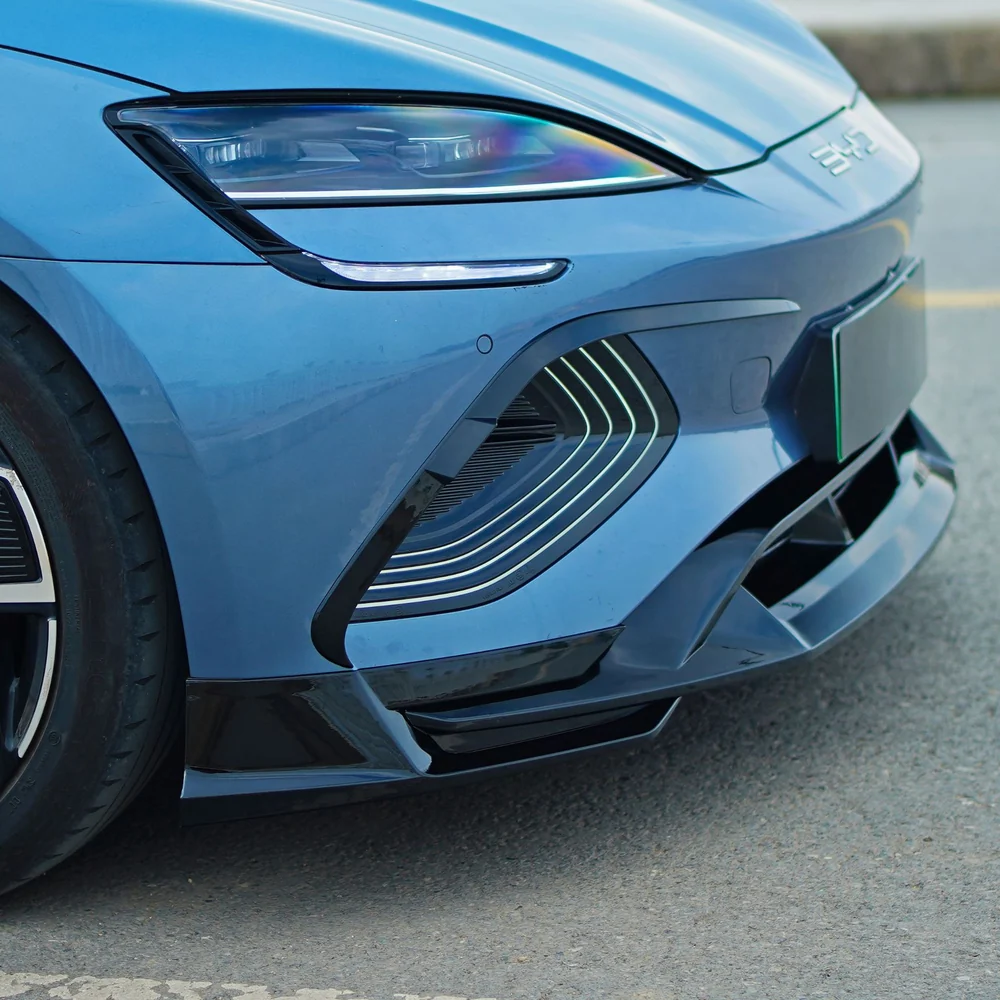
How to fit a front lip protector
Whatever type you choose, preparation decides how long it lasts:
- Clean and degrease the area. Wash off road grime, then wipe with isopropyl alcohol so the adhesive or film can bond.
- Dry-fit first. Hold the strip or pads in place and check that they sit evenly on both sides and don’t cover any parking sensor, camera or radar opening.
- Work in mild temperatures. Adhesive bonds best in a warm, dry place. In cold weather, warm the surface gently first.
- Fix from the centre outwards. Press adhesive strips firmly along their length; for screw-in guards, use the hardware supplied and don’t overtighten into plastic.
- Let it cure. Leave adhesive for about 24 hours before washing or driving through heavy rain.
- Check clearance. Measure from the lowest point to the ground before and after. Skid pads add a little depth, so check a steep ramp you use often.
Avoid drilling into the bumper of a newer car without checking how it affects your warranty, and don’t fit hard guards so they hang below the lip’s own lowest edge. For the main lip installation steps, see our guide on how to install a body kit.
For more on how body kits affect parking sensors and ADAS cameras, see our dedicated guide.
Protecting a front lip on a BYD
Many BYD models carry parking sensors and driver-assist sensors at the front, so placement matters: keep every protector clear of sensor openings and the lower grille area, and re-check the warning displays after fitting.
The lip material also changes how it copes with contact. Most Marvix exterior styling parts are ABS, with PP on selected lips and kits. PP flexes more, so it tends to bend and recover after a light scrape. If you expect occasional contact, a PP part such as the PP front bumper lip for the BYD SEAL 7 DM-i may suit you better. ABS is stiffer and holds a crisp edge, so it benefits more from splitter guards on cars that scrape regularly.
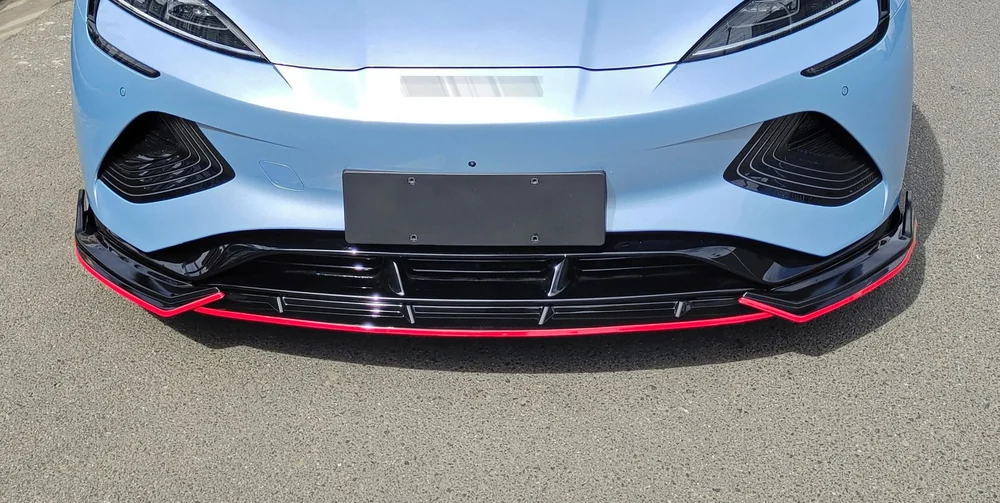
How the lip is fixed matters too. A no-drill front bumper lip for the BYD SEAL keeps the original bumper free of holes, so if you later add skid pads, fix them to the lip rather than the bumper. If a lip is badly worn, replacing it is far cheaper than repairing the bumper behind it.
To compare the lips listed for each model, see BYD front bumper lips, or browse by car on BYD Seal accessories and BYD Sealion 7 accessories.
Driving and parking habits that save your lip
Protection helps, but how you drive over obstacles matters just as much:
- Take steep ramps at an angle. Approaching diagonally lifts one front corner at a time and gives the lip more room.
- Stop short of kerbs and parking stops. The lip often reaches further forward than the tyres, so it touches first.
- Slow right down for speed bumps. The nose dips under braking, so brake before the bump, not on it.
- Reverse into tight spaces where the front would otherwise meet a high kerb.
- Check the underside regularly. Loose fixings or a cracked edge are easier to fix early.
Frequently Asked Questions
What is the difference between a front lip protector and a splitter guard?
A lip protector strip usually fits along the front edge and absorbs kerb knocks. A splitter guard is a pad fixed underneath the lip or splitter so it slides over ramps and speed bumps instead of the lip scraping.
Do front lip protectors work?
Yes, for the damage they are designed for. Skid pads reduce scraping from below, and edge strips stop small kerb scuffs. Neither will prevent damage from hitting a high kerb at speed.
Will a lip protector affect my parking sensors?
Not if it stays clear of the sensor openings and camera views. Dry-fit it first and check the sensor and driver-assist displays after fitting.
Can I fit splitter guards to a plastic lip?
Usually, if the lip is thick and solid enough to hold the screws. Thin or flexible lips are better suited to stick-on pads or an edge strip.
Is clear protection film enough on its own?
It is enough for stone chips and light scratches on the paint. It won’t stop the lowest edge from scraping, so add a guard if you hear contact from below.
Need a front lip or replacement for your BYD?
Marvix is a one-stop BYD partner, combining a BYD vehicle-export background with parts, accessories and export logistics. 1-piece samples and retail orders are accepted, pricing is tiered for larger quantities, and listed parts are usually in stock, with orders under 100 sets shipped directly. We also support mixed-SKU orders, dropshipping and fitment checks from your model, year, VIN or photos.
We ship large parts to all countries on EXW, FOB or DAP terms, plus DDP for samples, retail orders and dropshipping. For Brazil, Colombia and Mexico the terms are EXW, FOB or DAP only, and the buyer handles customs clearance and taxes. See our shipping policy for BYD accessories, review BYD exterior accessories wholesale terms, or request a quote.

 English
 Portuguese
 French
 Turkish
 Russian
 Arabic
 Spanish