

Is a rear spoiler worth it? It is if you want the car to look finished, if you value a small improvement in high-speed stability, and if you choose a part that suits the body and fits properly. It is not worth it if you are buying it for acceleration, top speed or fuel (or range) savings. Those expectations are where the disappointment comes from.
You like the look. You have also read that a spoiler adds grip, and somewhere else that it does nothing but add drag. Both claims are floating around, the two of them cannot both be the whole truth, and the decision is stuck.
Getting this wrong is not expensive in the catastrophic sense, but it is expensive in the ordinary one. You spend a few hundred dollars, put holes in a boot lid, gain a part that whistles at motorway speed and blocks a little of the view out of the back window, and then notice nothing different about how the car drives. That is a poor outcome for the money, and it is entirely avoidable.
If you are still choosing a shape, read our guides to the types of car spoilers and spoiler vs wing first. This article is about whether the part earns its place on your car.

Is a rear spoiler worth it? The short answer
On a road car, yes for styling and stability, no for performance.
The aerodynamic effect is real. A rear spoiler disrupts the airflow leaving the roof and rear glass so the car generates less lift at the back, which keeps the rear tyres loaded and makes the car feel steadier at speed. What it will not do is add power, improve acceleration or make the car quicker in a straight line. It is a device that manages air, and air only becomes a major force when the car is moving quickly.
So the honest test is what you are buying it for. If the answer is "the back of my car looks unfinished and I want a subtle, factory-looking part", a spoiler delivers exactly that for a modest sum. If the answer is "I want my car to be faster", the money belongs somewhere else entirely.
Is a rear spoiler worth it for speed?
This is the question that produces the most misleading marketing, so it is worth taking apart properly.
Does a spoiler make a car faster? Not in the sense most buyers mean. It does not add power, and on a typical road car it does not raise top speed — a raised wing actually adds drag, which works against top speed. What it can do is make the car faster through corners by increasing the load on the rear tyres, and that only pays off on a car that is being driven hard enough and is set up well enough to use it.
Does a spoiler do anything at road speeds? It reduces lift, which you can feel as stability rather than speed. How much depends on the design and the car, and there is no single speed at which every spoiler "switches on". Aerodynamic forces grow with the square of speed, so doubling your speed roughly quadruples the effect. Different sources put the point where a spoiler starts to matter anywhere between about 60 mph and considerably higher, which tells you the truth: it varies by design, and no honest answer covers every part.
Does a universal spoiler work? Often less than its owner hopes. A part that was not designed around your car’s shape can disturb airflow rather than manage it, and one that is poorly mounted can make the car feel less stable at speed, not more. A factory-designed or vehicle-specific part has a much better chance of doing something useful, because someone tested it against that body.
The practical conclusion: treat a spoiler as a stability and appearance part. Expecting straight-line performance from it leads to disappointment, and on a low-powered daily driver a large wing can make the car slightly slower, noisier and thirstier for no real benefit.
Does a spoiler hurt fuel economy?
Usually, by a small amount — and this is the part buyers most often get backwards.
Adding any external part to a car disturbs the flow of air, and disturbance costs energy. A low lip or a slim roof spoiler adds very little. A tall wing with a large surface area adds noticeably more, and at motorway speeds you may see a small penalty. What a spoiler will not do on a normal car is improve your fuel economy in any way you would notice at the pump.
The same logic applies to electric and plug-in hybrid cars, only the cost shows up as range rather than fuel. A low, well-fitted spoiler costs very little; a tall wing costs more at motorway speed, which is when an EV is already using the most energy.
There is one genuine exception worth knowing, and it works on some hatchbacks, estates and SUVs: a well-shaped rear spoiler can manage the airflow over the rear glass so the back window collects less road spray and grime. That is not a fuel saving, but it is a real everyday benefit that has nothing to do with performance claims.
So if someone tells you a spoiler will save you money on fuel, the honest reply is that the effect runs the other way for most add-on parts.
The trade-offs nobody puts in the listing
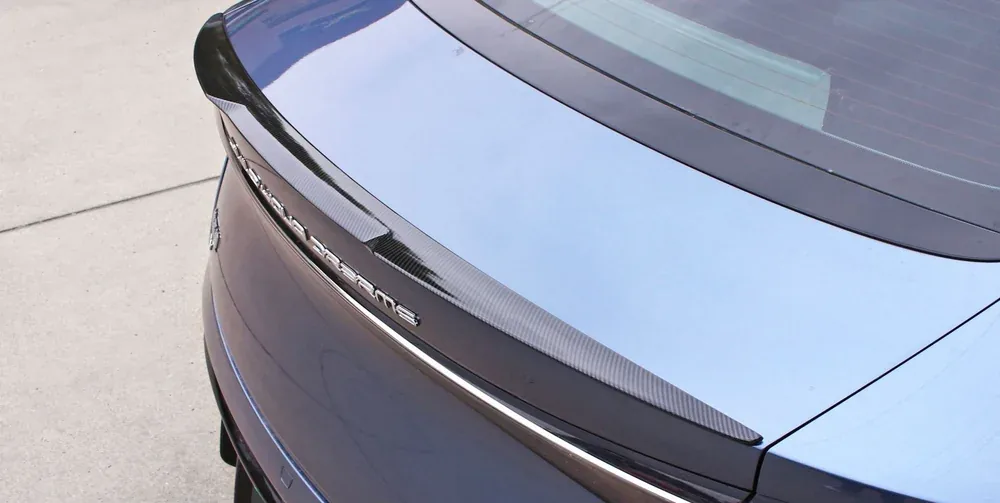
Cost is the first one. A finished part plus installation is usually a few hundred dollars; paint, drilling and hole repair can push it well past that, and a removed factory spoiler can leave you paying for bodywork in a panel you cannot easily replace.
Then there are the everyday effects:
- Rear visibility. A tall part sits in the middle of your view out of the mirror. Check that before you commit to a height, not after.
- Tailgate weight and travel. On a hatchback or SUV, a heavier spoiler changes how the tailgate feels, and a powered one with tired struts will struggle. The part also has to clear the roof line and the wiper through full travel.
- Bodywork you cannot undo. Taped parts are reversible. Drilled parts leave holes, and the holes are the commitment, not the spoiler.
- Noise. Some designs generate wind noise at speed that the rest of the car did not have.
- Maintenance. Real carbon and painted finishes need care (see carbon fiber vs ABS vs fiberglass spoilers), and the joint between part and panel is a place where water can sit if it was never sealed properly.
- Regulations, locally. Outside dimensions rarely change with a spoiler, but rules on external fittings and modifications vary by country and state, so check what applies where you drive. Our guides for the UK and Australia are a starting point.
- Resale. A subtle, factory-style part rarely hurts. A large wing on a standard car narrows your buyer pool, and a poorly fitted one raises questions about what else was done.
None of those are reasons not to fit a spoiler. They are reasons to fit a modest one that suits the car, rather than the largest part the boot will carry.
What a spoiler is genuinely good at
It is worth being fair to the part, because the case for it is real even when the performance claims are not.
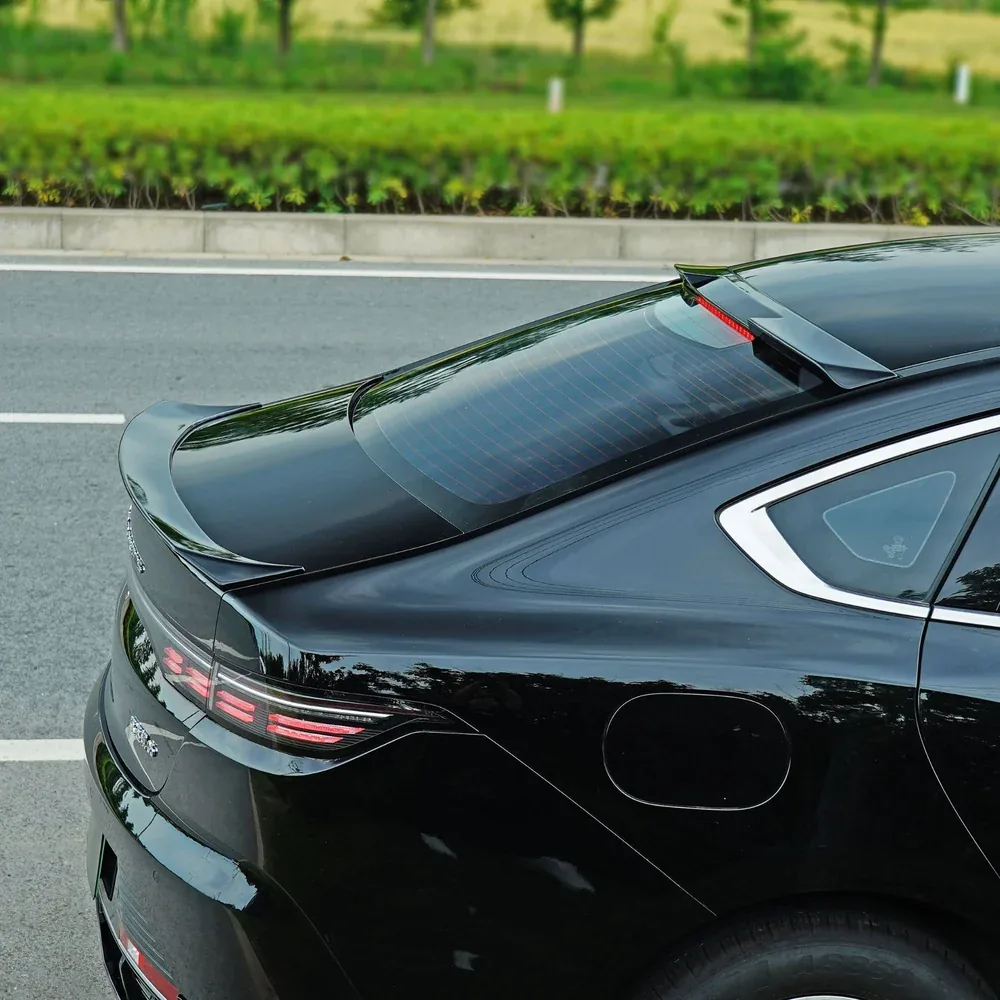
It finishes the rear of the car. Sedans and fastbacks often look truncated without a lip or blade, and a roof or mid spoiler does the same job for a tall tailgate. This is the single biggest reason buyers fit one, and there is nothing wrong with it.
It reduces rear lift. That translates into a car that feels planted in fast lane changes and long bends. On a well-designed vehicle-specific part it is a genuine, if modest, improvement.
It can keep the rear glass cleaner. Especially on hatchbacks and SUVs, where the airflow over the tailgate decides how much spray settles on the glass.
It signals intent. On a build that already has skirts, a diffuser and wheels, the rear of the car needs something to balance it. A spoiler is usually that piece.
What it cannot do is turn a standard car into a track car. Suspension, tyres and brakes come first, and no aerodynamic add-on makes up for worn dampers.
When it is worth it, and when it is not
| Worth it when | Not worth it when |
|---|---|
| You want a finished rear profile in a factory-style design | You are expecting quicker acceleration or a higher top speed |
| You drive a lot of motorway miles and value high-speed stability | The car rarely goes above town speeds |
| The part is designed for your exact model and can reuse factory mounting | The part is universal and needs brackets, drilling and guesswork |
| You choose a part that arrives in a ready-to-fit finish | You buy a cheap unpainted part and underestimate paint and labour |
| The car is part of a wider build with matching skirts and diffusers | The rear of the car is otherwise standard and a large wing would look bolted on |
| You are happy that the main gain is appearance | You are buying it to save fuel, which it will not do |
Making it worth it: how to buy well
Three decisions separate a spoiler that pleases its owner for years from one that ends up for sale.
Fit the design to the body. A fastback sedan takes a lip, blade or shallow deck-lid part. A hatchback or SUV takes a roof or roof-end design at the top of the tailgate. Match the mounting surface first and the look follows.
Choose the finish before the part. A spoiler supplied in a ready-to-fit finish such as gloss black needs no paint budget. That is often what makes the difference between a successful project and one that stalls in the garage.
Buy fitment, not guesses. A part designed for your model can reuse the factory mounting, keeps the boot lid working, and avoids the holes that make the job permanent.
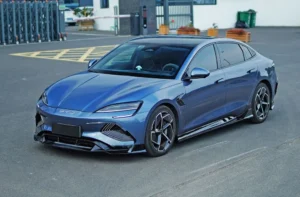
If you drive a BYD, the Spoilers & Wings range lists deck-lid, roof and mid designs for models including the Seal, Dolphin, Sealion 7, Seal U DM-i, King and SEAL 5 DM-i. Finish options vary by listing, so check the photos. For a fastback like the Seal, the Rear Spoiler Wing for BYD SEAL is a low deck-lid part that adds the line without changing the character of the car.

Frequently Asked Questions
Do spoilers actually do anything?
Yes, but modestly on a road car. A rear spoiler reduces lift at the back, which improves stability at speed. A wing generates downforce and adds drag. Neither makes a meaningful difference to acceleration, and on a street car the appearance is usually the biggest change.
Does a spoiler make your car faster?
It can make a car faster through corners at high speed by increasing grip. It does not add power and it usually does not raise top speed — a large wing adds drag that costs straight-line performance. On a low-powered daily driver, a big wing can make the car slower overall.
Do spoilers make cars faster or slower in a straight line?
Slower, if anything. Drag rises with speed, and any external part that disturbs airflow adds to it. A low lip costs almost nothing; a large wing can be noticeable at motorway speeds.
Does a spoiler improve fuel economy?
Generally no. Most add-on spoilers add a small amount of drag, which works against economy. A spoiler designed as part of a car’s factory aero package can help overall efficiency, but that is a property of the whole vehicle, not of a part bolted onto a car developed without one.
What are the disadvantages of a spoiler?
Cost, the holes if it is drilled, reduced rear visibility with tall designs, extra weight on a tailgate, possible wind noise, and a small fuel penalty at speed. On a standard car a large wing can also hurt resale by narrowing who wants to buy it.
At what speed does a spoiler start working?
There is no single number, and anyone who gives you one is describing a specific part on a specific car. Aerodynamic forces grow with the square of speed, so the effect is small at town speeds and grows quickly on the motorway. Published estimates of where it becomes noticeable range widely, which is exactly why you should treat it as a stability aid rather than a performance upgrade.
Not sure it is worth it for your car? Ask us first
Send us your model, model year and market version, plus how you use the car, and we will tell you honestly what a spoiler would and would not do for it, and which of our listings suit the body. We would rather talk you out of a part that does not fit your plan than sell you one you regret.
Ordering several units for a workshop or store? MOQ is 1 piece, larger quantities move you down a tiered price list with no cap, and we can quote FOB, EXW, or DDP/DAP for some countries. Stocked parts (anything that is not a new ODM design) ship directly on orders under 100 sets, with no production lead time. Start with the Spoilers & Wings range and then request a quote.
References
- Spoiler (car) — Wikipedia — https://en.wikipedia.org/wiki/Spoiler_(car)
- Car Spoiler Guide: Do They Actually Work or Are They Just For Looks? — XeroDrive — https://xerodrive.com/featured/car-spoiler-guide/
- The Spoiler Myth: Why They’re (Mostly) Useless on Street Cars — Madras Mechanic — https://www.madrasmechanic.com/post/the-spoiler-myth-why-they-re-mostly-useless-on-street-cars
- Does A Spoiler Make A Car Faster? — Vehicle Freak — https://vehiclefreak.com/does-a-spoiler-make-a-car-faster/
- Do Spoilers Actually Make Cars Go Faster? — Forbes — https://www.forbes.com/sites/quora/2016/09/30/do-spoilers-actually-make-cars-go-faster/
- How Much Does Spoiler Installation Cost? — The Pricer — https://www.thepricer.org/spoiler-installation-cost/

 English
 Portuguese
 French
 Turkish
 Russian
 Arabic
 Spanish