

You have chosen the kit — a front bumper, side skirts, a rear diffuser, a wing. Then you read that almost every rebuild in Norway needs approval from Statens vegvesen, and the whole idea starts to feel like a government project rather than a weekend upgrade.
The worry is understandable, because Norway really does have its own system. It is not in the EU, it runs its own vehicle administration, and it treats a change to a registered vehicle as something that has to be approved and written into the registration card. What that system is not is automatic rejection. A well-made bolt-on styling kit is the easy end of the scale, and there is a defined path for it.
Here is the straight answer: a body kit is legal in Norway, and for most styling kits the route is short. You do the work or have it done, you book a vehicle inspection in the rebuild category, you bring the documentation for the parts, and if everything is in order the change is approved and noted in your vognkort. Only larger rebuilds need an application before you start.
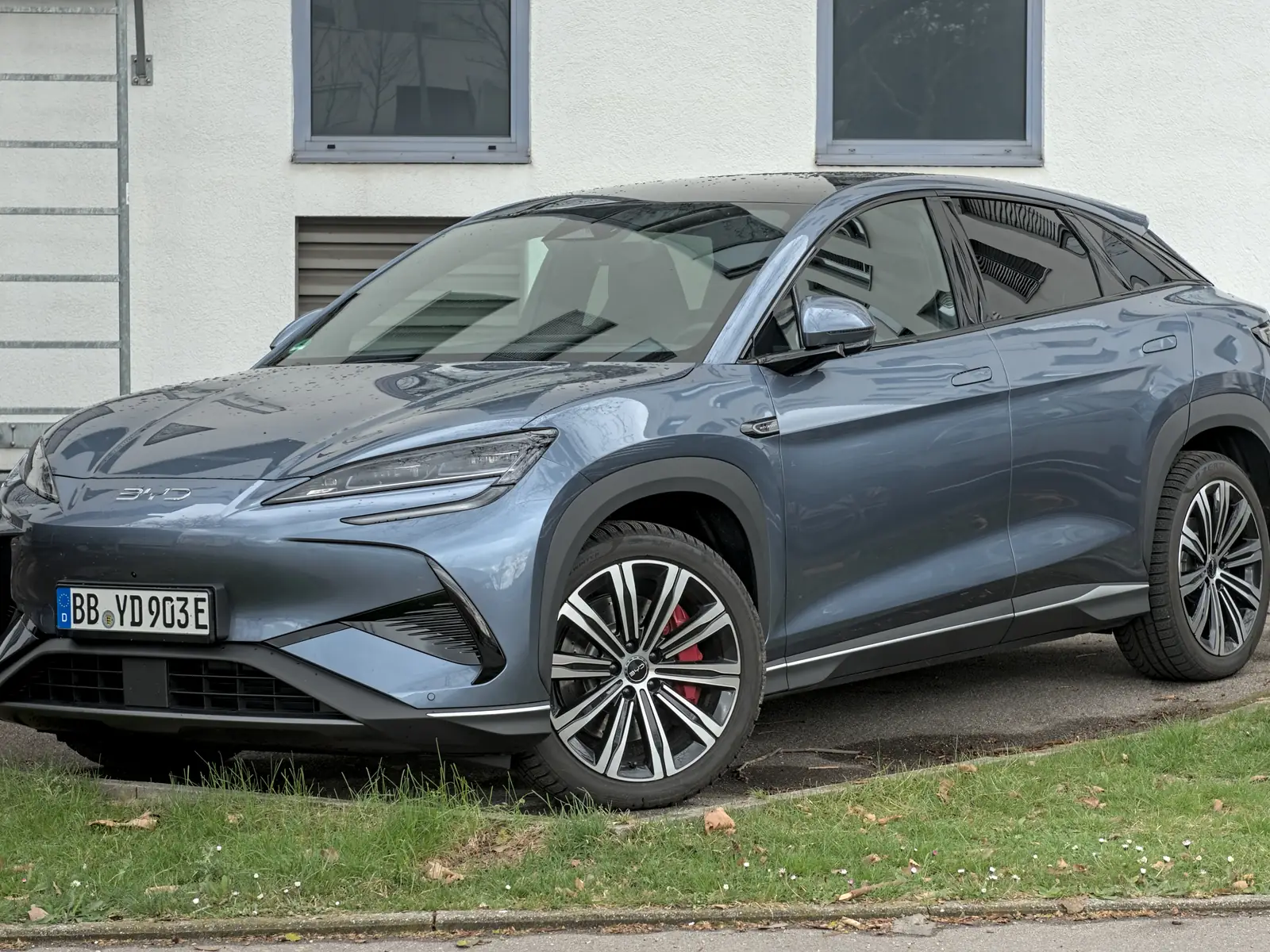
Photo: Alexander Migl / Wikimedia Commons (CC BY-SA 4.0)
The short answer: body kit legal in Norway means approval plus a note in the vognkort
Norway does not ban aftermarket exterior parts. It requires changes to be approved so that the vehicle still matches its paperwork — and the paperwork in question is the vognkort, the registration card that lists the car’s technical data.
Three things are worth knowing from the start:
- Statens vegvesen handles the approval of rebuilds. Its own guidance is blunt: "almost all rebuilds require new approval."
- The EU-kontroll is the separate periodic inspection, carried out at an approved workshop, that keeps the car legal on the road.
- A rebuild inspection is different from the EU-kontroll. The rebuild check is where the change itself is approved; the EU-kontroll is where the car is checked again, every two years, once the change is already part of its record.
| What you fit | Position in Norway |
|---|---|
| Interior or purely decorative changes that do not affect the vehicle’s data | Normally outside the approval process |
| A bolt-on lip, skirt, diffuser or spoiler that changes no recorded data | Rebuild inspection in the rebuild category, then a note in the vognkort |
| A kit that changes the car’s dimensions or other technical data | Same route — approval and an updated vognkort |
| A frontal protection system (bull bar) | Must meet the specific approval rules, including documentation |
| Anything that alters load-bearing structure, or turns the car into a different type of vehicle | Larger rebuild — apply to Statens vegvesen before you start |
Minor rebuild or major rebuild: the two paths
This is the distinction that saves the most time, and Statens vegvesen sets it out clearly.
Minor rebuilds can be done without applying in advance. You check that everything is in order, carry out the work, and then book a kjøretøykontroll in one of the rebuild categories. Statens vegvesen’s own examples of this category include converting a van to a passenger car, changing the number of seats, changing permitted weights, fitting a lowering kit with documentation from a technical body such as TÜV or DEKRA, changing wheels or tires when that requires approval, fitting a frontal protection system, and chip tuning with technical documentation.
Larger rebuilds have to be applied for first. That is not bureaucracy for its own sake: Statens vegvesen gives guidance on whether the technical solution you have chosen is allowed, so you do not spend money on a build that cannot be approved — or go so far that the car is regarded as newly built.
A styling body kit that bolts to the original mounting points belongs to the first group. A project that cuts into the shell, changes the vehicle’s structure, or replaces the body belongs to the second.
Photo: Sicnag / Wikimedia Commons (CC BY 2.0)
What you have to check before and after the work
Statens vegvesen’s process for a rebuild inspection is short and specific, and it is worth following in order.
- Check the vehicle’s identity marking. The manufacturer’s plate (VIN tag), the stamped chassis number and the visible VIN in the windscreen all have to be in order, and the rebuild must not affect them. If a modification touches or hides the identity marking, you have created a much bigger problem than a bumper.
- Check whether the rebuild is taxable. Some rebuilds have to be reported to Skatteetaten, which provides a rebuild calculator for exactly this question. Do this before you order parts, not after.
- Do the work. A workshop that fits the kit properly and keeps a record of what was fitted makes the next step simple.
- Book the vehicle inspection in the right rebuild category. Booking the appointment counts as your application for approval, which is why you are responsible for giving correct information about yourself and the vehicle.
- Bring the documentation. This is the appointment where paperwork decides the outcome as much as the car does.
If everything is in order, the rebuild is approved and the extra equipment is noted in the vognkort — and you are driving legally. If something is not in order, you get a kontrollseddel listing the defects, with a deadline to fix them, and then you book a new appointment.
Frontal protection systems: where Norway has extra rules
If your plans include a bull bar or a light bar rather than a styling kit, Norway has a specific regime, and it is stricter than most countries.
Bull bars and other frontal protection systems for passenger cars and vans must be approved, and the requirements apply both to equipment fitted at the factory and to equipment retrofitted later. Using the vehicle with equipment that does not meet the requirements is illegal.
The rules cover bull bars, front bars with or without mounted lights, and other systems mounted at the front of the vehicle. There is a narrow exemption: structures intended only to protect the lamps, weighing no more than 0.5 kg, are outside the requirement.
Two details decide how much work the approval becomes:
- Documentation. You must be able to present documentation that includes the vehicle identification number or the brand and type, and it must come from the manufacturer or from a competent, independent laboratory.
- The EU type-approval mark. If the equipment carries an EU type-approval mark, the vehicle does not need to be approved at a traffic station. The documentation still has to be kept with the vehicle’s vognkort, and the mark must be impossible to remove and easy to read.
Without that mark, the vehicle has to be presented for approval at a traffic station, and the extra equipment is noted in the vognkort.
Who does what: you, the seller, the workshop and Statens vegvesen
First-time buyers get stuck here because nobody explains the division of labor. Here it is in one table.
| Who | What they handle |
|---|---|
| You | Decide on the parts, report the rebuild if it is taxable, book the inspection and bring the car |
| The seller | Accurate product information: the exact part, the model and year it fits, the material, the weight, the mounting points, photos of the fixings and an invoice with the correct HS code |
| The workshop | Fits the kit correctly with proper fixings and a neat finish, and keeps a record of what was fitted |
| Statens vegvesen | Approves the rebuild and records the extra equipment in the vognkort |
What you want from the seller, above all, is accurate information about the part and the car it fits: the correct part number for your model year, the material and weight, how it mounts, and photos of the fixing points. That is what your workshop works from and what the approval process is built on — and it is what we send with every kit we ship.
If you are unsure whether your project counts as a minor or a major rebuild, ask Statens vegvesen before you buy. For a larger rebuild, that conversation is part of the required process anyway.
Will the kit stick out, drop your clearance, or hide your plate?
Norway’s approval system does not measure styling parts against a fixed millimeter limit. What it does is check that the vehicle is safe, that it matches its approval, and that it still works as a car.
Photo: Joe Ross / Wikimedia Commons (CC BY-SA 2.0)
The EU-kontroll gives a useful checklist for what a modification must not disturb. It has a traffic safety part and an environmental part: lights, vision, wheels, seat belts and brakes on one side; noise and emissions on the other. If you drive an electric BYD, remember that the charging cable is checked too, so bring it.
Three practical checks follow from that:
- The plate and the lights must stay fully visible. A diffuser that swallows the registration plate, or a wing that hides the third brake light, is a problem on the road long before your next inspection date.
- Ground clearance is a daily question in Norway. A lip that drops the front end below speed-bump height will pass the paperwork and still make winter miserable. Norwegian roads, ferries and parking garages are not forgiving.
- Nothing may touch the wheels or suspension. A body kit should keep clear through the full range of steering lock and suspension travel — a point that matters more on rough winter roads.
Fitment: model year, drilling, and going back to stock
A body kit is not a universal product, and BYD’s line-up proves it. A Seal, an Atto 3, a Dolphin, a Sealion 7 and a Shark 6 share almost nothing at the mounting level, and facelifted versions of the same model can change the bumper shape, the sensor layout and the tow-hook cover.
Before you buy, give the seller the model, model year, trim, market version and VIN. A supplier that will not ask for the VIN is guessing. The BYD model lineup is a useful starting point if you are still confirming which generation you own. When we quote a BYD kit, the VIN is the first thing we ask for, because it is the only reliable way to confirm the bumper revision, sensor openings and tow-hook cover before the part is made.
Three fitment questions matter more than any photo:
- Sensor and camera cutouts. If the original bumper carries ultrasonic sensors, a front radar or washer jets, the new one must provide the right openings and brackets. Cutting them by hand is possible, but it is the most common source of problems — which is why we mold every kit around the openings on your car.
- How it is fixed. Use the car’s original mounting points, with screw holes molded to match the OEM positions. A kit that bolts on the way the factory bumper bolts on is easier to approve and easier to explain at an inspection.
- Whether you can go back. With a bolt-on kit, returning to standard means unbolting the parts and refitting the originals. Keep the factory parts, and the round trip stays simple.
If you also drive a UK-registered car, the rules are completely different: our UK body kit legality guide explains why a bolt-on kit there can be legal with no government paperwork at all.
Radar, cameras, ADAS and the tailgate
Modern BYDs are sensor platforms. Front radar modules, ultrasonic park sensors, surround-view cameras, rain sensors and lane-keeping cameras are spread across the bumper, grille and windscreen area — and since 2022, EU rules have required a long list of driver assistance systems on new vehicles under Regulation (EU) 2019/2144, which Norway applies through the EEA agreement.
Replacing a bumper that carries those sensors is a different job from adding a cosmetic lip, because a sensor that is moved, tilted or shielded no longer sees what it is supposed to see. In practice: the new bumper has to hold the radar and sensor modules at the same height, angle and depth as the original; the workshop should run the calibration routine the manufacturer specifies, because a bumper replacement on a car with front radar or a windscreen camera is not finished when the last bolt is tight; and power tailgates, soft-close doors and sensor-triggered features should be tested through a full cycle before the car leaves the workshop.
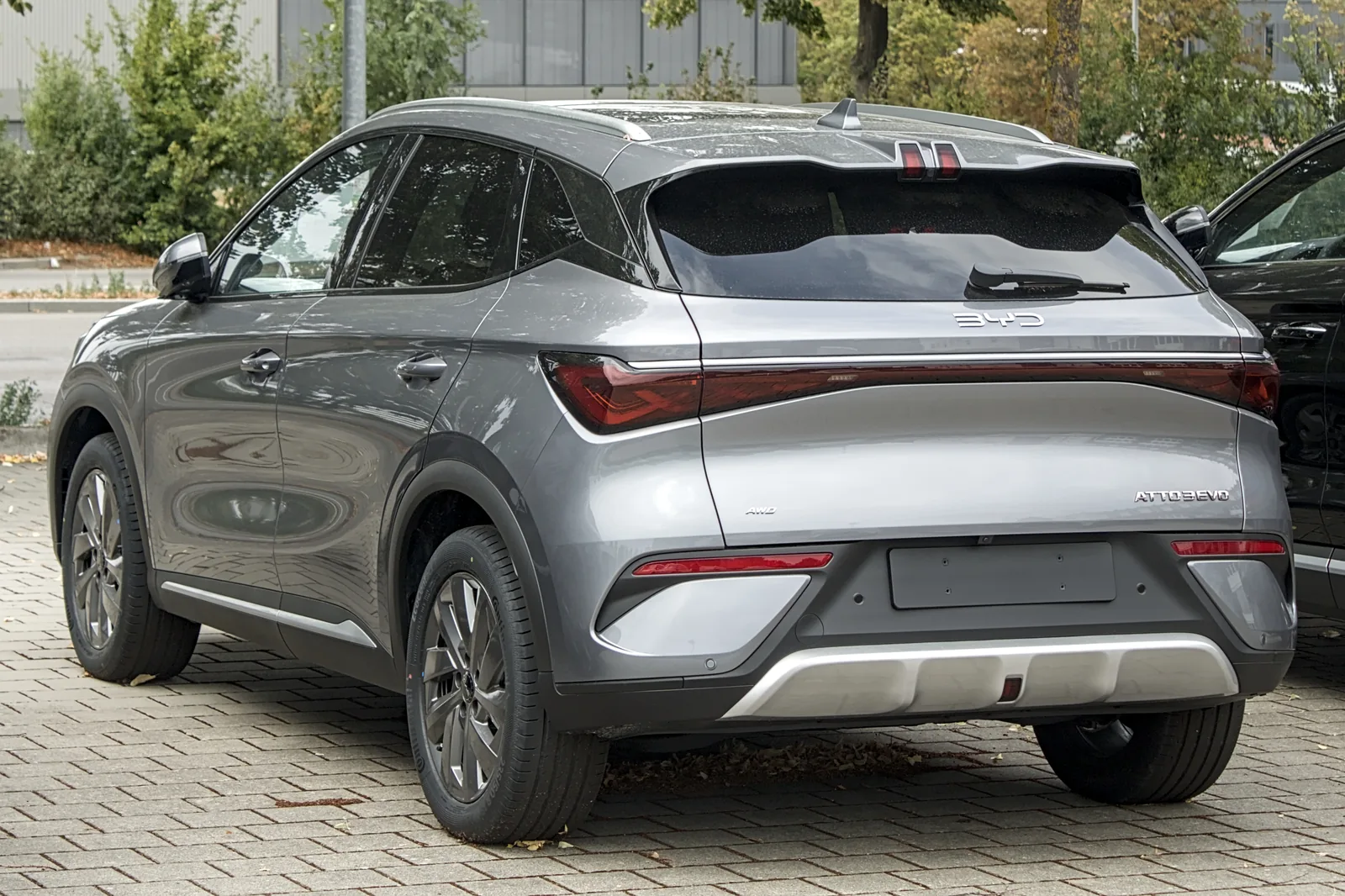
Photo: Alexander Migl / Wikimedia Commons (CC BY-SA 4.0)
This is where the kit itself decides the outcome. A bumper that keeps every factory sensor opening, washer jet and bracket in its original position bolts on and calibrates normally. One that reshapes the front end around a photo rather than a VIN turns a two-hour job into a week of fabrication.
Materials, paint and Norwegian conditions
Kit materials are usually ABS, polyurethane, fiberglass or carbon fiber, and each one has a job. Polyurethane (PU) flexes and shrugs off parking knocks, which is why it is the usual choice for full bumper replacements on daily-driven cars. ABS is lighter on cost, takes paint well, and suits lips, grilles and trim. Fiberglass is easy to shape and repair, and is popular for custom widebody work. Carbon fiber is the lightest option and the one buyers choose when weight and finish matter most. The right answer depends on the part, the car and how you use it — not on a single "best" material.
Paint is a separate step, not an afterthought. European cars carry a color code, and a paint shop mixes to that code. On metallic and pearlescent finishes, a good shop blends into the neighboring panels so the new part reads as factory paint rather than a patch — ask for that, not just a color match.
Norwegian conditions deserve a paragraph of their own. Salt, grit and stone chips from October to April are brutal on painted surfaces, and the difference between a kit that still looks new after five winters and one that looks tired after two is usually the preparation: proper primer and sealer under the top coat, and a flexible material such as polyurethane on the parts that face the road. It is also an argument for keeping the kit bolt-on — a part that can be unbolted and repainted is far easier to live with than one that was blended into the shell.
High-speed vibration is almost never a material problem. It comes from insufficient fixing: too few fasteners, adhesive-only joints, or brackets that were never designed for the load. If a wing or diffuser moves when you push it by hand, it will move far more at highway speed.
Importing a body kit into Norway: VAT, duty and paperwork
This is where Norway differs most from its neighbors, and it catches people out.
Norway is not in the EU, so the European Union’s common customs rules do not apply. The EU’s 4.5% duty rate for bumpers and their parts — HS heading 8708 10 — is not the figure that applies when your crate lands in Norway. Instead, the shipment is cleared under Norwegian rules:
- VAT (mva) is 25%, charged on import, on top of the value of the goods, freight and insurance.
- Customs duty depends on the tariff line, so the classification has to match what is actually in the box. Norway sets its own tariff, and your broker confirms the rate when the declaration is filed.
- Clearance has a cost. Norwegian brokers and carriers charge a declaration or handling fee, whether the shipment contains one bumper or ten.
Photo: Jerzystrzelecki / Wikimedia Commons (CC BY 3.0)
Three things to plan for. Classification: bumpers, grilles, spoilers and trim can fall under different tariff lines, so give your broker an accurate description of every part. Volume: freight and clearance are charged per shipment, not per part, so two bumpers and a set of skirts in one consolidated crate usually cost far less per unit than three parcels. Terms: if you would rather not deal with the declaration at all, ask for a DDP quotation — the landed price is agreed before the container leaves, including Norwegian VAT and duty.
Insurance: a bolted-on kit still has to be declared
This is the step almost everyone skips, and Norway handles it slightly differently from the rest of Europe.
Under the Norwegian Insurance Contracts Act, you must give correct and complete answers to the insurer’s questions, disclose matters of significant importance to the insurer’s risk assessment on your own initiative, and report without undue delay if you realize you have given incorrect or incomplete information. If the policyholder has fraudulently failed to provide information, the insurer has no liability at all. In other cases, the insurer’s liability can be reduced or fall away, taking into account how significant the error was, the degree of fault and how the loss happened.
The insurer can also include a reservation that it will be wholly or partly free of liability if a specified circumstance of significance changes — which is exactly what a body kit can be — and it may reduce the compensation proportionally if the premium depended on how the vehicle was used. Those reservations cannot be used against you if you neither knew nor should have known about the change, or if the loss was not caused by it.
Two practical conclusions follow. First, tell your insurer in writing before the work starts, and keep their reply. Second, get the rebuild approved and noted in the vognkort: an unapproved modification is also an easy argument for an insurer to use after a claim.
After the install: the two-year EU-kontroll and resale
For a car of up to 3,500 kg, the first EU-kontroll is due in the fourth calendar year after the registration year, and after that every second year. The inspection month is set by the last digit of the registration number — plates ending in 1 are inspected in January, 2 in February, and so on, with 7 in November and 0 in October. You can present the car up to four months before your inspection month, and you can choose to take it earlier if that suits your plans.
The deadline itself is not flexible in the ordinary sense: if the car is not approved in time, you are driving illegally and the vehicle can be deregistered. The owner is responsible for the vehicle being approved in time, whether or not a reminder arrives.
That is why keeping the kit approved and documented matters over the life of the car. A bolt-on kit with a note in the vognkort sits happily alongside the normal two-year cycle. A change that was never recorded, or that a workshop fitted in a way nobody wrote down, tends to surface at the worst moment: at an inspection, at a roadside check, or after a claim.
Why the effort is worth it
None of the above is a reason to skip the kit. It is a reason to buy one that fits and that bolts on.
A bumper that reuses the factory mounting points, keeps every sensor opening in place and arrives with real fitting data is the easy case in Norway: it goes through the rebuild inspection, gets noted in the vognkort, and then lives quietly alongside the EU-kontroll cycle. You end up with the car you wanted, on the road, with its paperwork in order.
Body kit legal in Norway: a pre-purchase checklist
| Check | Why it matters |
|---|---|
| Model, year, trim and VIN confirmed by the seller | Facelifts and market versions change bumpers and sensor layouts |
| Kit bolts to the original mounting points | Easier to approve and easier to reverse |
| No cutting, welding or structural work | Keeps the project a minor rebuild instead of a major one |
| Sensor, camera and radar positions documented | Prevents ADAS and parking-system failures after fitting |
| Plate, lights and reflectors still visible in the design | A frequent problem on the road and at inspection |
| Material spec, weight and mounting photos supplied | Gives the workshop and the approval process real data |
| VIN and identity marking left untouched | The identity marking must stay intact and readable |
| Taxable rebuild reported to Skatteetaten before the work | Avoids surprises after the parts are already fitted |
| Quote states VAT, duty and delivery terms | Norway is outside the EU, so landed cost needs its own calculation |
| Insurer notified in writing before installation | Protects the claim, not just the premium |
Frequently Asked Questions
Are body kits legal in Norway?
Yes. Norway does not ban aftermarket exterior parts, but changes to a registered vehicle normally require approval from Statens vegvesen. A bolt-on styling kit goes through a vehicle inspection in the rebuild category, and the extra equipment is then noted in the vognkort.
Do I need approval before I fit the kit, or after?
For a minor rebuild — which is where a bolt-on styling kit sits — you do the work first and then book a vehicle inspection in the rebuild category. Larger rebuilds, including structural work, have to be applied for before you start.
Do I need to tell anyone about the modification for tax purposes?
Some rebuilds have to be reported to Skatteetaten and can trigger a tax charge. Statens vegvesen points owners to Skatteetaten’s rebuild calculator, and it is worth checking before you order parts rather than after.
How often does a car need an EU-kontroll in Norway?
For cars up to 3,500 kg: the first inspection falls in the fourth calendar year after the registration year, and after that every second year. The inspection month follows the last digit of the registration number, and you can take the car in up to four months early.
What about a bull bar or light bar?
Frontal protection systems have their own approval rules in Norway. They must be approved, the documentation has to identify the vehicle or the product and come from the manufacturer or a competent independent laboratory, and the vehicle normally has to be approved at a traffic station. Equipment carrying an EU type-approval mark is exempt from the traffic-station approval, but the documentation must be kept with the vognkort.
What product information should come with the kit?
Enough for your workshop to fit it and for the approval process to understand what has been fitted: the part and model identification, the material and thickness, mounting drawings or photos of the fixing points, and the weight. We include that pack with every kit we ship.
Get a fitment-matched BYD body kit for Norway
If you would rather not discover the technical questions after the parts arrive, start with the fitment check. We supply BYD exterior accessories and body kits for the full BYD range — complete kits, or individual front and rear bumpers, side skirts, lips, diffusers, wings and spoilers.
Three details matter here. First, our bumpers are not glue-on parts: the screw holes are molded to match your car’s original mounting points, so the kit fixes the way the factory bumper fixes. Second, sensor openings, washer jets and brackets stay in their factory positions, so the bumper goes on and the assistance systems recalibrate normally. Third, every order ships with the fitting pack your workshop needs — part identification, material spec, mounting photos and weight — and you get one-to-one support from the person who matched your parts if a question comes up mid-install.
We ship from China with MOQ 1 piece, and we also handle bulk orders and dropshipping for shops, installers and resellers across Scandinavia and the rest of Europe. If you would rather not deal with the Norwegian declaration at all, ask for a DDP price — VAT and duty included, so the figure we quote is the figure you pay at the door.
Send us your model, year and VIN, and we will confirm compatibility before you pay — then request a quote with the parts, shipping and delivery terms you need. If you also buy vehicles, our global sourcing service covers cars and parts in the same order.
References
- Ombygging — Statens vegvesen (approval of vehicle rebuilds) — https://www.vegvesen.no/kjoretoy/eie-og-vedlikeholde/ombygging/
- Ombygging av bil — Statens vegvesen (minor rebuilds, the approval process and reporting to Skatteetaten) — https://www.vegvesen.no/kjoretoy/eie-og-vedlikeholde/ombygging/ombygging-av-kjoretoy/
- Krav til kufanger og andre beskyttelsessystemer — Statens vegvesen (frontal protection systems, documentation and the EU type-approval mark) — https://www.vegvesen.no/kjoretoy/eie-og-vedlikeholde/ombygging/frontale-beskyttelsessystemer/
- Chiptuning — Statens vegvesen (approval, vognkort and deregistration risk) — https://www.vegvesen.no/kjoretoy/eie-og-vedlikeholde/ombygging/chiptuning/
- Bestill kjøretøykontroll — Statens vegvesen (inspection categories, including ombygging) — https://www.vegvesen.no/kjoretoy/eie-og-vedlikeholde/bestill-kjoretoykontroll/
- EU-kontroll — Statens vegvesen (periodic inspection, deadlines and consequences) — https://www.vegvesen.no/kjoretoy/eie-og-vedlikeholde/eu-kontroll/
- Hva sjekkes på en EU-kontroll? — Statens vegvesen (safety and environmental checks) — https://www.vegvesen.no/kjoretoy/eie-og-vedlikeholde/eu-kontroll/hva-sjekkes/
- Forskrift om periodisk kontroll av kjøretøy (FOR-2009-05-13-591), § 5 (timing and intervals) — Lovdata — https://lovdata.no/dokument/SF/forskrift/2009-05-13-591
- Forskrift om tekniske krav og godkjenning av kjøretøy, deler og utstyr (kjøretøyforskriften) — Lovdata — https://lovdata.no/dokument/SF/forskrift/1994-10-04-918
- Lov om forsikringsavtaler (forsikringsavtaleloven), kapittel 4 (§§ 4-1 to 4-8) — Lovdata — https://lovdata.no/dokument/NL/lov/1989-06-16-69
- Regulation (EU) 2019/2144 on type-approval requirements for the general safety of motor vehicles (vehicle safety systems) — EUR-Lex — https://eur-lex.europa.eu/eli/reg/2019/2144/oj

 English
 Portuguese
 French
 Turkish
 Russian
 Arabic
 Spanish