

La presión de los neumáticos es lo más fácil de ignorar en un BYD Seal y una de las cosas más caras de hacer mal. El coche te indica la presión en el salpicadero, pero la mayoría de los propietarios nunca comparan esos números con los valores que BYD recomienda realmente — hasta que aparece una luz de advertencia o un neumático se desgasta antes de tiempo.
Los costes se acumulan en silencio. El Seal es una berlina eléctrica pesada, así que los neumáticos desinflados aumentan la resistencia a la rodadura, reducen la autonomía, suavizan el manejo y pueden sobrecalentarse hasta provocar fugas de aire. Los neumáticos sobreinflados ruedan con dureza, pierden agarre y desgastan el centro de la banda de rodadura. En un coche donde cada kilovatio-hora importa, la presión incorrecta es un impuesto constante e invisible en cada trayecto.
BYD especifica presiones en frío de 250 kPa (36 PSI) delante y 290 kPa (42 PSI) detrás para el Seal, como se muestra en la etiqueta del marco de la puerta del lado del conductor y en el manual del propietario. Esta guía explica por qué esos números difieren entre el eje delantero y el trasero, cómo comprobar la presión correctamente, qué significan las advertencias del TPMS y cómo mantener los neumáticos en buen estado a lo largo de las estaciones y las cargas.
Por qué la presión de los neumáticos importa más en un VE
El Seal pesa aproximadamente entre 1.900 y 2.100 kg según la versión, porque la Blade Battery de 82,56 kWh está situada baja bajo el suelo de la cabina. Eso son varios cientos de kilogramos más que una berlina de gasolina comparable, y cambia cómo se cargan los neumáticos.
Más peso significa que cada neumático trabaja más, lo que hace que la inflación correcta sea más crítica. El manual del propietario advierte que conducir con neumáticos desinflados provoca un desgaste irregular, afecta a la maniobrabilidad y al consumo de energía, y puede causar fugas de aire debido al sobrecalentamiento.
La autonomía es el factor extra que los propietarios de VE notan primero. La baja presión aumenta la resistencia a la rodadura, y en un vehículo cuya autonomía WLTP alcanza alrededor de 570 km en algunas versiones, incluso una pequeña pérdida de eficiencia cambia la autonomía real en un viaje largo.

Foto: Alexander-93 / Wikimedia Commons (CC BY-SA 4.0)
Las presiones correctas de los neumáticos del BYD Seal
Las presiones recomendadas en frío son las mismas en todos los montajes estándar y se aplican a todas las variantes del Seal, tanto de tracción trasera como de tracción total:
| Medición | Delantero | Trasero |
|---|---|---|
| Presión en frío (kPa) | 250 | 290 |
| Presión en frío (PSI) | 36 | 42 |
| Presión en frío (bar) | 2.5 | 2.9 |
| Tamaño de neumático estándar | 225/50 R18 | 225/50 R18 |
| Tamaño de neumático opcional | 235/45 R19 | 235/45 R19 |
| Ubicación de la etiqueta | Marco de la puerta del lado del conductor | Marco de la puerta del lado del conductor |
Las cifras de 250/290 kPa provienen directamente de las especificaciones del BYD Seal en el manual del propietario y de la etiqueta de presión de los neumáticos, que también indica el requisito de equilibrio dinámico de las ruedas. Si tu vehículo es un modelo reestilizado más reciente o una versión específica de un mercado, confía siempre en la etiqueta de tu propio coche — prevalece sobre cualquier guía, incluida esta.
Por qué difieren las presiones delanteras y traseras
Las presiones del Seal no son simétricas por una razón. El paquete de baterías recorre el suelo del vehículo, y más peso del vehículo se asienta sobre el eje trasero que en una berlina típica con motor delantero.
La cifra trasera más alta de 290 kPa (42 PSI) compensa ese sesgo de peso trasero. Evita que los neumáticos traseros se hundan bajo carga, mantiene el coche estable a velocidad y ayuda a que ambos ejes se desgasten de manera uniforme. Usar la misma presión delante y detrás es uno de los errores más comunes — y más costosos — que cometen los propietarios, porque los neumáticos traseros se desgastan prematuramente.
Lecturas en caliente frente a en frío: cuál usar
Ajusta siempre la presión de los neumáticos cuando estén fríos. El manual del propietario define frío como:
- Al menos tres horas después de que el vehículo se haya detenido, o
- Dentro de los primeros 1,6 km de conducción, cuando los neumáticos aún están a temperatura ambiente.
Una vez que el coche ha sido conducido, las lecturas suben. El manual indica que es normal que la presión medida con los neumáticos calientes sea 30–40 kPa (0,3–0,4 bar) superior al valor en frío.
Eso lleva a la regla más importante de esta guía: si compruebas los neumáticos después de conducir y ves, por ejemplo, 280 kPa delante y 320 kPa detrás, no liberes aire. Esas son lecturas normales en caliente. Desinflar para alcanzar la especificación en frío con un neumático caliente deja los neumáticos desinflados cuando se enfrían.
Cómo comprobar la presión de los neumáticos tú mismo
Comprobar la presión lleva cinco minutos y solo necesita un manómetro de neumáticos y una fuente de aire.
- Aparca el coche y deja que los neumáticos se enfríen durante al menos tres horas, o conduce no más de 1,6 km antes de comprobar.
- Retira el tapón de la válvula del primer neumático y presiona el manómetro firmemente sobre la válvula.
- Lee la presión y compárala con el objetivo de 250/290 kPa (36/42 PSI) para el delantero y el trasero.
- Añade aire si está bajo, o libera un poco si está claramente por encima del objetivo. Vuelve a comprobar después de cada ajuste — los manómetros y las bombas varían.
- Vuelve a colocar el tapón de la válvula y repite para los cuatro neumáticos, incluido el par trasero.
- Después de inflar, conduce brevemente y confirma que las lecturas del cuadro de instrumentos se actualizan para coincidir.
El manual también recomienda arrancar el vehículo de forma estática antes de cada trayecto para comprobar que la presión de los neumáticos cumple los requisitos del fabricante. Un vistazo rápido a la pantalla del cuadro antes de ponerse en marcha no cuesta nada y detecta una fuga lenta a tiempo.

Foto: Woshifongge2006 / Wikimedia Commons (CC BY-SA 4.0)
Cómo funciona el TPMS en el Seal
El Sistema de Monitoreo de Presión de Neumáticos (TPMS) del Seal muestra la presión en vivo de cada neumático en el cuadro de instrumentos y te avisa cuando un valor cae fuera del rango seguro.
Qué significan las advertencias
- Alarma de baja presión: el sistema avisa cuando la presión de un neumático cae por debajo del umbral seguro. Actúa el mismo día — rellena hasta la especificación en frío y vigila la lectura.
- Advertencia de falla: si la luz de advertencia de falla de presión de los neumáticos parpadea y luego permanece encendida, con “Sin señal” o “Verifique el TPMS” en el tablero, el sistema no puede leer uno de los sensores. El manual indica a los propietarios que revisen el módulo de monitoreo de presión de los neumáticos y busquen fuentes electromagnéticas cercanas.
- “Visualización de ”Sin señal”: esto indica que la señal de presión en esa rueda está siendo interferida, o que el módulo de monitoreo puede estar dañado. Un distribuidor o proveedor de servicio autorizado de BYD se encarga de las fallas del módulo.
Límites del TPMS
El sistema advierte, pero no impide conducir con presión anormal. El manual es claro en que el conductor debe verificar la presión antes de cada viaje. La recepción también puede verse afectada en áreas con fuerte interferencia electromagnética, por lo que un “Sin señal” momentáneo después de estacionar cerca de equipos eléctricos no es automáticamente una falla del sensor.

Foto: Tokumeigakarinoaoshima / Wikimedia Commons (CC BY-SA 4.0)
Qué le hace la presión incorrecta al automóvil
Cada error tiene una firma predecible:
| Condición | Manejo de | Marcha | Desgaste de los neumáticos | Gama |
|---|---|---|---|---|
| Baja presión | Lenta, menos precisa | Más suave, más rodadura | Ambos hombros se desgastan rápido | Reducido |
| Exceso de presión | Más precisa pero con menos agarre | Dura | La banda de rodadura central se desgasta rápido | Ganancia marginal únicamente |
| Presión correcta | Equilibrada | Confort diseñado | Uniforme en toda la banda de rodadura | Óptima |
La baja presión es el riesgo mayor porque es silenciosa. El neumático se flexiona más con cada revolución, se acumula calor y, en un EV pesado, la carga adicional acelera tanto el desgaste como la probabilidad de fuga de aire por sobrecalentamiento. El exceso de presión sacrifica confort y agarre por una ganancia de autonomía demasiado pequeña para notarse.
Ajuste según estaciones y cargas
La presión de los neumáticos es un gas, por lo que sigue al clima. La presión baja cuando la temperatura desciende y sube cuando esta aumenta.
- Invierno: una regla común es aproximadamente 7 kPa (alrededor de 1 PSI) por cada 10 °C de cambio de temperatura. Revise mensualmente desde el otoño hasta la primavera y rellene según sea necesario.
- Verano: las lecturas en caliente después de conducir parecerán altas. Como se explicó anteriormente, no desinfle un neumático caliente hasta la especificación en frío.
- Carga completa: si la etiqueta del marco de la puerta indica una presión para carga completa, úsela cuando transporte cinco adultos más equipaje. En muchos mercados, esa cifra está unos 10–20 kPa por encima del valor normal en frío.
- Conducción en autopista: la conducción sostenida a alta velocidad no requiere un ajuste en frío más alto — se aplican los valores estándar de la etiqueta, y el sistema tiene en cuenta por sí solo las lecturas más altas en caliente.
Salud de los neumáticos y cuándo reemplazarlos
La presión es solo la mitad del cuidado de los neumáticos. La banda de rodadura y los flancos merecen una revisión rápida cada vez que revise el aire.
- Profundidad de la banda de rodadura: el mínimo legal en la mayoría de los mercados es 1,6 mm. Los indicadores de desgaste — pequeñas tiras elevadas a través de los surcos de la banda de rodadura — aparecen cuando el neumático se acerca a ese límite.
- Indicadores de desgaste expuestos: el manual indica que los neumáticos con indicadores de desgaste expuestos han sufrido una pérdida grave de rendimiento y deben reemplazarse.
- Daño en el flanco: grietas, abultamientos o cordón visible significan reemplazo inmediato independientemente de la profundidad de la banda de rodadura.
- Desgaste irregular: si un neumático se desgasta solo en un borde, revise la alineación y la suspensión antes de instalar neumáticos nuevos.
- Vida típica de los neumáticos de un EV: 000–60.000 km es una expectativa común, dependiendo del estilo de conducción. El frenado regenerativo ayuda al reducir las fuerzas de frenado bruscas, pero el peso y el torque del Seal siguen exigiendo revisiones regulares de presión.
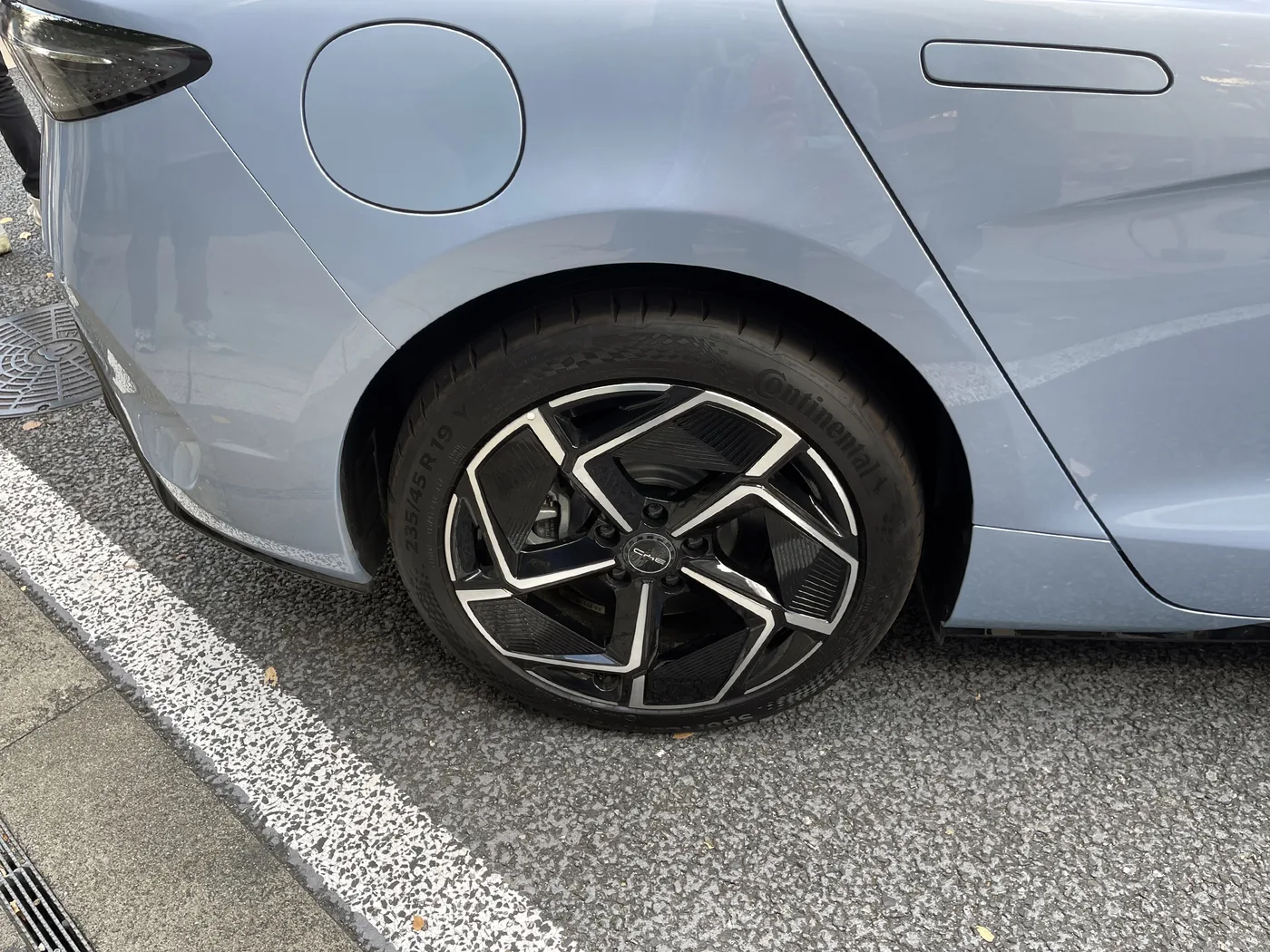
Foto: Tokumeigakarinoaoshima / Wikimedia Commons (CC BY-SA 4.0)
Errores comunes que cometen los propietarios del BYD Seal
- Desinflar neumáticos calientes para igualar las especificaciones en frío. Las lecturas en caliente 30–40 kPa por encima del valor en frío son normales. Liberar aire crea un neumático subinflado después.
- Usar la misma presión delante y detrás. El Seal necesita 250 delante y 290 detrás; presiones iguales causan desgaste prematuro del neumático trasero.
- Ignorar las alertas del TPMS. El sistema avisa pero no puede impedir la conducción. Una alarma de baja presión merece atención el mismo día.
- No comprobar nunca manualmente. El TPMS es un monitor, no un sustituto de una comprobación mensual con manómetro y una mirada a la banda de rodadura.
- Inflar en exceso para mejor autonomía. La ganancia es marginal, y la contrapartida —conducción dura, menos agarre, desgaste central— no vale la pena.
- Olvidar las caídas de presión en invierno. El aire más frío desinfla los neumáticos de forma natural; las comprobaciones mensuales desde el otoño hasta la primavera lo detectan.
- Saltarse la comprobación en el arranque estático. Un vistazo al cuadro antes de conducir detecta fugas lentas a tiempo.
Referencia rápida de presión de neumáticos del BYD Seal
| Artículo | Valor |
|---|---|
| Presión en frío, delantera | 250 kPa / 36 PSI / 2,5 bar |
| Presión en frío, trasera | 290 kPa / 42 PSI / 2,9 bar |
| Medidas de neumáticos | 225/50 R18 estándar; 235/45 R19 opcional |
| Etiqueta de presión | Marco de la puerta del lado del conductor |
| Definición de frío | 3+ horas aparcado, o dentro de 1,6 km de conducción |
| Aumento normal en caliente | 30–40 kPa por encima de frío |
| Pantalla del TPMS | Lecturas en vivo por neumático en el cuadro de instrumentos |
| Mensajes de fallo | “Sin señal” o “Verifique el TPMS” |
| Mínimo legal de banda de rodadura | 1,6 mm, mostrado por los indicadores de desgaste |
| Frecuencia de comprobación | Mensual, antes de viajes largos y tras cambios de temperatura |
Preguntas frecuentes
¿Qué PSI deberían tener los neumáticos de mi BYD Seal?
Las presiones en frío recomendadas son 36 PSI (250 kPa) delante y 42 PSI (290 kPa) detrás. Confirme la etiqueta en el marco de la puerta del lado del conductor, porque las versiones reestilizadas o específicas de cada mercado pueden diferir.
¿Por qué el BYD Seal necesita mayor presión detrás?
El paquete de baterías está situado bajo el piso y más peso del vehículo recae sobre el eje trasero. La mayor presión trasera compensa esa carga, mantiene el coche estable y evita el desgaste desigual del neumático trasero.
¿Debo comprobar la presión de los neumáticos cuando están calientes o fríos?
Ajuste siempre la presión cuando los neumáticos están fríos: al menos tres horas después de aparcar, o dentro de 1,6 km de conducción. Las lecturas en caliente son 30–40 kPa más altas y son normales — nunca desinfle un neumático caliente para igualar las especificaciones en frío.
¿Qué significa la advertencia del TPMS del BYD Seal?
Una alarma de baja presión significa que un neumático está por debajo del umbral seguro y necesita aire. “Sin señal” o “Verifique el TPMS” con una luz de advertencia que parpadea y luego queda fija significa que el sistema no puede leer un sensor — verifique si hay interferencia electromagnética o comuníquese con un concesionario autorizado de BYD.
¿Con qué frecuencia debo comprobar la presión de los neumáticos del BYD Seal?
Al menos una vez al mes, antes de viajes largos y siempre que cambie la estación. Las caídas de temperatura en invierno pueden bajar la presión notablemente, por lo que las comprobaciones mensuales desde el otoño hasta la primavera son esenciales.
¿Cómo sé cuándo debo sustituir los neumáticos de mi Seal?
Sustituya los neumáticos cuando la banda de rodadura alcance 1,6 mm (indicadores de desgaste visibles), cuando los flancos muestren grietas, bultos o cables, o cuando el desgaste sea claramente desigual tras confirmar la alineación. La vida típica de un neumático de VE es de alrededor de 40.000–60.000 km según el estilo de conducción.
Haga que los neumáticos de su Seal trabajen para usted
Ajuste las presiones en frío, compruébelas mensualmente y deje que el TPMS haga su trabajo de detectar lo que usted pasa por alto. Diez minutos con un manómetro protegen la autonomía, el confort de marcha y la vida del neumático — y mantienen el coche predecible en la carretera. En caso de duda, siga la etiqueta del marco de la puerta, no los consejos de foros ni un número adivinado.
Siga consultando Marvix Auto para más guías prácticas para propietarios de BYD, desde funciones de llave inteligente hasta carga y mantenimiento.
¿Busca los accesorios adecuados para su BYD Seal? Explora nuestra Accesorios para BYD Seal colección de opciones compatibles con el modelo. Si necesita una pieza específica que no aparece en la lista, contáctenos con el año de su modelo y los detalles de la pieza — podemos ayudarle a encontrar el accesorio adecuado.
Fuentes
- Manual del propietario del BYD Seal — especificaciones de presión de neumáticos, guía de presión en frío/caliente, advertencias del TPMS y secciones de reemplazo de neumáticos.
- Guía del usuario de especificaciones del BYD SEAL — tabla de especificaciones y presión de neumáticos (225/50 R18 y 235/45 R19, 250/290 kPa delantero/trasero).
- Wikimedia Commons — fotos de Alexander-93, Woshifongge2006 y Tokumeigakarinoaoshima (CC BY-SA 4.0).



 English
 Portuguese
 French
 Turkish
 Russian
 Arabic
 Spanish