
When discussing electric vehicles (EVs), battery capacity and driving range often dominate the conversation. However, the true hero of any efficient and long-lasting EV is a sophisticated control system working tirelessly in the background—the Battery Management System (BMS). For BYD, a global leader in new energy vehicles and battery innovation, the BMS is not just an accessory; it is the central nervous system that ensures every kilowatt-hour of energy is used safely, efficiently, and intelligently [1].
1. What is a BMS? The Battery’s Guardian and Decision-Maker
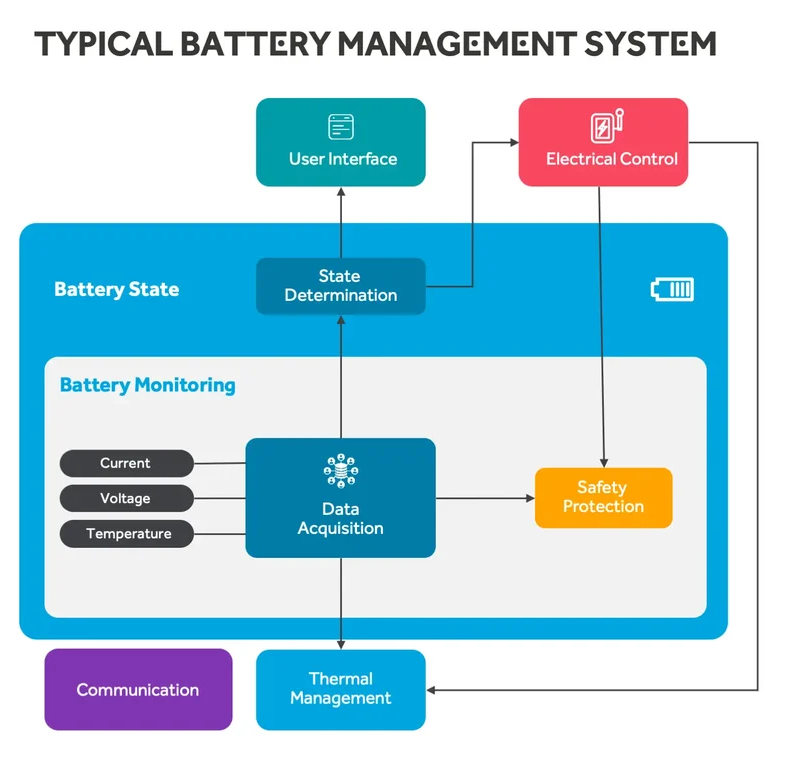
A modern EV battery is a complex assembly of hundreds of lithium-ion cells that must work in perfect harmony. Even a slight imbalance between cells can lead to reduced performance, shorter lifespan, or, in extreme cases, safety hazards. The BMS is responsible for real-time supervision of the entire battery pack, acting as its brain and guardian [2].
Source: [Alamy/Technical Diagram]
Key monitoring functions of BYD’s BMS include:
•Voltage Management: Tracking each individual cell’s voltage to prevent overcharging or over-discharging, which are critical for battery health and safety.
•Current Control: Regulating the flow of electricity during both charging and discharging based on real-time conditions, preventing excessive current that could damage the battery.
•Temperature Monitoring: Ensuring thermal stability across all cells, which is paramount for safety, longevity, and optimal performance. Extreme temperatures can severely degrade battery life and pose fire risks.
•State of Charge (SOC) Estimation: Accurately calculating the remaining battery range to provide drivers with confidence and prevent unexpected power loss. This involves complex algorithms that consider various factors like temperature and discharge rate.
•State of Health (SOH) Calculation: Predicting long-term battery aging and performance degradation, allowing for proactive maintenance and informing the driver about the battery’s overall condition.
In simple terms, if the battery is the heart of the EV, the BMS is the brain that keeps it beating correctly, making crucial decisions hundreds of times per second.
2. Safety First: The Core Philosophy of BYD BMS
Battery safety is non-negotiable, especially as EVs expand into global markets with diverse climates and charging infrastructures. BYD’s BMS incorporates multiple layers of protection to ensure peace of mind for every driver, building upon the inherent safety of its Blade Battery technology [3].
2.1. Thermal Safety Management
BYD’s BMS uses dozens of high-precision sensors to sample temperatures across the entire battery pack. If the system detects an abnormal heat rise, its early-warning algorithms instantly trigger mitigation strategies, such as limiting current, activating the cooling system, or isolating the affected modules. This proactive approach prevents thermal runaway, a critical safety concern in lithium-ion batteries.
2.2. Cell Equalization Strategies
As lithium cells age, they naturally begin to vary in performance and capacity. BYD employs both active and passive equalization techniques to balance the energy levels across all cells within the pack. Active equalization redistributes energy from higher-charged cells to lower-charged ones, while passive equalization dissipates excess energy from higher-charged cells. This ensures that no single cell is overworked or underutilized, which maximizes the overall usable capacity and extends the battery’s total lifecycle.
2.3. Predictive Diagnostics and Fault Tolerance
The BMS doesn’t just react to problems—it predicts them. By continuously analyzing patterns in voltage drift, resistance changes, and localized temperature spikes, the system can identify potential risks long before they escalate into a fault. This advanced predictive capability allows for proactive maintenance and enhanced safety, often alerting the driver or service center to potential issues before they become critical. Furthermore, BYD’s BMS is designed with fault-tolerant architectures, meaning that even if a component fails, the system can often continue to operate safely in a degraded mode.
3. Deep Integration with the Blade Battery: A Synergistic Approach
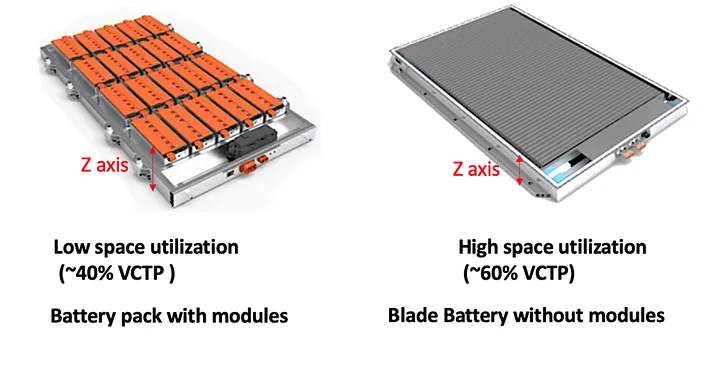
Since its introduction in 2020, the BYD Blade Battery has set a new industry standard for safety and energy density. Much of this success is due to its seamless and deep integration with the BMS [4].
Source: [BYD Official/Munro Live]
Because BYD is a vertically integrated company—designing and manufacturing both the battery chemistry and the electronic control systems—the BMS is tailor-made for the Blade Battery’s unique LFP (Lithium Iron Phosphate) chemistry and cell-to-pack (CTP) design. This co-design results in:
•Higher Usable Energy: Precise SOC calibration, optimized for the Blade Battery’s characteristics, allows drivers to utilize more of the battery’s capacity without compromising safety or longevity.
•Better Climate Stability: The BMS optimizes performance in extreme cold and heat, a common weakness for many competitors’ batteries. This ensures consistent range and charging performance across diverse geographical regions.
•Longer Lifecycle: Intelligent management, specifically tuned for LFP chemistry, allows BYD batteries to last for hundreds of thousands of kilometers with minimal degradation, often exceeding the vehicle’s lifespan.
•Enhanced Structural Integrity: The CTP design, combined with BMS monitoring, creates a robust and safe battery pack that can withstand significant external forces.
4. Efficiency and Range Management: Maximizing Miles per kWh
Beyond safety, the BMS is the key to maximizing driving efficiency and extending real-world range. Through dynamic energy control, BYD’s BMS ensures that energy is delivered to the motor in the most efficient way possible, adapting to driving conditions and driver behavior.
For example, during regenerative braking, the BMS determines exactly how much current can safely be sent back to the battery without causing over-voltage. During rapid acceleration, it calculates the maximum safe discharge rate to provide peak performance without damaging the cells. This constant “negotiation” between performance, longevity, and efficiency is what makes BYD EVs so reliable and economical in real-world conditions. The high-accuracy SOC estimation also reduces range anxiety, providing drivers with reliable information about their remaining mileage.
5. Communication and Power Distribution: A Coordinated Effort
BYD’s BMS does not operate in isolation. It works collaboratively with other critical vehicle systems, including the motor control unit (MCU), vehicle control unit (VCU), and thermal management system, to coordinate power delivery and optimize overall vehicle performance [5].
Key communication functions include:
•High-Speed Data Exchange: Utilizing robust communication protocols like CAN (Controller Area Network) and Ethernet to ensure rapid and reliable data exchange between the BMS and other ECUs.
•Cell-Level Data Fusion: The BMS collects granular data from individual cells and aggregates it to provide comprehensive insights to the VCU, informing decisions about power requests and energy recuperation.
•Load-Balanced Planning: The system continuously negotiates power demands for acceleration, hill climbs, and regenerative braking, ensuring that the battery is never overstressed while still delivering optimal performance.
A sudden acceleration requires instant high current—the BMS determines if the power is safe to provide. When descending a steep hill, regenerative braking charges the battery—the BMS controls the current to avoid over-voltage risk. This continuous dialogue ensures that the entire powertrain operates as a cohesive, intelligent unit.
6. BYD vs. The Industry: The Advantage of Independent R&D and Vertical Integration
Many traditional automakers outsource their BMS solutions from third-party suppliers, leading to potential integration challenges and slower innovation cycles. In contrast, BYD’s independent R&D and vertical integration—from battery cell production to final vehicle assembly—provide a significant competitive advantage [6].
This integrated approach allows for:
•Tailored Optimization: The BMS is perfectly matched to BYD’s proprietary battery chemistries and vehicle platforms.
•Faster Innovation: BYD can rapidly iterate and implement improvements across its entire NEV ecosystem.
•Cost Efficiency: In-house development and manufacturing can lead to better cost control, which benefits consumers.
Voici un aperçu comparatif :
| Capacité | BYD BMS | Tesla | Legacy OEMs (Typical) |
| Co-conception batterie + BMS | Fully Integrated | Fort | Often Separated |
| Optimisation de la PFR | Industry Leading | Modéré | Limitée |
| Marge de sécurité | Very High | Haut | Variable |
| Diagnostic prédictif | Advanced | Advanced | Moyen |
| Global Scale | Large & Diverse | Grandes dimensions | Modéré |
Conclusion: BYD excels particularly in mass-market LFP safety and climate stability, while matching global leaders in high-performance EV intelligence.
7. Built for Tomorrow: OTA Updates and 800V Platform Readiness
As battery technology and EV infrastructure continue to evolve, so does the BMS. BYD’s latest systems support Over-the-Air (OTA) updates, allowing for continuous improvements in safety algorithms, charging efficiency, and new feature rollouts throughout the vehicle’s life. This ensures that BYD EVs remain cutting-edge long after they leave the factory [7].
Furthermore, the new generation of BYD BMS is designed to handle the massive power requirements of 800V high-voltage platforms, enabling ultra-fast charging that can add hundreds of kilometers of range in just minutes. This forward-thinking design ensures that BYD vehicles are ready for the next wave of EV technology, offering unparalleled convenience and performance.
Conclusion: The Unsung Hero of the EV Revolution
Car buyers rarely think about the BMS when they step into their vehicle, and that is exactly how it should be. It operates silently and flawlessly, ensuring that every journey is safe, efficient, and reliable. As the world transitions to electric mobility, BYD’s mastery of both battery chemistry and intelligent control gives the company a decisive advantage. The Blade Battery may be the star of the show, but the BMS is the brilliant engineer behind the scenes, making every charge more meaningful and every drive safer.
In the world of EVs, smart power isn’t just about energy—it’s about intelligent energy. BYD’s BMS ensures that this intelligence is felt by millions of drivers around the world, every single day.
Références :
[1]: https://www.byd.com/cn/tech/bms “BYD Battery Management System – BYD Official Website”
[2]: https://www.victronenergy.com/blog/2021/05/26/what-is-a-battery-management-system-bms/ “What is a Battery Management System (BMS)? – Victron Energy”
[3]: https://bydcarchina.com/byd-blade-battery-2-0-explained-the-chemistry-behind-1000-km-range-and-9-minute-charging/ “BYD Blade Battery: The Advanced and Safe Battery Technology – BYDCARCHINA”
[4]: https://munrolive.com/the-next-generation-battery-pack-design-from-the-byd-blade-battery-to-cell-to-chassis/ “The Next-Generation Battery Pack Design: from the BYD Blade Battery to Cell-to-Chassis – Munro Live”
[5]: https://www.edn.com/understanding-ev-battery-management-system-architectures/ “Understanding EV battery management system architectures – EDN”
[6]: https://www.visualcapitalist.com/byd-vs-tesla-who-is-winning-the-ev-race/ “BYD vs Tesla: Who is Winning the EV Race? – Visual Capitalist”
[7]: https://www.byd.com/cn/tech/ota “BYD OTA Updates – BYD Official Website”






 English
 Portuguese
 French
 Turkish
 Russian
 Arabic
 Spanish