

For most road-car body kits, PP (polypropylene) and ABS are the practical everyday choices: PP flexes better on impacts and cold roads, while ABS holds sharper edges and is common on pre-finished gloss parts. Fiberglass and carbon fiber suit show or track builds more than daily kerb scrapes. The best body kit material depends on how you drive, where you park and whether you plan to paint.
This comparison covers PP vs ABS body kit options in depth, then places fiberglass and carbon fiber in context for bumpers, lips, skirts and rear pieces. It is written for BYD owners and for shops that stock exterior kits. Spoiler-only material choices are covered separately in our carbon fiber vs ABS vs fiberglass spoilers guide.
If you are shopping on Marvix: most of our exterior styling parts are moulded in ABS, with PP used on selected body kits and lips, and practical items such as frunk storage boxes made from PP. Each product page lists the material, so you can match it to how you drive and how you plan to finish the part.
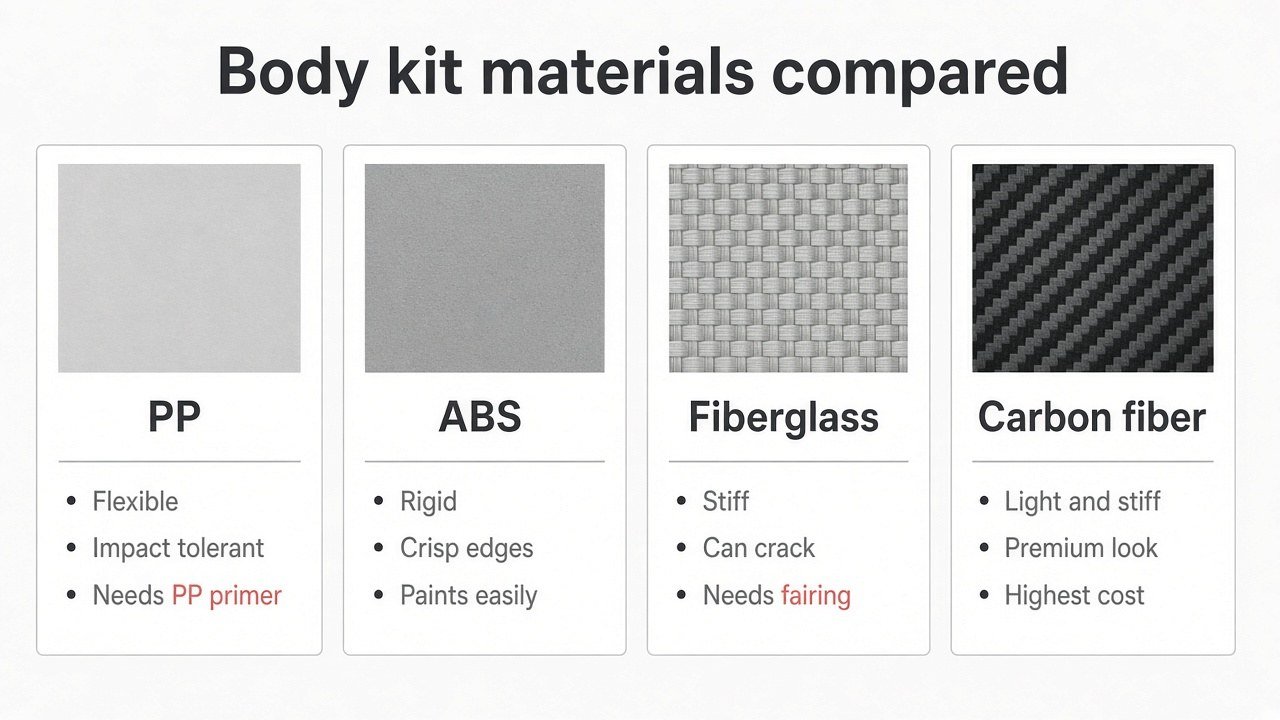
Quick comparison: PP vs ABS vs fiberglass vs carbon fiber
Use this table as a decision snapshot. Real parts also vary by thickness, tooling and finish, so treat it as a starting point rather than a rule.
| Factor | PP (polypropylene) | ABS | Fiberglass | Carbon fiber |
|---|---|---|---|---|
| Feel / stiffness | Flexible; recovers from light knocks | Rigid; crisp lines | Stiff; can crack on impact | Very stiff and light |
| Cold / heat behaviour | Generally forgiving in cold | Can feel brittle in deep cold if thin | Stable; gelcoat can chip | Stable; finish needs care |
| Paint | Needs PP-compatible primer | Paints well with standard prep | Often primed; fairing may be needed | Often clear-coated weave or painted |
| Typical road use | Lips, skirts, bumpers for daily cars | Pre-finished gloss lips and kits | Custom / show / older kits | Show, track styling, premium look |
| Repair after kerb hit | Often survives scrapes; replace if torn | May crack; section repair or replace | Crack risk; laminate repair | Costly repair; often replace |
| Cost band (relative) | Usually mid / accessible | Mid | Varies; labour-heavy | Highest |
What is a polypropylene (PP) body kit?
A polypropylene body kit uses PP plastic — the same family of material used in many OEM bumpers. That is why a PP lip or skirt often feels a little “live” when you press it: it can flex and spring back instead of snapping.
Strengths for daily drivers:
- Impact tolerance. Front lips and side skirts take kerbs, ramps and speed bumps. Flexibility helps.
- Cold roads. PP generally stays more forgiving than hard brittle plastics when temperatures drop.
- OEM-like behaviour. On bumper-related parts, PP behaviour is familiar to body shops that already work on factory bumpers.
Trade-offs:
- Paint prep. PP needs the right adhesion promoter / primer. Skipping that step is a common reason paint peels.
- Edge sharpness. Some designs look slightly softer than a hard ABS edge — design and tooling matter more than the label alone.
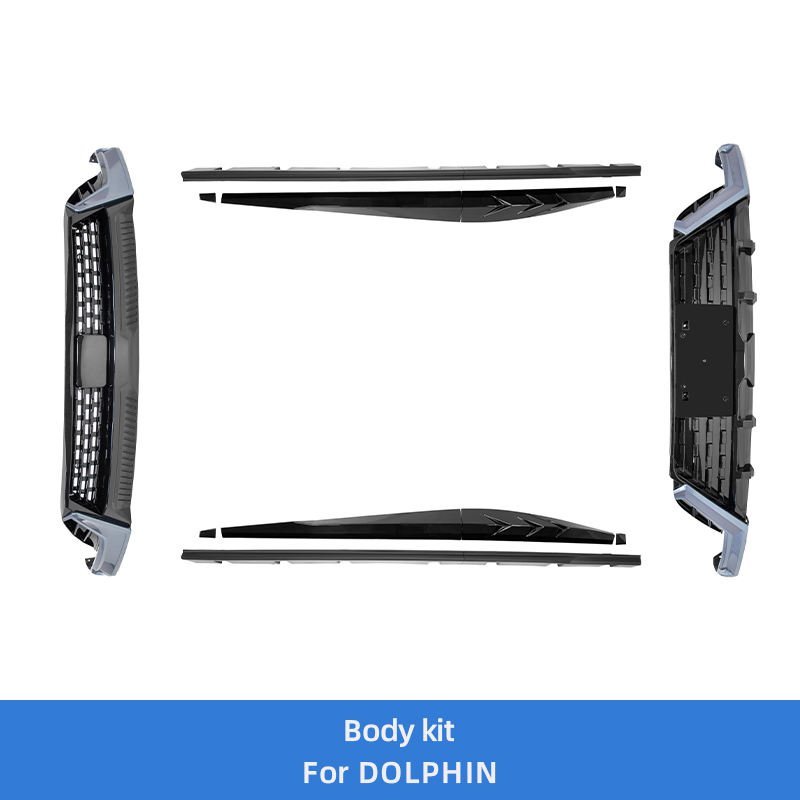
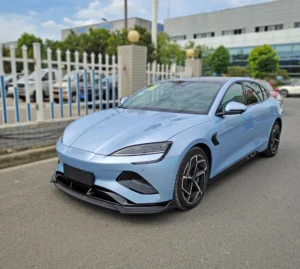
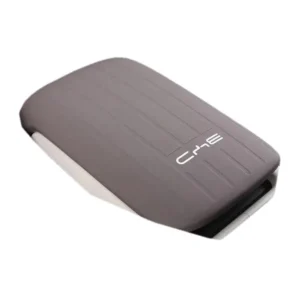
That flex-and-recover behaviour is why PP works well on the lowest, most exposed pieces. A front lip such as the PP front bumper lip for the BYD SEAL 7 DM-i sits right where ramps and kerbs make contact, and a complete set like the PP exterior full body kit for the BYD Dolphin brings the same tolerance to the skirts and rear pieces of a compact daily car. PP is also a natural fit for hard-working storage items such as frunk boxes, which get loaded, knocked and wiped down every day.
What is an ABS body kit?
An ABS body kit uses acrylonitrile butadiene styrene, a rigid thermoplastic popular for crisp styling parts. Many pre-finished gloss-black lips and kit pieces on the aftermarket are ABS or ABS blends, and most Marvix exterior styling parts are ABS too.
Strengths:
- Sharp appearance. Holds fine edges and gloss finishes well.
- Paint and finish. Body shops are used to ABS prep; primed ABS is a common paint-shop starting point.
- Dimensional stability. Good for parts that need a precise visual line along a bumper edge.
Trade-offs:
- Impact. A hard ABS lip can crack where a PP lip might flex.
- Cold weather. Thin ABS pieces can feel more brittle in deep cold.
- Heat near exhaust or brakes. Less relevant for pure EV bumpers, but still worth knowing for hybrids and ICE installs.
ABS is a good choice when the part needs to look sharp straight out of the box or go straight to a paint shop for colour-matching. If your project calls for a specific material — for example, a paint process your shop already uses — mention it when you request a quote and we will point you to the right parts.
PP vs ABS body kit: which should you choose?
This is the comparison most owners and buyers actually need.
- Choose PP if the car is a daily driver, you scrape ramps often, you park tightly, or you want bumper-like flexibility on lips and skirts.
- Choose ABS if you want maximum edge sharpness, a pre-finished gloss look, or your paint shop prefers ABS prep — and you accept a higher crack risk on heavy kerb hits.
- Match the part to the job. A front lip lives a harder life than a high rear spoiler. It is normal for different exterior parts on the same car to use different materials.
Neither material turns a bolt-on styling kit into a race aero package. Most road kits are mainly about stance and appearance. For the basics of what a kit includes, see what a car body kit is. For whether to buy a complete set or piece by piece, see full body kit or individual parts.
Fiberglass body kits
A fiberglass body kit is built from glass-reinforced plastic laminate. It has a long history in custom and show cars because it can be shaped in low-volume moulds.
Typical traits:
- Stiff and light relative to thick plastic, depending on layup.
- Crack risk on impact — a kerb hit can spider the laminate.
- Finish work — gelcoat pinholes and fairing are common before paint.
- Repairable by a composites shop, but not as simple as swapping a plastic lip.
For modern BYD EV bolt-on lip kits, injection-moulded plastics (PP/ABS families) are usually the more practical daily choice. Fiberglass still appears in custom widebody and one-off projects.
Carbon fiber body kits
Carbon fiber looks premium and saves weight when the layup is structural. On many road cars, “carbon” exterior pieces are still mainly a visual upgrade: real aero gains need a full underbody package, not only a woven finish on a lip.
Points to check:
- Real carbon vs printed wrap / pattern. Ask for clear product photos and a material statement.
- Clear coat quality. UV yellowing and orange peel show quickly on cheap clear.
- Repair cost. Damaged carbon is often replaced, not patched cheaply.
- Budget. Carbon is usually the highest cost band for the same shape.
For spoilers specifically (where carbon, ABS and fiberglass are compared in more detail), use carbon fiber vs ABS vs fiberglass spoilers. This article stays focused on body-kit pieces that live lower on the car: lips, skirts, bumpers and diffusers.
Impact, cold weather and paint: practical checks
Before you lock a body kit material choice, run through these checks:
- Where will the part sit? Front lips and side skirts take more abuse than a high roof spoiler.
- Climate. Cold mornings and underground ramps favour more flexible materials on low parts.
- Paint plan. Pre-finished gloss black can go on as contrast. Colour-matching needs primer suited to the substrate (especially PP).
- Install method. Tape, clips and screws all work; a flexible part still needs clean surfaces and correct pressure.
- Sensors. Leave parking sensors, radar and camera windows clear regardless of material.
Shop BYD body kits by material
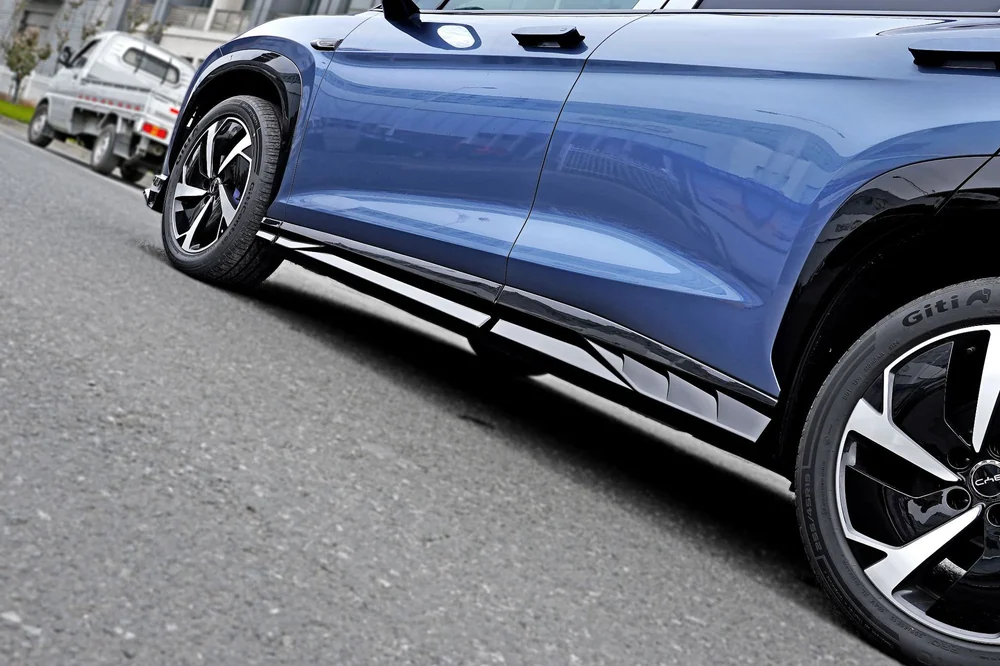
Once you know which material suits your driving, choosing parts gets easier. Most pieces in our BYD body kits range are ABS, which suits owners who want crisp lines and a clean gloss or paint-ready finish. If you would rather have PP’s flexibility on a daily car, complete sets such as the gloss black PP body kit for the BYD KING and the PP body kit for the BYD SEAL 7 DM-i are good places to start.
Not sure which option fits your car? Send us your model and year, or a few photos, and we will help you choose. New to lips and splitters? Start with what is a front lip.
Frequently Asked Questions
Is PP or ABS better for a body kit?
For daily lips and skirts, PP is often the more forgiving choice because it flexes on scrapes. ABS is often preferred when you want sharper edges and a crisp pre-finished gloss look. Match the material to how hard the part will be hit.
What is a polypropylene body kit?
It is a kit (or kit parts) moulded from polypropylene plastic. PP is widely used in OEM bumpers and behaves in a similar flexible way on aftermarket lips and skirts.
Do fiberglass body kits crack easily?
They can. Fiberglass is stiff; a sharp kerb impact may crack the laminate where a PP part might bend. Fiberglass still suits custom shapes and show builds when impact risk is managed.
Is carbon fiber worth it on a road body kit?
It is worth it if you want the look and are prepared for the price and repair cost. On most street cars it is a styling and weight choice, not a guaranteed aero upgrade.
Can I paint a PP body kit?
Yes, with PP-compatible cleaner, adhesion promoter and primer. Ask your paint shop to treat it as polypropylene, not as a generic plastic.
What material are Marvix body kit parts made from?
Most Marvix exterior styling parts are ABS, with PP used on selected body kits and lips. Storage accessories such as frunk boxes are PP. The material is shown on each product page.
Where can I compare spoiler materials?
See carbon fiber vs ABS vs fiberglass spoilers. Spoilers sit higher and face different loads than bumper lips and skirts.
Buying body kits for a shop, installer or online store?
Marvix is a one-stop BYD partner: vehicle-export background plus exterior parts, accessories and export logistics. We run a dedicated plastic parts production line with in-house tooling, a large mold library and a 2,000+ m² warehouse and production site — many BYD models are already tooled.
1-piece samples and retail orders are accepted, with tiered pricing for larger quantities. Listed parts are usually in stock (new ODM designs excepted), and orders under 100 sets ship directly with no production lead time. Mixed-SKU orders, dropshipping, OEM/ODM and private label are available. We check fitment from model/year, VIN, part number or photos.
Shipping terms for large parts: Brazil, Colombia and Mexico — EXW, FOB or DAP only (buyer handles customs and taxes). All other countries — EXW, FOB, DAP, plus DDP for samples, retail and dropshipping.
Start with our BYD exterior accessories wholesale page, browse BYD body kits, or request a quote.

 English
 Portuguese
 French
 Turkish
 Russian
 Arabic
 Spanish