

There are six main types of car spoilers: lip, blade, ducktail, mid, roof (or roof-end) and pedestal or wing-style designs. Which one suits your car depends mostly on the shape of the rear. Sedans and fastbacks take lip, blade or ducktail designs on the edge of the boot lid, and some sedans can also take a slim roof spoiler above the rear window. Hatchbacks, SUVs and crossovers take roof, roof-end and mid spoilers on the tailgate. Larger cars with enough rear structure to support it can take pedestal or wing-style parts.
Walk into any parts listing and the same word — spoiler — is used for a thin strip glued to a boot lid, a tall structure standing on two uprights, and a roof-height blade sitting above an SUV tailgate. They are sold as one category, and buyers are left to guess which one belongs on their car.
Guess wrong and the consequences are visible and expensive. A tailgate roof spoiler bought for a sedan has nowhere to mount. A pedestal design fitted to a hatchback clobbers the tailgate glass. A ducktail chosen for a car with a steeply falling roofline fights the body lines instead of finishing them. None of that is a product problem; it is a shape problem.
The fix is to match the spoiler type to the surface you actually have. If you are new to the subject, start with what a rear spoiler actually does. This guide covers the shapes, where each one mounts, and which cars they suit.
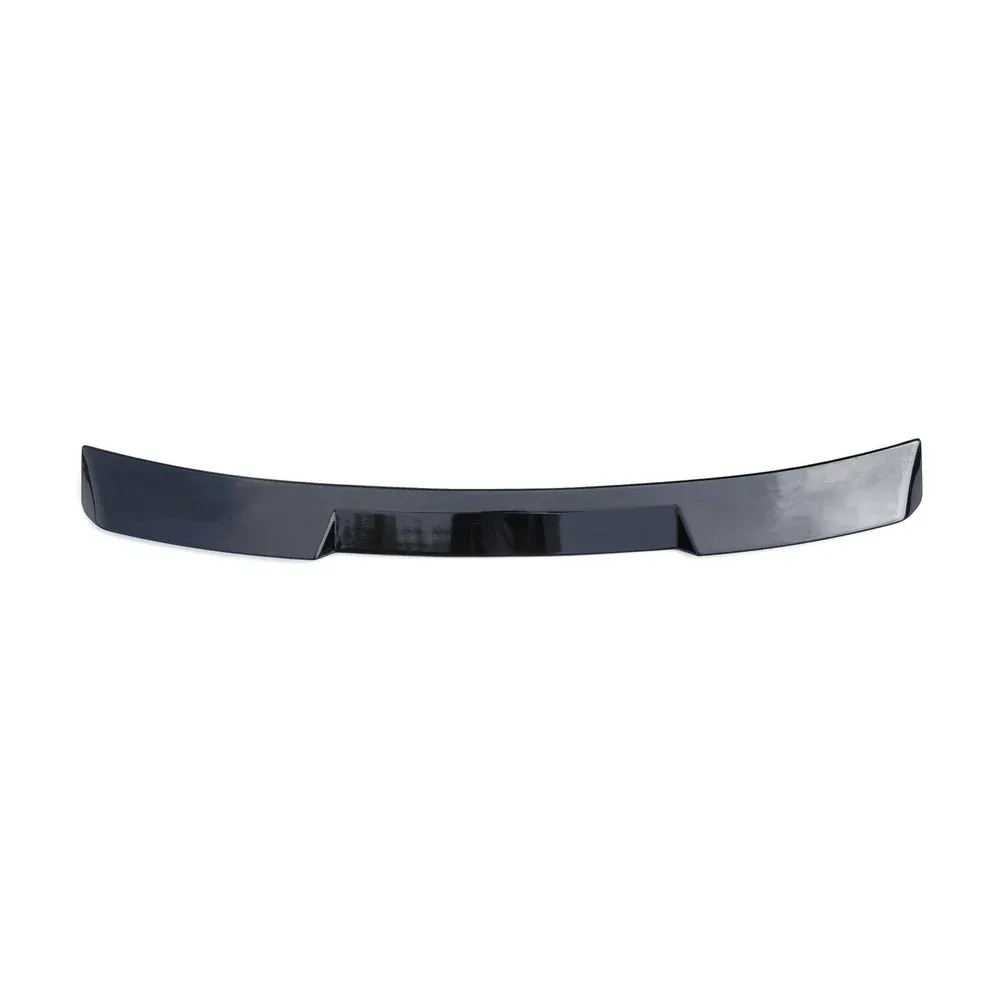
The short answer: the main types of car spoilers
There are six families that cover almost every part sold for a normal car, plus front-mounted designs that live in a separate discussion.
| Type | Position | Best suited to |
|---|---|---|
| Lip spoiler | Along the very edge of the boot lid | Sedans, fastbacks, subtle OEM-plus builds |
| Blade spoiler | Across the boot lid, slimmer and flatter than a lip | Sedans wanting a wider horizontal accent |
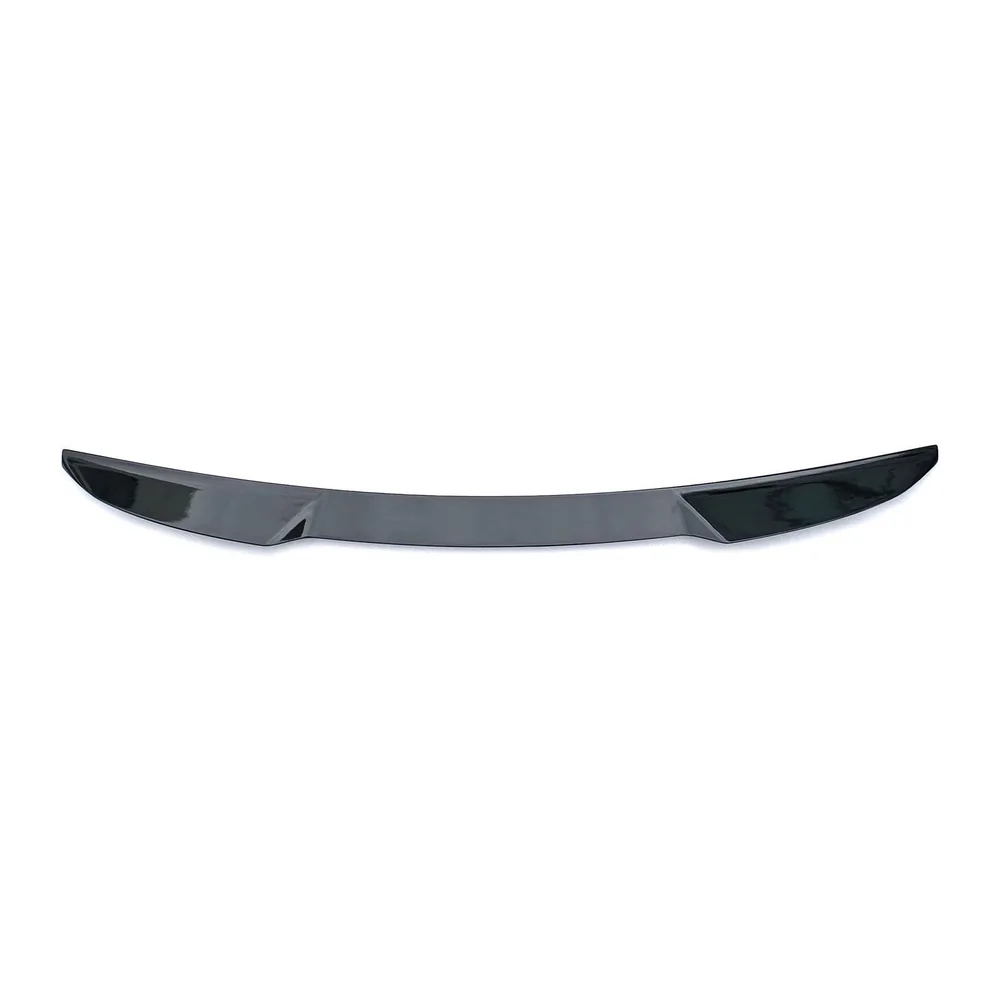
| Ducktail | Upturned at the rear edge of the deck lid | Classic sports-car proportions, rear-engine shapes |
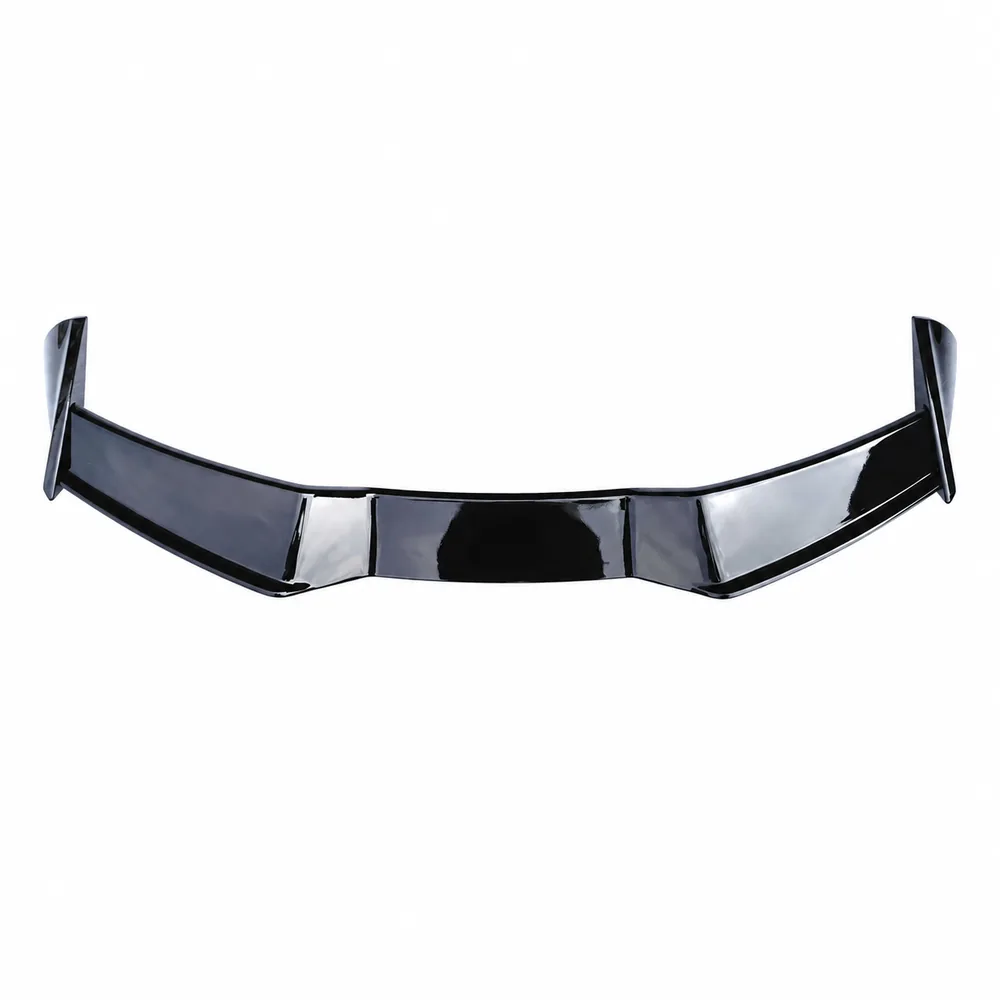
| Mid spoiler | On the tailgate, below the rear glass | SUVs and crossovers |
| Roof / roof-end spoiler | At the top of the tailgate or above the rear glass | Hatchbacks, SUVs, estates |
| Pedestal / wing-style | Raised above the body on uprights | Larger sedans and track-inspired builds |
The important thing to notice is that these are not steps on a scale from mild to wild. They are different solutions to different body shapes, and only one or two of them will actually suit any given car.
Lip and blade spoilers
The lip is the most common spoiler in the world, and the most misunderstood. It is a small extension along the trailing edge of the boot lid — often only a few centimetres tall — that breaks the airflow exactly where it separates from the body.
Because it sits so close to the surface, a lip does very little to the car’s silhouette, which is why it is the default choice for a daily driver. It also fits the widest range of body shapes. The blade is the lip’s slightly bolder cousin: flatter and wider, usually running the full width of the deck, giving the rear a single clean horizontal line rather than a raised edge.
Both are typically fixed with automotive double-sided tape, sometimes with small studs for security, and both are light enough that tape is a legitimate method when the surface is properly prepared. Neither will transform how the car handles. What they do is finish the rear of a sedan that looks like it is missing something.
Ducktail spoilers
A ducktail does the same job as a lip but with attitude. Instead of sitting flat, the rear edge kicks upward, following the line of a duck’s tail. Porsche popularised the shape on 1970s 911s, and it has never really left.
The ducktail works best on cars with a short rear deck and a rounded tail, because the upturned edge is what balances the profile. On a fastback with a long, low roofline, a ducktail can look heavy; on a compact performance car it looks deliberate.
Functionally it is still a spoiler — it disrupts the flow leaving the rear of the car and reduces lift — but the angle means it catches more air than a lip, so it adds a little more drag too. It is the classic example of a part where style and function are genuinely intertwined.
Roof and roof-end spoilers
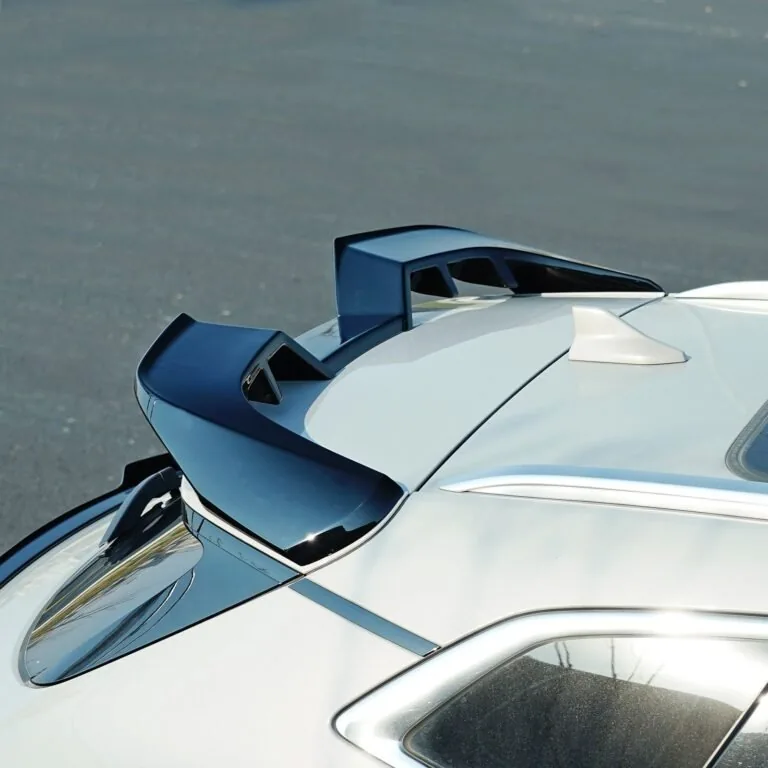
If your car has a tailgate rather than a boot lid, the top of that tailgate is your mounting surface. Roof spoilers sit along the upper edge of the tailgate or just above the rear glass, and on hatches and SUVs they are the natural place to manage airflow.
This is where the spoiler type matters most. On a hatchback or SUV such as the BYD Dolphin or Seal U DM-i, the air comes off the roof and drops down a steep tailgate. The top edge of the tailgate is where a spoiler can tidy up that transition. Some roof spoilers also house a high-mount brake light, which is one reason roof spoilers are best made for the specific vehicle rather than adapted.
Sedans have their own version. A sedan roof spoiler sits on the trailing edge of the roof, just above the rear window, and is often paired with a boot-lid spoiler. Our catalogue lists this combination for the BYD King and the BYD SEAL 5 DM-i.
Fitting a roof spoiler is not just a styling decision. The tailgate has to open through its full travel without contact, and a powered tailgate with tired struts will notice the extra weight. On a car with a rear wiper, the spoiler also has to leave the wiper’s sweep clear.
Mid spoilers
The mid spoiler is the design most buyers meet for the first time on an SUV. It sits on the tailgate below the rear glass, creating a second horizontal line between the roof spoiler above and the bumper below.
It is largely a styling device, and there is nothing wrong with that. On a tall, slab-sided crossover, a mid spoiler visually lowers the rear and connects the roof line to the diffuser. On a BYD Seal U DM-i, for example, the mid spoiler wing gives the tailgate the same finished look that a boot-lid lip gives a sedan.
Because it sits flat against the tailgate panel, a mid spoiler is usually taped, which makes it one of the easier exterior upgrades to fit and to reverse.
Pedestal spoilers and wing-style designs
The pedestal spoiler is the shape most people picture when they hear the word: a raised bar supported on two uprights above the boot lid. It is the design that appeared on 1970s and 1980s performance cars and never left the market.
Two things matter here. First, "pedestal" describes how the part is mounted, not how much downforce it makes. A pedestal spoiler and a GT wing can look similar and behave very differently depending on the height of the uprights, the aerofoil section and the angle of attack. Second, because it stands off the body, a pedestal design puts leverage on the boot lid, especially at high speed. That is why taller parts are bolted rather than taped, and why some installations need backing plates or reinforcement under the panel.
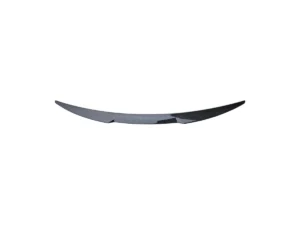
Most vehicle-specific spoilers for road cars are not true pedestal designs. The rear spoiler wing for the BYD King, for example, sits on the boot lid and gets its presence from the shape of its trailing edge rather than from tall uprights, as the photo below shows.

Front spoilers and air dams — a separate conversation
The parts at the front of the car are spoilers too, but they belong to a different topic. A front lip or splitter works the air at the nose, and an air dam blocks air from passing underneath the car. They share the underlying principle — managing airflow to reduce lift — but they bolt to a bumper rather than a boot lid, and they have their own fitment issues with parking sensors, tow hooks and ground clearance.
We keep them in their own part of the catalogue, alongside front bumper lips and side skirts, because a rear spoiler decision should not be made as if the front of the car does not exist. If you are building the whole look, plan both ends together.
Style and function are two separate axes
This is the idea that saves the most money. Every spoiler sits somewhere on two scales, and they are not the same scale.
The first is physical position: where the part mounts. This is fixed by the car. A Dolphin has a tailgate, so it takes a roof or roof-end design. A Seal has a boot lid, so it takes a lip, blade or ducktail.
The second is visual weight: how far the part departs from the body lines. A lip is nearly invisible; a pedestal design changes the entire rear profile. You can choose almost any point on this scale, as long as it sits on the correct mounting position.
Buyers get into trouble when they let the second scale override the first. A tall wing that will not mount correctly is not a bold choice; it is a part that will rattle, leak or fall off.
Which types of car spoilers suit which car?
The BYD line-up is a useful guide because it includes sedans, fastbacks, hatchbacks and SUVs. The groups below are based on body shape and the spoiler listings we carry for each car. Always confirm the model year and market version before ordering.
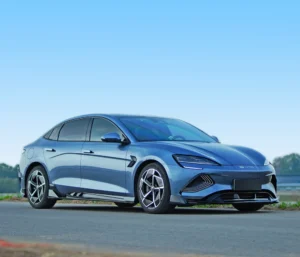
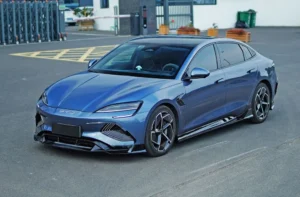
Fastback sedan: BYD Seal. The rear deck is long and low, so a lip or blade-style boot-lid spoiler belongs here. See the Rear Spoiler Wing for BYD SEAL and the Gloss Black Rear Spoiler for BYD SEAL.
Sedans with a boot-lid and a roof option: BYD King and BYD SEAL 5 DM-i. For each of these cars we list a boot-lid spoiler and a roof spoiler that sits above the rear window. That makes them the clearest example of why the type matters more than the size: you can keep it subtle with one piece or combine the two. See the Rear Spoiler Wing for BYD KING, Roof Spoiler Wing for BYD KING, Blade Trunk Spoiler for BYD SEAL 5 DM-i and Rear Roof Spoiler for BYD SEAL 5 DM-i.
Hatchback: BYD Dolphin. With a short tailgate and steep rear glass, the top of the tailgate is the natural mounting point. The Rear Roof Spoiler for BYD DOLPHIN is a roof-end design, there is a separate gloss black version, and a third Dolphin design adds raised end plates.
SUV and crossover: BYD SEALION 7 and SEAL U DM-i. These take a roof spoiler at the top of the tailgate. The Seal U DM-i also has a mid spoiler option lower down. See the Roof Spoiler Wing for BYD SEALION 7, the Roof Spoiler Wing for BYD SEAL U DM-i and the Mid Spoiler Wing for BYD SEAL U DM-i.
Not sure which group your car belongs to, or whether a listing covers your model year? Browse the full Spoilers & Wings category or send us a photo of the rear of the car.
How to choose without wasting money
Start with the car, not the catalogue. Take a photo of the rear of the vehicle straight on and from the side, and note whether the car has a boot lid or a tailgate, whether it already has a factory spoiler, and how much clear flat surface sits at the mounting point.
Then decide how much of the rear you want to change. If the answer is "not much", a lip or roof-end part in a gloss black or paint-matched finish is almost always the cleanest result. If the car is part of a wider build with skirts and a diffuser, a blade or pedestal design will hold its own visually. Material matters too: see our comparison of carbon fiber vs ABS vs fiberglass spoilers.
Finally, confirm how the part is fixed and whether the mounting can reuse what the car already has. Reusing factory positions keeps the job reversible and protects resale value. New holes should be sealed and treated against corrosion, and any part that stands off the body should be bolted rather than relying on tape.
If you are not sure, ask. Send the model, model year and a rear photo, and we will tell you which spoiler types we list for your car, so you do not have to sort through a listing full of near-misses.
Frequently Asked Questions
How many types of car spoilers are there?
For practical purposes, six: lip, blade, ducktail, mid, roof or roof-end, and pedestal or wing-style. Front lips and air dams are sometimes grouped in as well, but they mount to the bumper and belong to a separate discussion.
Which spoiler type is best?
The one that fits your car’s mounting surface and matches how much you want to change the look. A lip or roof-end spoiler suits most daily drivers. A blade, ducktail or pedestal design carries more visual weight and suits a car that is being built up rather than kept subtle.
What is the difference between a lip spoiler and a ducktail?
A lip sits flat along the boot lid edge and adds a small raised edge. A ducktail kicks upward at the rear, following the line of a duck’s tail. Both manage airflow leaving the deck, but the ducktail is more visible and catches more air.
Can I fit a roof spoiler to a sedan?
Yes, but it is a different part from a hatchback roof spoiler. On a sedan, the roof spoiler sits on the trailing edge of the roof above the rear window and is often paired with a boot-lid spoiler. A tailgate roof spoiler made for a hatchback or SUV will not fit a sedan.
Are spoilers only for looks?
Not only, but styling is a large part of it on road cars. A spoiler genuinely reduces lift at speed, which helps stability, and it also finishes the rear of the car. What it will not do is add meaningful power or cut fuel consumption.
Do different spoiler types change fuel economy differently?
Yes, in a small way. A lip or roof spoiler adds very little drag. A tall pedestal or wing-style part adds more, and at motorway speeds that shows up as a small efficiency penalty (or a small range penalty on an electric car). Choosing a lower-profile design keeps that cost down.
Find the right spoiler type for your BYD
Send us your model, model year and market version, plus a rear photo or your VIN, and we will tell you which spoiler types we list for your car: lip, blade, roof, mid or a combination. Finish options vary by part, so check the listing photos and tell us which finish you want when you request a quote.
Buying for a shop, installer or reseller? MOQ is 1 piece, and pricing is tiered: the more you order, the lower the unit price, with no cap on quantity. We quote FOB or EXW, and DDP or DAP door-to-door for some countries. Listed parts are usually in stock (the exception is a new ODM design), and orders under 100 sets ship directly with no production lead time. Browse the full Spoilers & Wings range or request a quote.
References
- 19 Different Types of Spoilers — Auto Trends Magazine — https://www.autotrends.org/types-of-spoilers/
- Spoiler (car) — Wikipedia — https://en.wikipedia.org/wiki/Spoiler_(car)
- Car Spoilers Explained: What Are The Different Types? — Fast Car — https://www.fastcar.co.uk/tuning-tech-guides/car-spoilers-explained/
- 11 Types Of Car Spoilers Explained (With Photos) — Lemonbin — https://lemonbin.com/types-of-car-spoilers/
- Car Spoilers Explained: Lip, Ducktail or Wing? — Ausbody Works — https://www.ausbodyworks.com.au/blogs/articles/car-spoilers-lip-ducktail-or-wing
- Downforce — Wikipedia — https://en.wikipedia.org/wiki/Downforce


 English
 Portuguese
 French
 Turkish
 Russian
 Arabic
 Spanish