

You have picked out the kit — a front bumper, side skirts, a rear diffuser, a wing. Then you read a Danish forum thread about cars losing their “tax identity” and paying registration tax all over again, and it suddenly sounds like fitting a spoiler could cost more than the car.
That fear is understandable, because Denmark really is different. It is the only country in the region where a modification can trigger a fresh registration tax bill, and it is a country where a car that was inspected two months ago may have to be presented for inspection again after a change. The parts are usually the cheapest part of the mistake.
Here is the straight answer: a body kit is legal in Denmark, and Denmark is actually friendlier to bolt-on styling than most owners expect. Spoilers, side skirts, wheel-arch extensions and replacement bumpers are explicitly allowed when they can be pop-riveted, glued, screwed or otherwise mechanically fixed. The line is simple: bolt it on and it stays a styling part; cut or weld it into the body and it becomes a rebuilding job — with approval, documentation, and possibly a new registration tax attached.
That one distinction decides almost everything below, so keep it in mind as you read.
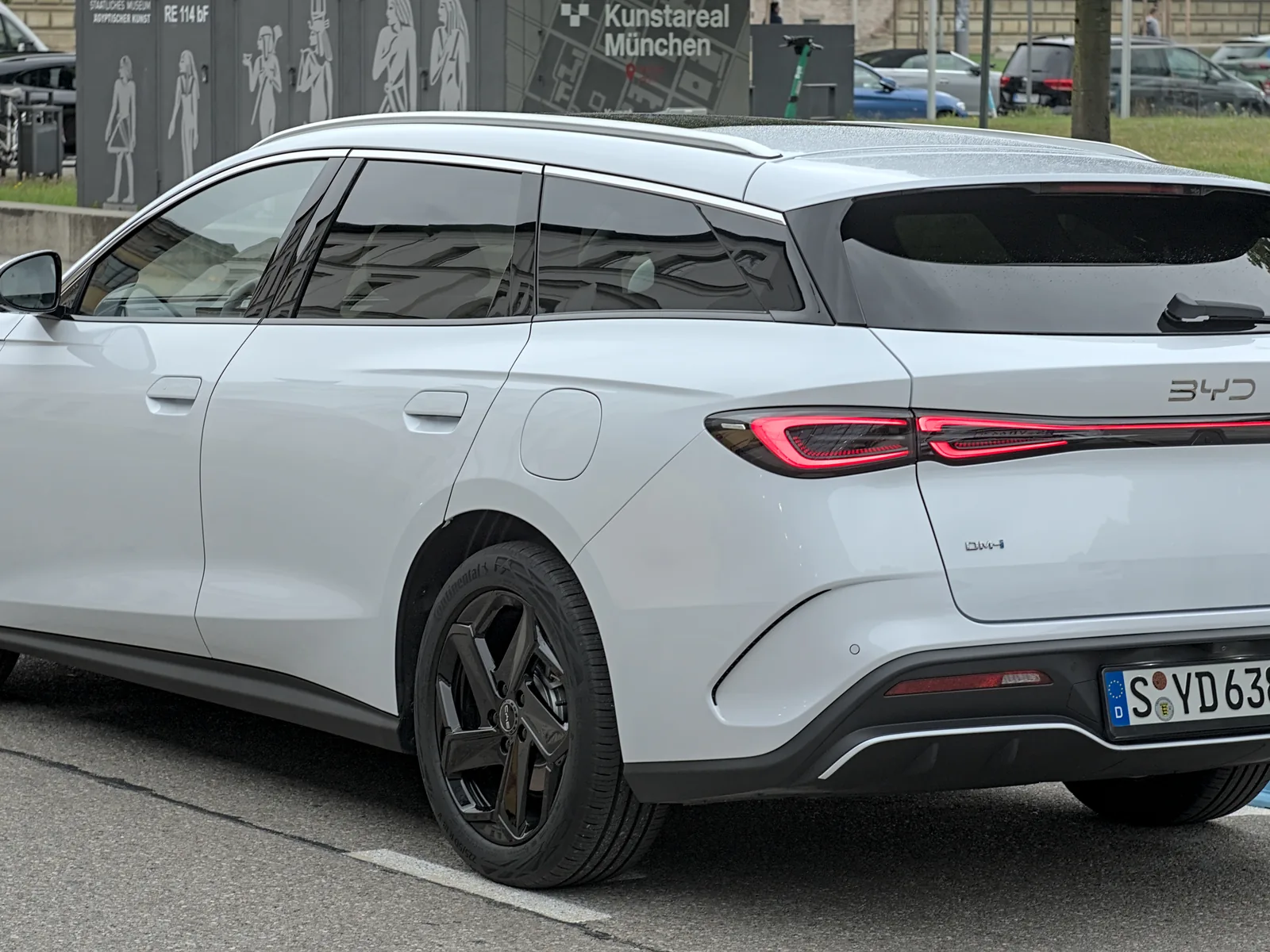
Photo: Alexander-93 / Wikimedia Commons (CC BY-SA 4.0)
The short answer: body kit legal in Denmark means keeping it a bolt-on
Denmark does not ban aftermarket exterior parts. What Denmark does is look at how the part is attached and what it changes — technically and for tax purposes.
Two authorities matter, and they are looking at different things:
- Færdselsstyrelsen (the Danish Road Traffic Authority) handles approval and inspection — the *syn*. It cares about whether the car is still safe, still meets the technical rules, and whether the change counts as a constructive change to the vehicle.
- Motorstyrelsen (the Danish motor tax administration) handles the vehicle register and registration tax. It cares about whether the car is still the same car, in tax terms, as the one that was originally registered.
Those two questions are separate, and a modification can be fine on one and a problem on the other. For a bolt-on body kit, both answers are usually the same: yes, that is allowed.
In practice, a single bolt-on styling kit on an otherwise standard car is the easy case. It does not touch the structure, it does not change the car’s registered technical data, and it stays far below the 50 kg threshold that triggers a registration inspection. That is the scenario this guide is written around.
In one sentence: if the part can be bolted, screwed, riveted or bonded on, and it can come off again with normal tools, Denmark treats it as styling. If it has to be cut, welded or filled into the body, it becomes a constructive change — with an inspection to match.
| What you fit | Position in Denmark |
|---|---|
| Adhesive trim, exhaust tips, plate frames, mud flaps | No approval, no register change |
| Paint, wrapping, decals | Explicitly listed as having no effect on the car’s tax identity |
| Lights of another design that mount without changing the bodywork | No approval, no tax effect |
| Spoiler, side skirts, wheel-arch extensions, fixed mechanically | Allowed — no inspection needed while it stays a bolt-on |
| Bumper that can be unscrewed and replaced with a bolt-on part | Allowed |
| Fiberglass or carbon fender or hood that bolts on in place of the original | Allowed |
| Anything welded, filled or cut into the bodywork | Approval required, and a real risk of a new registration tax |
| Anything that pushes the car’s weight up by more than 50 kg, or changes its registered technical data | Registration inspection required |
Decoration or constructive change? The three questions that decide it
Danish inspectors and tax officers are not asking whether you like the part. They are asking three practical questions.
- Can it be fixed mechanically and removed again? Bolts, screws, pop rivets, structural adhesive or the manufacturer’s own mounting points all count. A part that only works once it is welded or filled into the shell does not.
- Does it change something the car is registered with? Dimensions, weight and the rest of the technical data in the Motorregister are the ones that matter. A kit that adds more than 50 kg of weight, or changes the car’s recorded dimensions, moves the job into a registration inspection.
- Does it touch load-bearing structure, steering, brakes or the engine? Those areas are always treated as constructive changes and always have to be approved at a syn.
If the answer to all three is no, you are dealing with decoration — and there is nothing to declare. If the answer to any of them is yes, plan for an inspection.
This is also where the most useful piece of Danish guidance sits, because it is unusually clear about styling parts. Motorstyrelsen’s own rules say you may fit a spoiler or side skirts when they can be pop-riveted, glued, screwed or similarly mechanically fixed — and that you may not fit ones that have to be welded on or filled and sanded until they become an integrated part of the bodywork. The same wording applies to wheel-arch extensions. Bumpers are treated the same way: you may remove and replace a bumper as long as it can be unscrewed and the new one does not need cutting, welding or filling into other body or chassis parts.
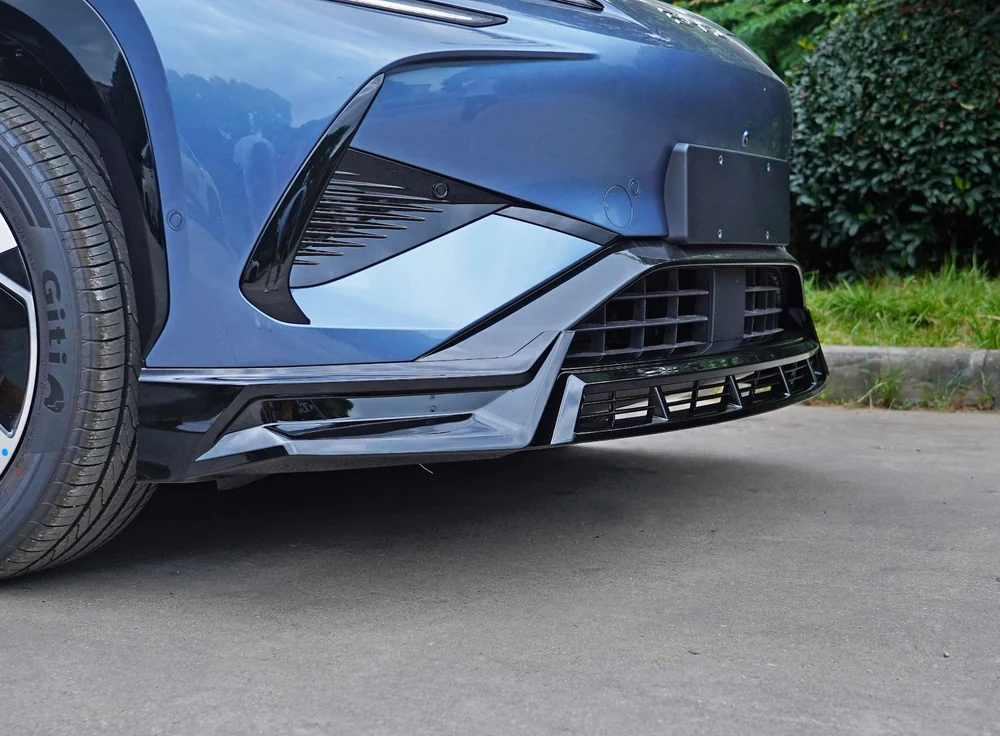
Front Bumper Modification for BYD sealion 7
The Danish tax question, explained without the panic
This is the part that scares people, so let’s take it slowly.
Denmark taxes cars heavily at registration. If a car is changed so much that it is no longer the same vehicle in tax terms, the original registration tax is effectively gone and a new one can be charged. Motorstyrelsen publishes this as three lists:
- Green — changes that never affect the car’s tax identity. Paint, wrapping and decals are in this list, along with things like tow bars, tinted windows, infotainment, an electric tailgate, wheels and tires of another size that fit the existing hubs, and lights of another design that mount without changing the bodywork.
- Yellow — changes judged case by case. This is where spoilers, side skirts, wheel-arch extensions, replacement bumpers and bolt-on body parts in another material (fiberglass, carbon) sit.
- Red — changes that always mean the car loses its tax identity: replacing the chassis or the body shell, welding or cutting into the bodywork, or an engine change that adds more than 20% power.
The yellow list is not a ban. Motorstyrelsen allows all of those parts on a mechanical fixing. What triggers the tax question is how much of it you do at once: Danish rules allow green changes plus one yellow-category change without a new registration tax. Combine green changes with two yellow-category changes inside 12 consecutive months, and the car can be assessed as having lost its identity — which is when a registration tax bill appears.
The practical takeaway is simple, and it is good news for anyone fitting a single body kit:
- A bolt-on kit is a yellow-category change, not a red one.
- A kit that is screwed, riveted, glued or bolted on does not put you in the red list.
- Cutting, welding or filling the shell does.
- If you are planning a kit and a suspension change and a wheel change in the same season, that is exactly the combination worth checking with Motorstyrelsen first.
Motorstyrelsen will give a binding answer if you ask, and the request can be made before you buy anything.
Who does what: you, the seller, the workshop and the synshal
First-time buyers usually give up at this point because nobody explains who produces what. Here it is in one table.
| Who | What they handle |
|---|---|
| You | Choose the parts, book the inspection if one is needed, and show the car |
| The seller | Accurate product information: the exact part, the model and year it fits, the material, the weight, the mounting points, photos of the fixings and an invoice with the correct HS code |
| The workshop | Fits the kit correctly and keeps a record of what was fitted and how |
| The synshal (inspection company) | If an inspection is required, checks the car, records the change in the Motorregister and issues the inspection report |
What you want from the seller, above all, is accurate information about the part and the car it fits: the correct part number for your model year, the material and weight, how it mounts, and photos of the fixing points. That is the information your workshop works from, and it is what we send with every kit we ship.
If you are unsure whether your project needs a registration inspection, ask a synshal before you buy. In most cases a short phone call settles it, and it costs nothing.
Will the kit stick out, lower your clearance, or hide your plate?
Denmark’s inspection does not measure your splitter against a fixed millimeter limit. What it checks is that the car is still safe and still meets the technical rules — and the Færdselsstyrelsen inspection covers exactly the things a body kit can disturb: steering, brakes, tires, lights, signals, reflectors and load-bearing parts, plus emissions and noise.
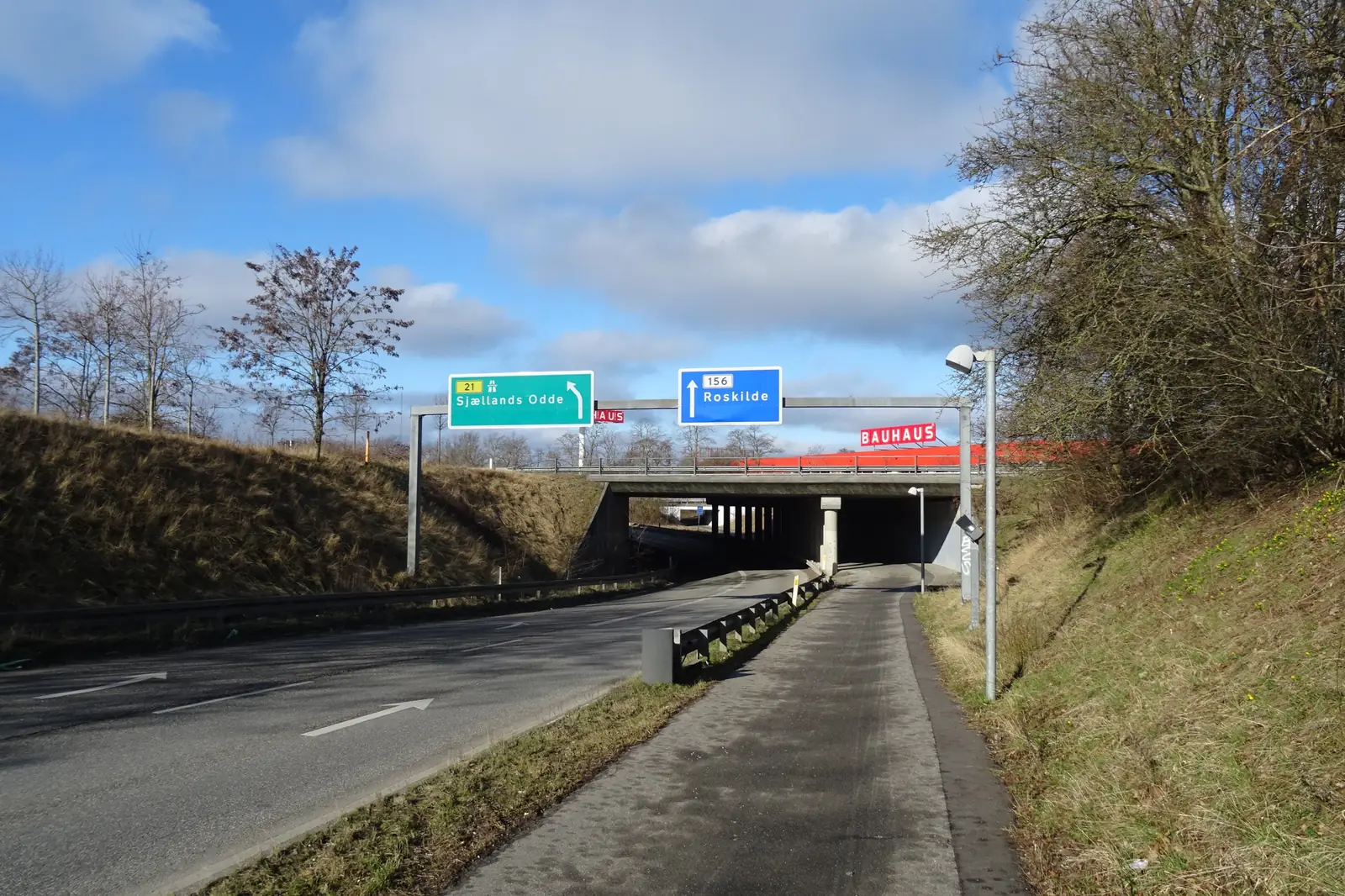
Photo: Leif Jørgensen / Wikimedia Commons (CC BY-SA 4.0)
Three checks matter most in practice:
- The plate and the lights have to stay fully visible. A rear diffuser or bumper extension that swallows the number plate, or a wing that hides the third brake light, is a problem anywhere in Europe — and it is the kind of thing that gets noticed at a roadside check long before your next scheduled inspection.
- Ground clearance is a daily-use question, not just a legal one. A lip that drops the front end below speed-bump height will pass the paperwork and still ruin your week. Denmark’s older town centers and ferries are not forgiving.
- Nothing may touch the wheels or suspension. Wide wheel-arch extensions are allowed as bolt-on parts, but the tire must still clear the arch through the full range of suspension travel and steering lock.
Living in Denmark also means one more thing: the car must be able to pass its ordinary periodic inspection, whether or not the kit needed a separate approval. Even modifications that do not require an approval have to satisfy Færdselsstyrelsen’s technical rules for vehicle equipment. A part that is fitted badly will be found eventually.
Fitment: model year, drilling, and going back to stock
A body kit is not a universal product, and BYD’s line-up proves it. A Seal, an Atto 3, a Dolphin, a Sealion 7 and a Shark 6 share almost nothing at the mounting level, and facelifted versions of the same model can change the bumper shape, the sensor layout and the tow-hook cover.
Before you buy, give the seller the model, model year, trim, market version and VIN. A supplier that will not ask for the VIN is guessing. The BYD model lineup is a useful starting point if you are still confirming which generation you own. When we quote a BYD kit, the VIN is the first thing we ask for, because it is the only reliable way to confirm the bumper revision, sensor openings and tow-hook cover before the part is made.
Three fitment questions matter more than any photo:
- Sensor and camera cutouts. If the original bumper carries ultrasonic sensors, a front radar or washer jets, the new one must provide the right openings and brackets. Cutting them by hand is possible, but it is the most common source of problems — which is why we mold every kit around the openings on your car.
- How it is fixed. This matters more in Denmark than almost anywhere else. A kit that reuses the car’s original mounting points, with screw holes molded to match the OEM positions, stays a bolt-on part — mechanically and legally. A kit that has to be bonded, filled and sanded into the shell changes the whole project.
- Whether you can go back. With a bolt-on kit, returning to standard means unbolting the parts, refitting the originals and, if the change was recorded, letting the inspection company update the register. Keep the factory parts and the round trip stays simple.
If you also drive a UK-registered car, the rules are completely different: our UK body kit legality guide explains why a bolt-on kit there can be legal with no government paperwork at all.
Radar, cameras, ADAS and the tailgate
Modern BYDs are sensor platforms. Front radar modules, ultrasonic park sensors, surround-view cameras, rain sensors and lane-keeping cameras are spread across the bumper, grille and windscreen area — and since 2022, EU rules have required a long list of driver assistance systems on new vehicles under Regulation (EU) 2019/2144.
Replacing a bumper that carries those sensors is a different job from adding a cosmetic lip, because a sensor that is moved, tilted or shielded no longer sees what it is supposed to see.
In practice: the new bumper has to hold the radar and sensor modules at the same height, angle and depth as the original; the workshop should run the calibration routine the manufacturer specifies, because a bumper replacement on a car with front radar or a windscreen camera is not finished when the last bolt is tight; and power tailgates, soft-close doors and sensor-triggered features should be tested through a full cycle before the car leaves the workshop.
This is where the kit itself decides the outcome. A bumper that keeps every factory sensor opening, washer jet and bracket in its original position bolts on and calibrates normally. One that reshapes the front end around a photo rather than a VIN turns a two-hour job into a week of fabrication.
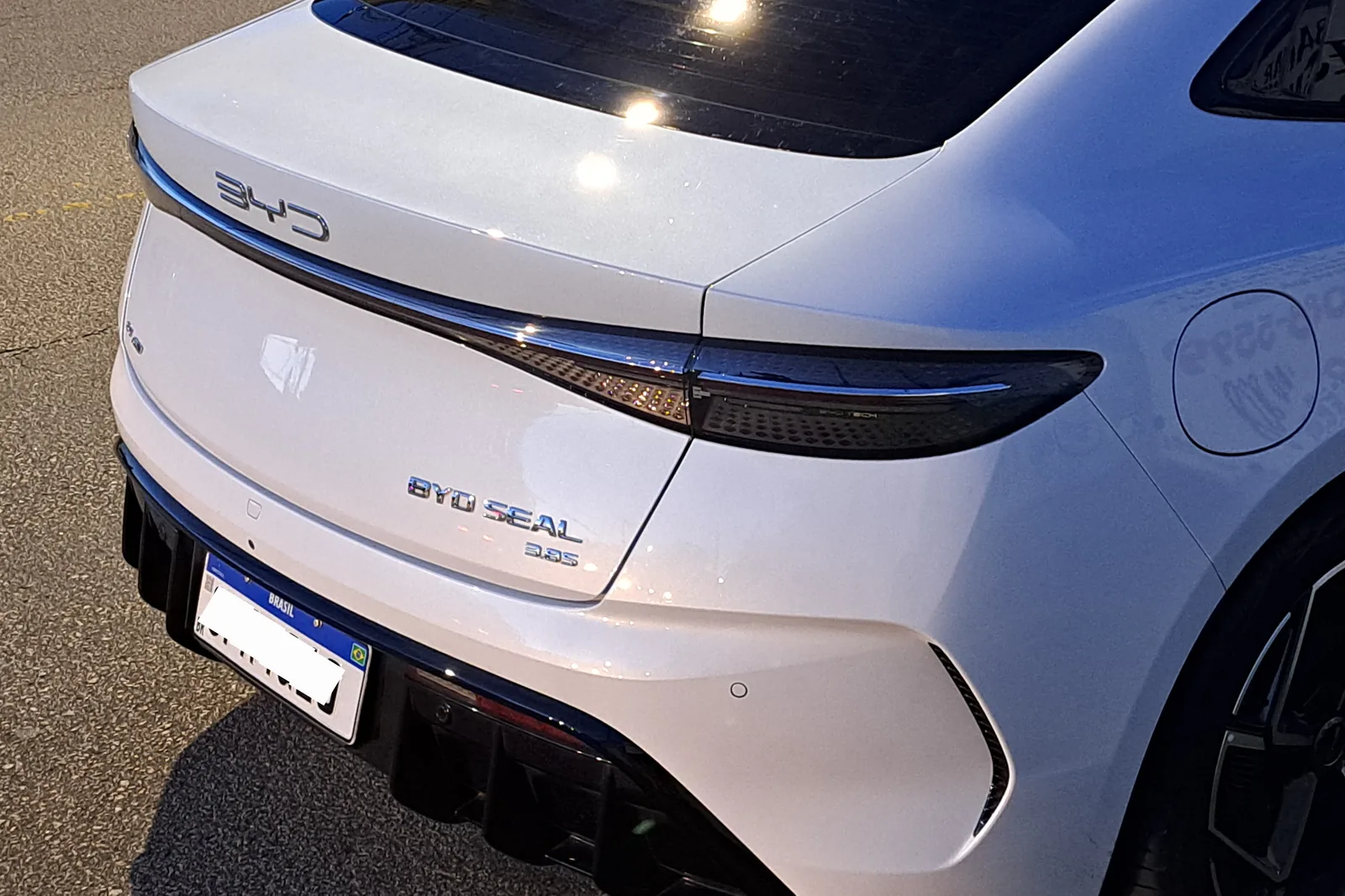
Photo: Mateusmatsuda / Wikimedia Commons (CC BY 4.0)
Materials, paint and high-speed stability
Kit materials are usually ABS, polyurethane, fiberglass or carbon fiber, and each one has a job. Polyurethane (PU) flexes and shrugs off parking knocks, which is why it is the usual choice for full bumper replacements on daily-driven cars. ABS is lighter on cost, takes paint well, and suits lips, grilles and trim. Fiberglass is easy to shape and repair, and is popular for custom widebody work. Carbon fiber is the lightest option and the one buyers choose when weight and finish matter most. The right answer depends on the part, the car and how you use it — not on a single “best” material.
Paint is a separate step, not an afterthought. European cars carry a color code, and a paint shop mixes to that code. On metallic and pearlescent finishes, a good shop blends into the neighboring panels so the new part reads as factory paint rather than a patch — ask for that, not just a color match.
One Danish bonus: paint, wrapping, foiling and decals are explicitly listed as changes that do not affect a car’s tax identity, and they do not require approval. If you want a visual change with the least possible paperwork, this is it.
Danish weather is worth planning for. Salt, grit and stone chips from November to March are hard on any painted surface, so the finish matters as much as the shape: proper primer and sealer under the top coat, and a flexible material such as polyurethane on the parts that face the road. It is also an argument for keeping the kit bolt-on — a part that can be unbolted and repainted is far easier to live with than one that was blended into the shell.
High-speed vibration is almost never a material problem. It comes from insufficient fixing: too few fasteners, adhesive-only joints, or brackets that were never designed for the load. If a wing or diffuser moves when you push it by hand, it will move far more at highway speed.
Importing a body kit into Denmark: duty, VAT and paperwork
Most BYD body kits sold into Europe are made in China, so the landed cost is not the price on the quote. For bumpers and their parts — HS heading 8708 10 — the EU’s third-country duty is 4.5%. Denmark then applies 25% Danish VAT (moms) on the duty-paid value, plus freight, insurance and the customs broker’s fee. Denmark’s VAT rate is the highest in the EU, which is why a body kit quote for Denmark should always be a landed-cost quote, not a parts price.
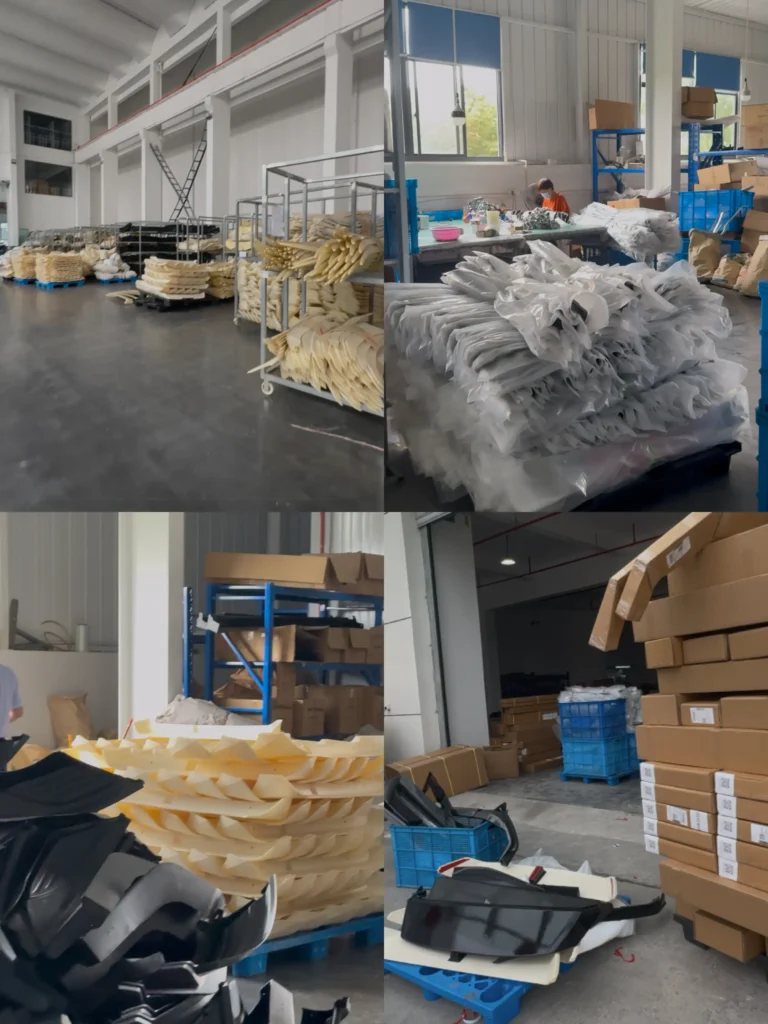
Three things to plan for. Classification: bumpers, grilles, spoilers and trim can sit in different subheadings at different rates, and the code has to match what is in the box. Volume: freight is charged per shipment, not per part, so two bumpers and a set of skirts in one consolidated crate usually cost far less per unit than three parcels — and large kits travel better braced in a crate than loose in cartons. Trade measures: anti-dumping and safeguard measures change over time, so have your broker confirm what applies to the exact part before you commit to a volume order.
For business buyers — accessory shops, body shops and resellers — a DDP quotation that includes duty and taxes removes most of this risk, because the landed price is agreed before the container leaves.
Insurance: a bolted-on kit still has to be declared
This is the step almost everyone skips, and it is the one with the sharpest consequences.
Under the Danish Insurance Contracts Act, the policyholder has to give the insurer the information it needs to assess the risk when the policy is taken out, and to report changes that increase that risk during the contract. If a change is not declared, the insurer can be free of liability for a claim it would not have accepted — or liable only to the extent it would have covered the car on different terms. Putting a kit on the car and saying nothing is exactly the kind of change a claims investigator looks for.
Separately, Danish traffic law puts the responsibility for keeping the vehicle legal on the owner. If the car is not in a lawful condition, that is your problem, not the workshop’s and not the seller’s.
The safe sequence is short: tell your insurer in writing before the work starts, keep their reply, and send them the updated registration certificate if the change was recorded in the Motorregister.
After the install: the two-year inspection and resale
For a normal passenger car in Denmark, the first periodic inspection falls four years after first registration, and after that it is every two years. Færdselsstyrelsen mails the summons eight weeks before the deadline, and the deadline cannot be extended once it has passed. If the car has been through an extra inspection in between — for example because of a constructive change — the schedule is recalculated from that point.
That is why keeping the kit a bolt-on matters over the life of the car. A documented bolt-on kit sits happily alongside a normal two-year inspection cycle. A change that was never recorded, or that a workshop fitted in a way nobody wrote down, tends to surface at the worst moment: at resale, at an inspection, or after a claim.
Why the effort is worth it
None of the above is a reason to skip the kit. It is a reason to buy one that fits and that bolts on.
A bumper that reuses the factory mounting points, keeps every sensor opening in place and arrives with real fitting data stays in the safe lane in Denmark: mechanically fixed, easy to explain, straightforward to reverse. You end up with the car you wanted, on the road, with no tax surprises and no stories to tell at the inspection station.
Body kit legal in Denmark: a pre-purchase checklist
| Check | Why it matters |
|---|---|
| Model, year, trim and VIN confirmed by the seller | Facelifts and market versions change bumpers and sensor layouts |
| Fixing method uses bolts, screws, rivets or adhesive — never welding | Keeps the kit a bolt-on part instead of a rebuild |
| Added weight kept well under 50 kg | Weight changes above 50 kg trigger an inspection |
| Sensor, camera and radar positions documented | Prevents ADAS and parking-system failures after fitting |
| Plate, lights and reflectors still visible in the design | A frequent problem at inspections and roadside checks |
| No cutting of the body shell or chassis | Cutting is what turns a styling job into a rebuilding one |
| Material spec, weight and mounting photos supplied | Gives the workshop and inspection company real data |
| Removal and return-to-original path planned | Keeps resale simple |
| Quote states duty, VAT and delivery terms | The named price is rarely the landed price |
| Insurer notified in writing before installation | Protects the claim, not just the premium |
Frequently Asked Questions
Are body kits legal in Denmark?
Yes — and Denmark is more permissive than its reputation suggests for styling parts. Spoilers, side skirts, wheel-arch extensions and bolt-on bumpers are allowed when they can be pop-riveted, glued, screwed or otherwise mechanically fixed. Parts that have to be welded or filled into the bodywork are treated as a rebuild instead.
Do I need a registreringssyn after fitting a body kit?
Usually not, if it stays a bolt-on. A registration inspection is triggered by constructive changes — steering, brakes, engine, wheels, springs, bodywork and load-bearing parts — by a weight change of more than 50 kg, or by changes to other registered technical data. If your kit bolts to the original mounting points and stays under that weight threshold, there is normally nothing to book.
Will a body kit make me pay registration tax again?
Not by itself. A mechanically fixed spoiler, skirt, wheel-arch extension or bolt-on bumper sits in Motorstyrelsen’s yellow category, and combining green changes with one yellow change does not trigger a new registration tax. The risk comes from combining two yellow-category changes within 12 months, or from welding and cutting bodywork, which is in the red category.
Does paint or a wrap count as a modification in Denmark?
No. Painting, wrapping, foiling and decals are explicitly listed as changes that do not affect the car’s tax identity, and they do not require approval.
What product information should come with the kit?
Enough for your workshop to fit it and for an inspection company to understand what has been fitted: the part and model identification, the material and thickness, mounting drawings or photos of the fixing points, and the weight. We include that pack with every kit we ship.
Will a body kit affect my Danish insurance?
It can. Danish insurance law requires you to give your insurer the information it needs and to report changes that increase the risk. If a modification is not declared, the insurer can be free of liability for a claim it would not have accepted, or liable only on the terms it would have applied.
Get a fitment-matched BYD body kit for Denmark
If you would rather not discover the technical questions after the parts arrive, start with the fitment check. We supply BYD exterior accessories and body kits for the full BYD range — complete kits, or individual front and rear bumpers, side skirts, lips, diffusers, wings and spoilers.
Three details matter here. First, our bumpers are not glue-on parts: the screw holes are molded to match your car’s original mounting points, so the kit fixes the way the factory bumper fixes. Second, sensor openings, washer jets and brackets stay in their factory positions, so the bumper goes on and the assistance systems recalibrate normally. Third, every order ships with the fitting pack your workshop needs — part identification, material spec, mounting photos and weight — and you get one-to-one support from the person who matched your parts if a question comes up mid-install.
We ship from China with MOQ 1 piece, and we also handle bulk orders and dropshipping for shops, installers and resellers across Scandinavia and the rest of Europe. If you would rather not deal with customs at all, ask for a DDP price — duty and Danish VAT included, so the figure we quote is the figure you pay at the door.
Send us your model, year and VIN, and we will confirm compatibility before you pay — then request a quote with the parts, shipping and delivery terms you need. If you also buy vehicles, our global sourcing service covers cars and parts in the same order.
Planning a BYD body kit in Denmark? Browse our BYD exterior accessories collection for model-matched options. If you need a specific accessory or fitment check, contact us with your model, year and VIN — we can help source it.
References
- Ombygning og reparation af biler — Motorstyrelsen (green, yellow and red categories for registration-tax identity) — https://motorst.dk/borger/ombygning-og-reparation-af-mc-og-biler/ombygning-og-reparation-af-biler
- Ændring af køretøjets udstyr eller anvendelse — Motorstyrelsen (when changes must be approved at an inspection, including the 50 kg weight threshold) — https://motorst.dk/borger/registrering-og-omregistrering/aendring-af-koeretoejets-udstyr-eller-anvendelse
- Registreringssyn — Færdselsstyrelsen (constructive changes, booking and what is checked) — https://www.fstyr.dk/privat/syn/registreringssyn
- Periodisk syn — Færdselsstyrelsen (first inspection after four years, then every two years) — https://www.fstyr.dk/privat/syn/periodisk-syn
- Spørgsmål og svar om syn — Færdselsstyrelsen (constructive changes, documentation and the owner’s responsibility under Færdselsloven) — https://www.fstyr.dk/privat/syn/spoergsmaal-og-svar
- Bekendtgørelse om godkendelse og syn af køretøjer — Retsinformation — https://www.retsinformation.dk/eli/lta/2025/1685
- Godkendelse af ombyggede biler — extract of Vejledning om syn af køretøjer, July 2024 (AutoConsult A/S) — https://autoconsult.dk/wp-content/uploads/2024/07/Bil-Folder-juli-2024-VoSaK.pdf
- Lov om forsikringsaftaler, §§ 4, 6 and 45 — Danish Insurance Contracts Act (duty of disclosure and increase of risk) — https://danskelove.dk/forsikringsaftaleloven
- EU customs tariff, HS 8708 10 — bumpers and parts thereof, third-country duty 4.5% — https://www.tariffnumber.com/2026/8708109090
- Regulation (EU) 2019/2144 on type-approval requirements for the general safety of motor vehicles (vehicle safety systems) — EUR-Lex — https://eur-lex.europa.eu/eli/reg/2019/2144/oj

 English
 Portuguese
 French
 Turkish
 Russian
 Arabic
 Spanish