

La pression des pneus est l'élément le plus facile à ignorer sur une BYD Seal et l'un des plus coûteux à négliger. La voiture affiche la pression sur le tableau de bord, mais la plupart des propriétaires ne comparent jamais ces chiffres aux valeurs réellement recommandées par BYD — jusqu'à ce qu'un voyant d'avertissement apparaisse ou qu'un pneu s'use prématurément.
Les coûts s'accumulent silencieusement. La Seal est une berline électrique lourde, donc des pneus sous-gonflés augmentent la résistance au roulement, réduisent l'autonomie, ramollissent la tenue de route et peuvent surchauffer jusqu'à provoquer une fuite d'air. Des pneus surgonflés offrent une conduite dure, perdent de l'adhérence et usent le centre de la bande de roulement. Sur une voiture où chaque kilowattheure compte, une mauvaise pression est une taxe constante et invisible sur chaque trajet.
BYD spécifie des pressions à froid de 250 kPa (36 PSI) à l'avant et 290 kPa (42 PSI) à l'arrière pour la Seal, comme indiqué sur l'étiquette du montant de porte côté conducteur et dans le manuel du propriétaire. Ce guide explique pourquoi ces chiffres diffèrent entre l'avant et l'arrière, comment vérifier correctement la pression, ce que signifient les avertissements du TPMS et comment garder les pneus en bonne santé à travers les saisons et les charges.
Pourquoi la pression des pneus compte davantage sur un véhicule électrique
La Seal pèse environ 1 900–2 100 kg selon la version, car la batterie Blade de 82,56 kWh est logée bas sous le plancher de l'habitacle. C'est plusieurs centaines de kilogrammes de plus qu'une berline essence comparable, et cela change la façon dont les pneus sont chargés.
Plus de poids signifie que chaque pneu travaille plus dur, ce qui rend le gonflage correct plus critique. Le manuel du propriétaire avertit que rouler avec des pneus sous-gonflés entraîne une usure irrégulière des pneus, affecte la maniabilité et la consommation d'énergie, et peut causer une fuite d'air due à la surchauffe.
L'autonomie est le facteur supplémentaire que les propriétaires de véhicules électriques ressentent en premier. Une basse pression augmente la résistance au roulement, et sur un véhicule dont l'autonomie WLTP atteint environ 570 km dans certaines versions, même une petite perte d'efficacité change l'autonomie réelle lors d'un long trajet.

Photo : Alexander-93 / Wikimedia Commons (CC BY-SA 4.0)
Les pressions de pneus correctes pour la BYD Seal
Les pressions à froid recommandées sont les mêmes pour toutes les monte d'origine et s'appliquent à toutes les variantes de la Seal, propulsion et transmission intégrale :
| Mesure | Avant | Arrière |
|---|---|---|
| Pression à froid (kPa) | 250 | 290 |
| Pression à froid (PSI) | 36 | 42 |
| Pression à froid (bar) | 2.5 | 2.9 |
| Taille de pneu standard | 225/50 R18 | 225/50 R18 |
| Taille de pneu en option | 235/45 R19 | 235/45 R19 |
| Emplacement de l'étiquette | Montant de porte côté conducteur | Montant de porte côté conducteur |
Les chiffres de 250/290 kPa proviennent directement des spécifications de la BYD Seal dans le manuel du propriétaire et de l'étiquette de pression des pneus, qui liste également l'exigence d'équilibrage dynamique des roues. Si votre véhicule est un modèle restylé plus récent ou une version spécifique à un marché, faites toujours confiance à l'étiquette de votre propre voiture — elle prime sur tout guide, y compris celui-ci.
Pourquoi les pressions avant et arrière diffèrent
Les pressions de la Seal ne sont pas symétriques pour une raison. Le pack de batteries s'étend le long du plancher du véhicule, et davantage du poids du véhicule repose sur l'essieu arrière que dans une berline typique à moteur avant.
Le chiffre arrière plus élevé de 290 kPa (42 PSI) compense ce biais de poids arrière. Il empêche les pneus arrière de s'affaisser sous charge, maintient la voiture stable à vitesse élevée et aide les deux essieux à s'user uniformément. Utiliser la même pression à l'avant et à l'arrière est l'une des erreurs les plus courantes — et les plus coûteuses — que commettent les propriétaires, car les pneus arrière s'usent prématurément.
Lectures à chaud versus à froid : laquelle utiliser
Réglez toujours la pression des pneus lorsque les pneus sont froids. Le manuel du propriétaire définit « froid » comme :
- Au moins trois heures après l'arrêt du véhicule, ou
- Dans les premiers 1,6 km de conduite, lorsque les pneus sont encore à température ambiante.
Une fois la voiture conduite, les lectures augmentent. Le manuel indique qu'il est normal que la pression mesurée lorsque les pneus sont chauds soit de 30–40 kPa (0,3–0,4 bar) supérieure à la valeur à froid.
Cela mène à la règle la plus importante de ce guide : si vous vérifiez les pneus après un trajet et voyez, par exemple, 280 kPa à l'avant et 320 kPa à l'arrière, ne purgez pas d'air. Ce sont des lectures à chaud normales. Dégonfler pour atteindre la spécification à froid sur un pneu chaud laisse les pneus sous-gonflés lorsqu'ils refroidissent.
Comment vérifier soi-même la pression des pneus
Vérifier la pression prend cinq minutes et ne nécessite qu'un manomètre et une source d'air.
- Garez la voiture et laissez les pneus refroidir pendant au moins trois heures, ou roulez sur 1,6 km maximum avant de vérifier.
- Retirez le capuchon de valve du premier pneu et appuyez fermement le manomètre sur la valve.
- Lisez la pression et comparez-la à la cible de 250/290 kPa (36/42 PSI) pour l'avant et l'arrière.
- Ajoutez de l'air si c'est bas, ou relâchez un peu si c'est clairement au-dessus de la cible. Revérifiez après chaque ajustement — les manomètres et les pompes varient.
- Remettez le capuchon de valve et répétez pour les quatre pneus, y compris la paire arrière.
- Après le gonflage, roulez brièvement et confirmez que les lectures du combiné d'instruments se mettent à jour en conséquence.
Le manuel recommande également de démarrer le véhicule à l'arrêt avant chaque trajet pour vérifier que la pression des pneus répond aux exigences du fabricant. Un coup d'œil rapide à l'affichage du combiné avant de partir ne coûte rien et détecte une fuite lente tôt.

Photo : Woshifongge2006 / Wikimedia Commons (CC BY-SA 4.0)
Comment fonctionne le TPMS sur la Seal
Le système de surveillance de la pression des pneus (TPMS) de la Seal affiche la pression en direct de chaque pneu sur le combiné d'instruments et vous alerte lorsqu'une valeur sort de la plage sûre.
Ce que signifient les avertissements
- Alarme de basse pression : le système avertit lorsqu'une pression de pneu descend sous le seuil de sécurité. Agissez le jour même — regonflez à la spécification à froid et surveillez la lecture.
- Avertissement de défaut : si le témoin d'avertissement de défaut de pression des pneus clignote puis reste allumé, avec “ No Signal ” ou “ Please check TPMS ” sur le combiné, le système ne peut pas lire l'un des capteurs. Le manuel demande aux propriétaires de vérifier le module de surveillance de la pression des pneus et de rechercher les sources électromagnétiques à proximité.
- “Affichage ” No Signal » : cela indique que le signal de pression au niveau de cette roue est perturbé, ou que le module de surveillance peut être endommagé. Un concessionnaire ou prestataire de services agréé BYD prend en charge les défauts du module.
Limites du TPMS
Le système avertit, mais il n'empêche pas de rouler avec une pression anormale. Le manuel précise clairement que le conducteur doit vérifier la pression avant chaque trajet. La réception peut également être affectée dans les zones à forte interférence électromagnétique, donc un “ No Signal ” momentané après un stationnement près d'un équipement électrique n'est pas automatiquement une défaillance de capteur.
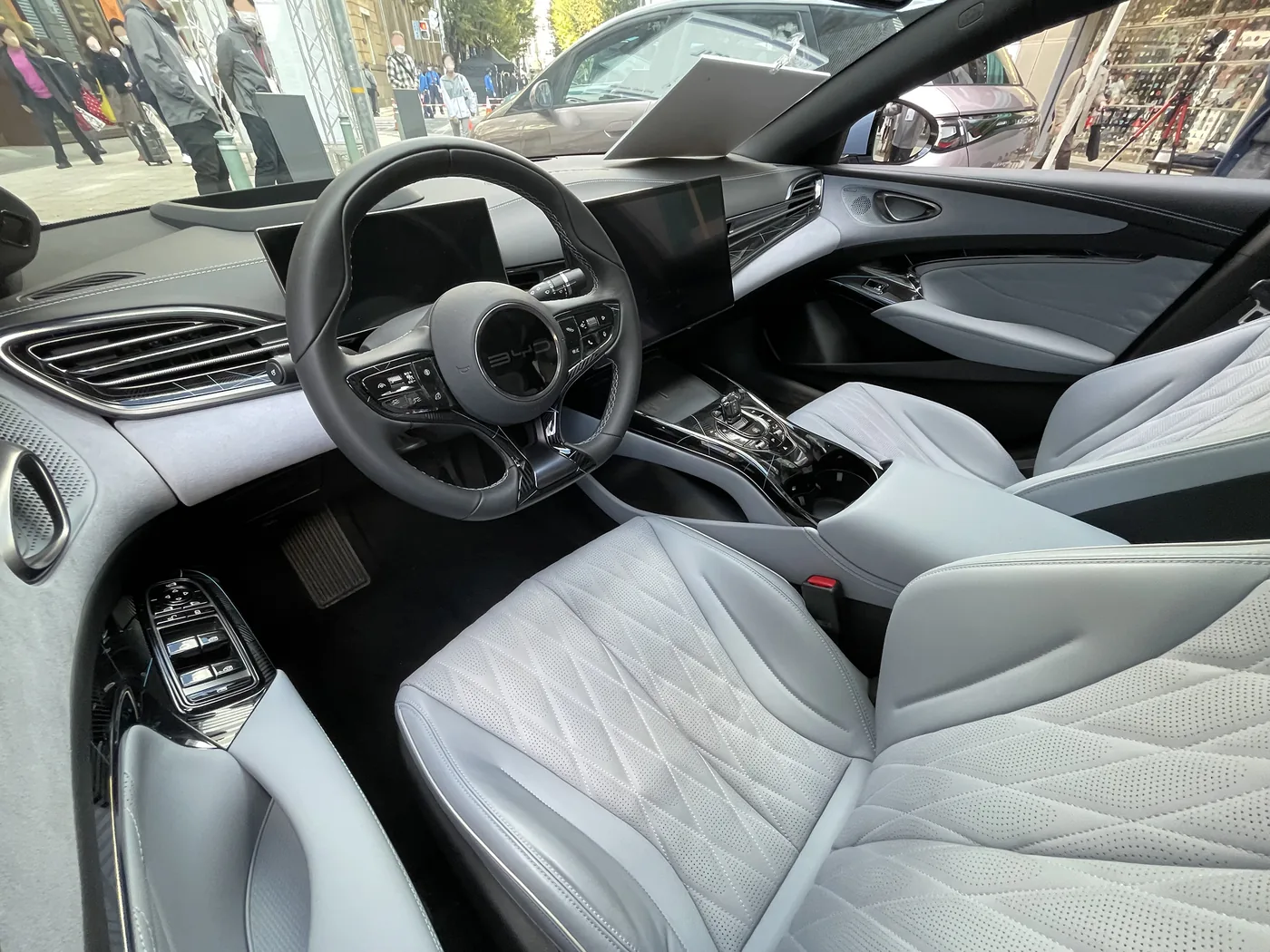
Photo : Tokumeigakarinoaoshima / Wikimedia Commons (CC BY-SA 4.0)
Ce qu'une mauvaise pression fait à la voiture
Chaque erreur a une signature prévisible :
| Condition | Manipulation | Conduite | Usure des pneus | Gamme |
|---|---|---|---|---|
| Sous-gonflage | Molle, moins précise | Plus souple, plus de roulement | Les deux épaules s'usent rapidement | Réduit |
| Sur-gonflage | Plus incisive mais moins d'adhérence | Dure | La bande de roulement centrale s'use rapidement | Gain marginal uniquement |
| Pression correcte | Équilibrée | Confort conçu | Uniforme sur la bande de roulement | Optimale |
Le sous-gonflage est le plus grand risque car il est silencieux. Le pneu fléchit davantage à chaque révolution, la chaleur s'accumule, et sur un VE lourd la charge supplémentaire accélère à la fois l'usure et le risque de fuite d'air par surchauffe. Le sur-gonflage échange le confort et l'adhérence contre un gain d'autonomie trop faible pour être remarqué.
Ajustement selon les saisons et les charges
La pression des pneus est un gaz, elle suit donc la météo. La pression baisse quand la température chute et augmente quand elle monte.
- Hiver : une règle empirique courante est d'environ 7 kPa (environ 1 PSI) par 10°C de variation de température. Vérifiez mensuellement de l'automne au printemps et complétez au besoin.
- Été : les relevés à chaud après avoir roulé sembleront élevés. Comme indiqué ci-dessus, ne dégonflez pas un pneu chaud pour atteindre la spécification à froid.
- Charge complète : si l'étiquette de votre cadre de porte indique une pression en charge complète, utilisez-la lorsque vous transportez cinq adultes plus des bagages. Sur de nombreux marchés, cette valeur se situe environ 10–20 kPa au-dessus de la valeur normale à froid.
- Conduite sur autoroute : la conduite prolongée à haute vitesse ne nécessite pas de réglage à froid plus élevé — les valeurs standard de l'étiquette s'appliquent, et le système tient compte de lui-même des relevés à chaud plus élevés.
Santé des pneus et quand les remplacer
La pression ne représente que la moitié de l'entretien des pneus. La bande de roulement et les flancs méritent un coup d'œil rapide chaque fois que vous vérifiez l'air.
- Profondeur de la bande de roulement : le minimum légal sur la plupart des marchés est de 1,6 mm. Les témoins d'usure — petites bandes en relief à travers les rainures de la bande de roulement — apparaissent lorsque le pneu approche de cette limite.
- Témoins d'usure exposés : le manuel indique que les pneus dont les témoins d'usure sont exposés ont subi une perte de performance grave et doivent être remplacés.
- Dommages aux flancs : fissures, renflements ou corde visible signifient un remplacement immédiat quelle que soit la profondeur de la bande de roulement.
- Usure irrégulière : si un pneu s'use sur un seul bord, vérifiez l'alignement et la suspension avant de monter des pneus neufs.
- Durée de vie typique des pneus de VE : 40 000–60 000 km est une attente courante, selon le style de conduite. Le freinage régénératif aide en réduisant les forces de freinage brusques, mais le poids et le couple de la Seal exigent tout de même des vérifications régulières de pression.
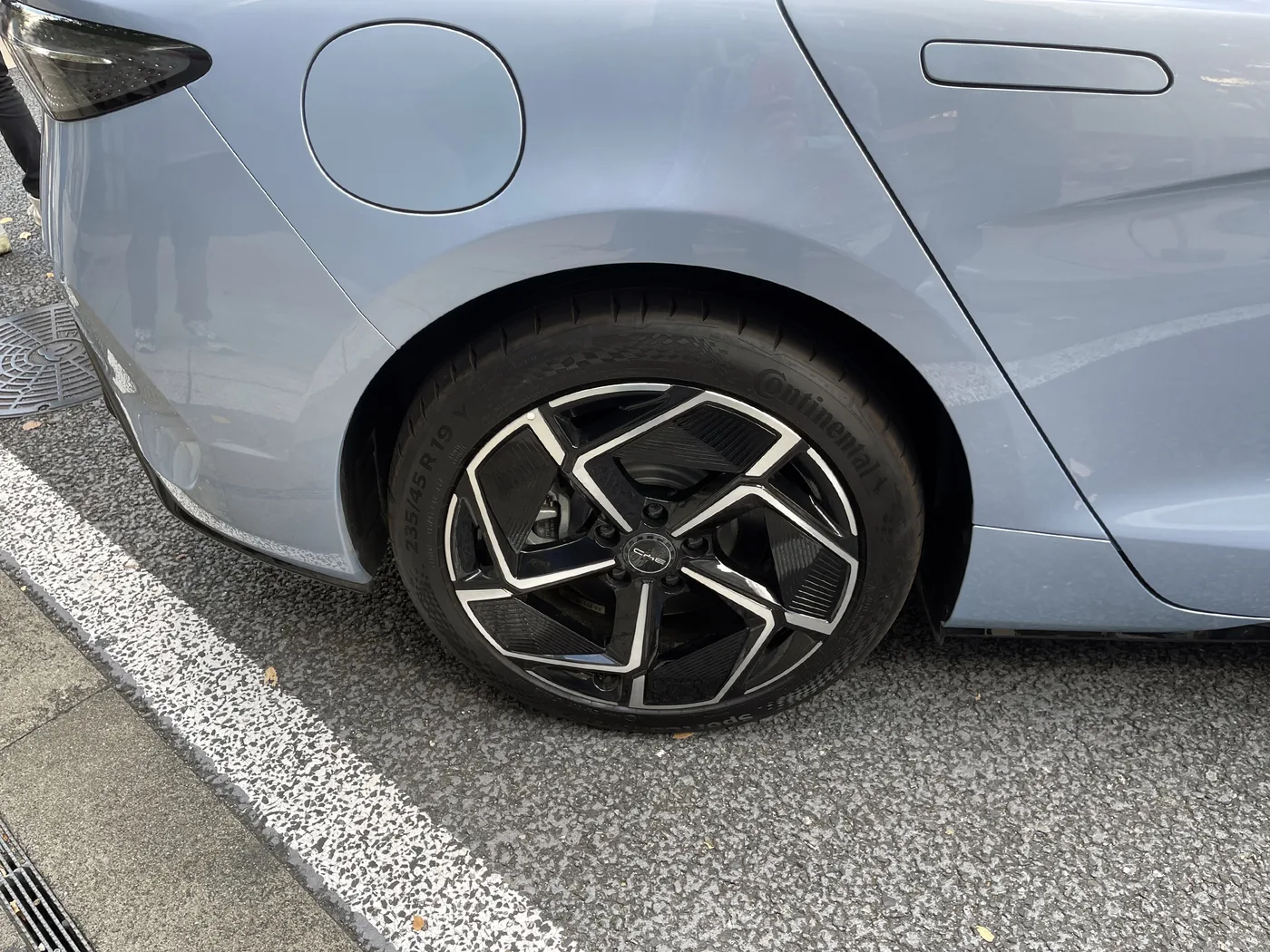
Photo : Tokumeigakarinoaoshima / Wikimedia Commons (CC BY-SA 4.0)
Erreurs courantes des propriétaires de BYD Seal
- Dégonfler des pneus chauds pour correspondre aux spécifications à froid. Des relevés à chaud 30–40 kPa au-dessus de la valeur à froid sont normaux. Libérer de l'air crée un pneu sous-gonflé plus tard.
- Utiliser la même pression à l'avant et à l'arrière. La Seal a besoin de 250 à l'avant et 290 à l'arrière ; des pressions égales provoquent une usure prématurée des pneus arrière.
- Ignorer les alertes du TPMS. Le système avertit mais ne peut pas empêcher de rouler. Une alarme de basse pression mérite une attention le jour même.
- Ne jamais vérifier manuellement. Le TPMS est un dispositif de surveillance, pas un remplacement d'une vérification mensuelle au manomètre et d'un coup d'œil à la bande de roulement.
- Surgonfler pour une meilleure autonomie. Le gain est marginal, et le compromis — confort dégradé, moins d'adhérence, usure au centre — n'en vaut pas la peine.
- Oublier les baisses de pression hivernales. L'air plus froid dégonfle naturellement les pneus ; des vérifications mensuelles de l'automne au printemps permettent de le détecter.
- Sauter la vérification au démarrage à l'arrêt. Un coup d'œil au tableau de bord avant de rouler permet de détecter tôt les fuites lentes.
Référence rapide de pression des pneus BYD Seal
| Article | Valeur |
|---|---|
| Pression à froid, avant | 250 kPa / 36 PSI / 2,5 bar |
| Pression à froid, arrière | 290 kPa / 42 PSI / 2,9 bar |
| Dimensions des pneus | 225/50 R18 standard ; 235/45 R19 en option |
| Étiquette de pression | Montant de porte côté conducteur |
| Définition de « à froid » | 3+ heures stationné, ou dans les 1,6 km de conduite |
| Augmentation normale à chaud | 30–40 kPa au-dessus de la pression à froid |
| Affichage TPMS | Lectures en direct par pneu sur le tableau de bord |
| Messages de défaut | “ No Signal ” ou “ Please check TPMS ” |
| Profondeur de sculpture minimale légale | 1,6 mm, indiqué par les témoins d'usure |
| Fréquence de vérification | Mensuellement, avant les longs trajets, et après les variations de température |
Foire aux questions
Quelle pression PSI pour mes pneus BYD Seal ?
Les pressions à froid recommandées sont de 36 PSI (250 kPa) à l'avant et 42 PSI (290 kPa) à l'arrière. Confirmez l'étiquette sur le montant de porte côté conducteur, car les versions restylées ou spécifiques au marché peuvent différer.
Pourquoi la BYD Seal a-t-elle besoin d'une pression arrière plus élevée ?
Le pack de batteries est situé bas sous le plancher et une plus grande partie du poids du véhicule repose sur l'essieu arrière. La pression arrière plus élevée compense cette charge, maintient la stabilité de la voiture et prévient une usure inégale des pneus arrière.
Dois-je vérifier la pression des pneus à chaud ou à froid ?
Réglez toujours la pression lorsque les pneus sont froids : au moins trois heures après le stationnement, ou dans les 1,6 km de conduite. Les lectures à chaud sont 30–40 kPa plus élevées et sont normales — ne dégonflez jamais un pneu chaud pour correspondre aux spécifications à froid.
Que signifie l'avertissement TPMS de la BYD Seal ?
Une alarme de basse pression signifie qu'un pneu est en dessous du seuil de sécurité et a besoin d'air. “ No Signal ” ou “ Please check TPMS ” avec un témoin d'avertissement clignotant puis fixe signifie que le système ne peut pas lire un capteur — vérifiez les interférences électromagnétiques ou contactez un concessionnaire agréé BYD.
À quelle fréquence dois-je vérifier la pression des pneus de ma BYD Seal ?
Au moins une fois par mois, avant les longs trajets, et à chaque changement de saison. Les baisses de température hivernales peuvent réduire sensiblement la pression, donc des vérifications mensuelles de l'automne au printemps sont essentielles.
Comment savoir quand remplacer les pneus de ma Seal ?
Remplacez les pneus lorsque la sculpture atteint 1,6 mm (témoins d'usure visibles), lorsque les flancs présentent des fissures, des renflements ou des cordes, ou lorsque l'usure est clairement inégale après confirmation de l'alignement. La durée de vie typique d'un pneu de VE est d'environ 40 000–60 000 km selon le style de conduite.
Faites travailler les pneus de votre Seal pour vous
Réglez les pressions à froid, vérifiez-les mensuellement, et laissez le TPMS faire son travail en détectant ce que vous manquez. Dix minutes avec un manomètre protègent l'autonomie, le confort de conduite et la durée de vie des pneus — et gardent la voiture prévisible sur la route. En cas de doute, suivez l'étiquette sur le montant de porte, pas les conseils de forum ni un chiffre deviné.
Continuez à suivre Marvix Auto pour plus de guides pratiques pour propriétaires de BYD, des fonctionnalités de clé intelligente à la charge et à l'entretien.
Vous cherchez les bons accessoires pour votre BYD Seal ? Parcourez notre accessoires BYD Seal collection pour des options adaptées au modèle. Si vous avez besoin d'une pièce spécifique qui n'est pas listée, nous contacter avec votre année de modèle et les détails de la pièce — nous pouvons vous aider à trouver l'accessoire adapté.
Sources
- Manuel du propriétaire BYD Seal — spécifications de pression des pneus, conseils de pression à froid/à chaud, avertissements TPMS et sections de remplacement des pneus.
- Guide utilisateur des spécifications BYD SEAL — tableau des spécifications et pressions des pneus (225/50 R18 et 235/45 R19, 250/290 kPa avant/arrière).
- Wikimedia Commons — photos par Alexander-93, Woshifongge2006 et Tokumeigakarinoaoshima (CC BY-SA 4.0).


 English
 Portuguese
 French
 Turkish
 Russian
 Arabic
 Spanish