

Body kits universal listings rarely fit every car cleanly. A “universal body kit” or adjustable lip is usually a compromise shape that needs trimming, padding or creative mounting — and it often leaves gaps at bumper edges, rockers and sensor zones. A vehicle-specific kit is molded for one model’s lines and is the safer choice for daily drivers and wholesale stock.
This checklist shows how to tell the two apart, what to measure before you buy, and how the same rules apply when you shop BYD body kits. For spoiler-only universal fitment, use our dedicated universal spoiler fitment guide — this post stays on front lips, side skirts, rear diffusers and related bumper/sensor checks.
If you need the basics first, see what a car body kit is and full body kit or individual parts.

Universal vs vehicle-specific: quick comparison
Search phrases like body kits universal, universal body kit and “can a universal body kit fit on any car” all point to the same buyer doubt. Use this table before you add anything to a cart.
| Check | Universal / adjustable | Vehicle-specific |
|---|---|---|
| Marketing claim | “Fits most cars”, multi-hole bar, cut-to-fit | Named model (e.g. BYD Seal) on the listing |
| Shape | Generic curve or flat section | Follows that bumper, rocker or rear valance |
| Mounting | Tape, self-tappers, multi-slot brackets — often DIY judgement | Holes/tabs aligned to OEM-style points on many designs |
| Sensors & cameras | Buyer must clear radar windows, PDC holes, camera sightlines | Easier to plan from on-car photos of that model |
| Paint & shop time | More gap-filling, blending and rework risk | More predictable prep if the part seats cleanly |
| Best use | Budget experiment on a non-critical car | Daily drivers, retail customers, wholesale inventory |

Can a universal body kit fit on any car?
Short answer: not cleanly. A universal piece may physically bolt or tape onto many bumpers, but “can you put any body kit on any car” is the wrong question. The right questions are: does it follow the OEM edge, do the gaps stay even, and do sensors still work?
Typical problems with body kits universal products:
- Front lips — flat or multi-slot bars that do not match bumper corners; visible steps or lift at the ends.
- Side skirts — length or height wrong for the wheelbase and sill; gaps at door bottoms or wheel arches.
- Rear diffusers / valances — exhaust or charge-port cut-outs in the wrong place; uneven contact under the bumper.
- Sensor zones — parking sensors, front radar and cameras blocked, tilted or left with no clearance window.
Spoilers have their own geometry (trunk length, hatch angle, high-mount brake light). Do not reuse this bumper checklist for wings — use the universal spoiler fitment guide instead.
Fitment checklist before you buy
Work through these steps whether the listing says “universal” or names a model.
- Confirm the exact vehicle — market name, body type (sedan, SUV, MPV) and generation notes only as stated on the product page. Do not assume Seal equals Sealion 7, or Song Plus equals another DM-i badge.
- Read the listing title and fitment line — vehicle-specific kits name the model; universal kits talk about “adjustable”, “cut to fit” or “most cars”.
- Compare photos to your bumper — look for matching corner radius, lower grille width and splitter/lip depth. On-car gallery shots beat white-background packs for this.
- Check mount method — adhesive tape, screws into the bumper lip, under-tray brackets, or OEM-style clips. If a product does not say “no drill”, plan for drilling.
- Map sensors and cameras — front radar window, parking sensors, reverse camera, blind-spot hardware. Mark keep-out zones with tape on the car before you order.
- Measure critical lengths — lip width vs bumper, skirt length between arches, diffuser width vs rear bumper. Note ground clearance with your tyre and ride height.
- Plan paint and shop hours — universal parts often need more filler and blend time; ask the body shop for a quote that includes gap correction.
- Ask for a fitment check — send model/year, VIN, part number or bumper photos to the seller before you commit volume.
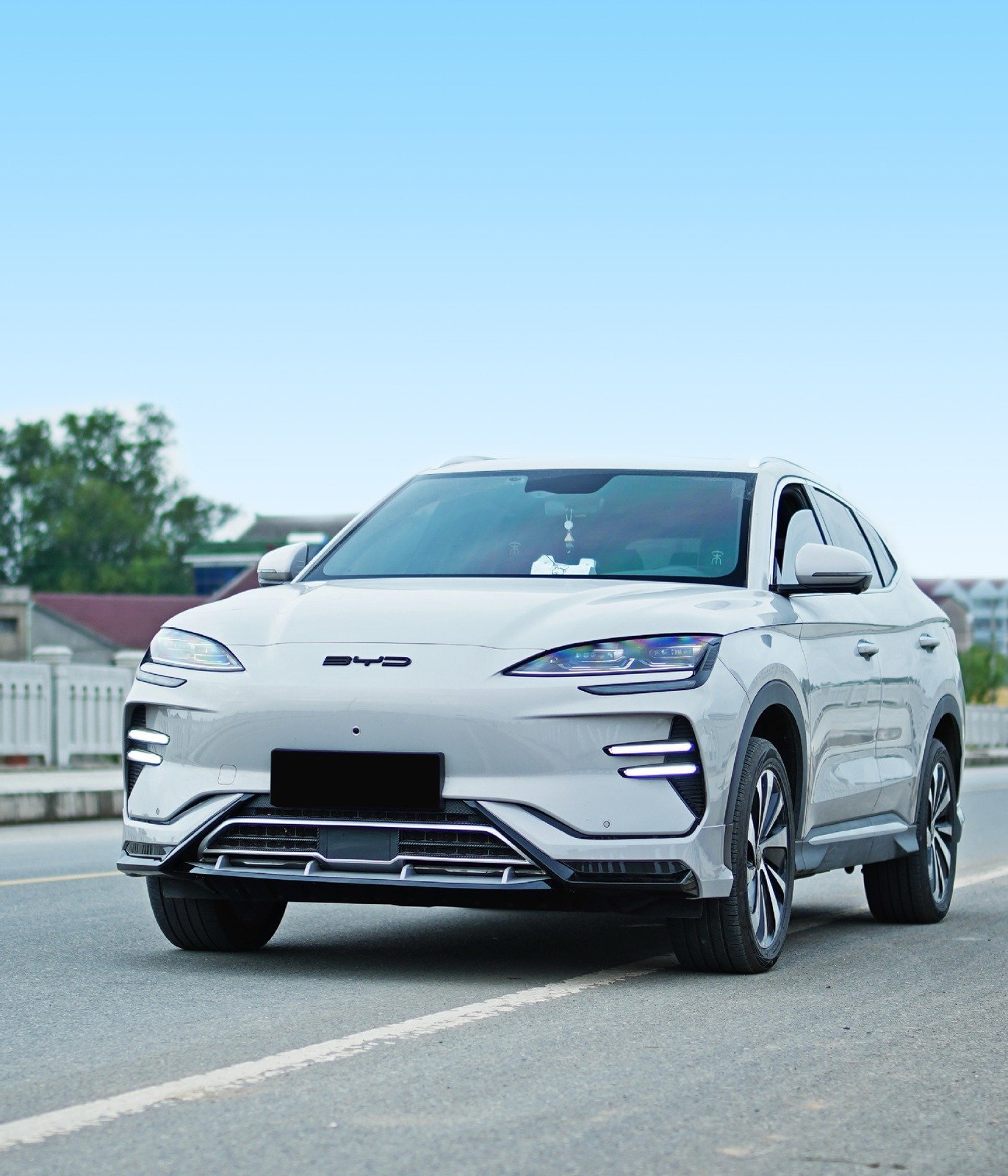
What to inspect on lips, skirts and diffusers
Front bumper lips
Lips change the lower front profile. On a vehicle-specific part, the outer tips should follow the bumper corners without a hard step. Universal lips often sit well in the centre and float at the ends. Also check approach angle on steep driveways — a deep lip scrapes first. For definitions, see what is a front lip.
Side skirts
Skirts should track the sill line between the arches. Watch for warping on long pieces after shipping, and for jacking-point clearance. Universal skirt “kits” sold by length alone rarely match BYD rocker contours.
Rear bumper diffusers and valances
Match the lower rear bumper width, exhaust or blanking layout, and tow-eye / parking-sensor positions. A universal diffuser with generic fins can look busy and still leave a gap under the OEM bumper edge.
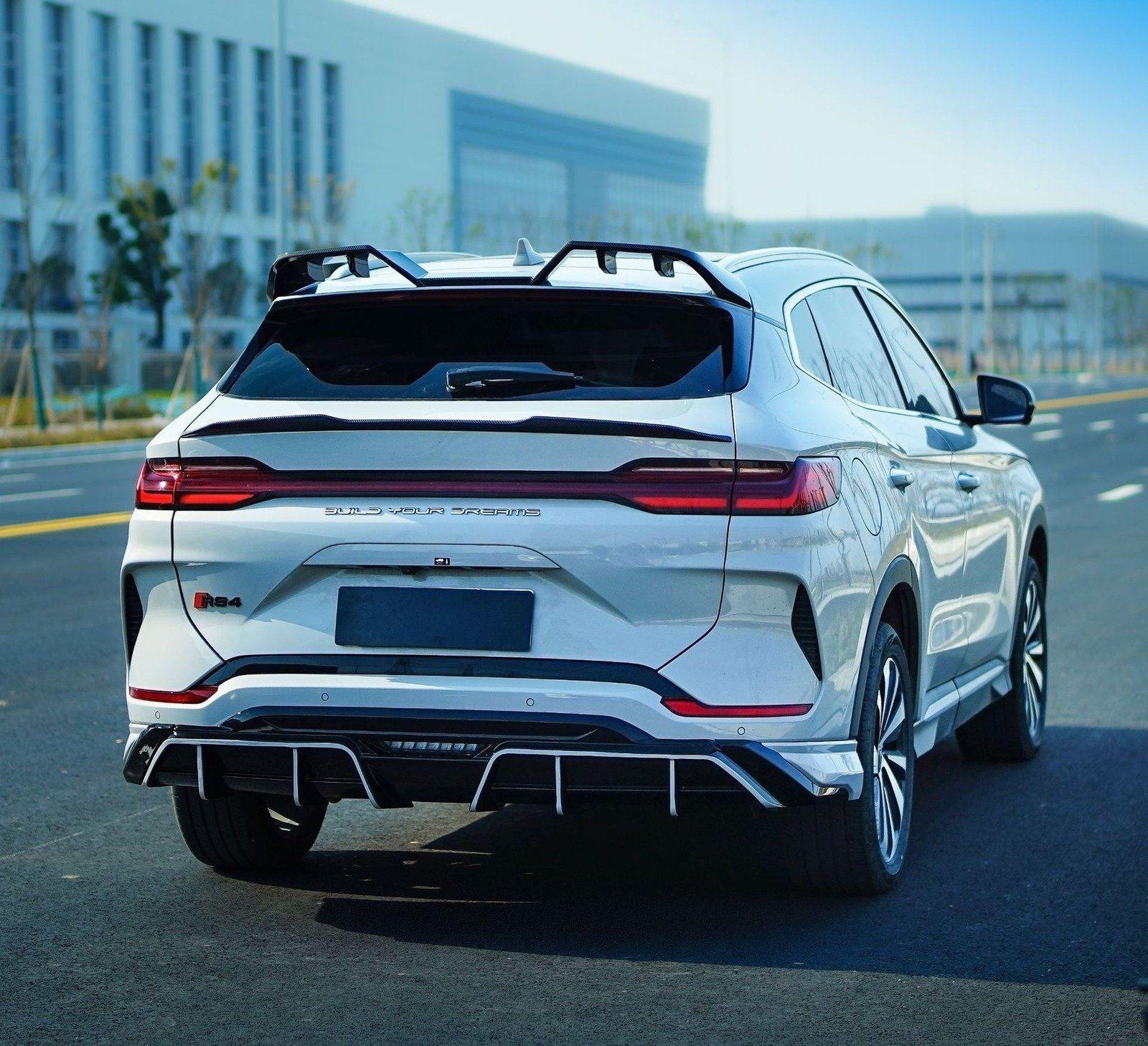
Sensors, cameras and EV packaging
Modern BYD bumpers carry parking sensors, radar modules and camera sightlines. A poorly fitted lip or diffuser can:
- Cover or tilt a sensor pocket
- Change the radar’s clear window in the lower grille area
- Force the shop to relocate holes after paint
Vehicle-specific parts with on-car photos for your model reduce that risk. Universal parts shift the burden onto the installer. When in doubt, photograph the bumper with sensors marked and send the set with your enquiry.
How this applies when you buy for BYD
Marvix catalogues are built as vehicle-specific exterior kits and pieces — not “fits any car” universal packs. Browse:
- BYD body kits
- Front bumper lips
- Side skirts
- Rear bumper diffusers
- Spoilers & wings (then use the spoiler fitment guide for universal questions)
Pick the model archive that matches the car you own or stock — for example BYD Seal, or start from the BYD car models index. If you are not sure which version you have — especially after a facelift — send us photos via contact and we will check before you order.
Our body kit installation guide walks through the install sequence for lips, skirts and diffusers; if you would rather not fit them yourself, treat mounting as a shop job and ask for an itemised quote.
Decision guide: when universal is (and is not) acceptable
| Situation | Safer choice |
|---|---|
| Daily EV with ADAS sensors | Vehicle-specific kit for that model |
| Retail customer expects OEM-like gaps | Vehicle-specific |
| Wholesale shelf for known BYD SKUs | Vehicle-specific (predictable returns) |
| One-off show car where gaps will be custom-fitted | Universal only if the shop budgets rework |
| Spoiler-only experiment | Follow the spoiler fitment guide, not bumper rules |
Frequently Asked Questions
Can a universal body kit fit on any car?
It may attach to many cars, but even contact and sensor clearance are unlikely without custom work. Treat “universal” as adjustable, not plug-and-play.
Can you put any body kit on any car?
No. Bumper geometry, rocker length, diffuser cut-outs and sensor layouts differ by model. Putting any kit on any car usually means gaps, paint rework or blocked sensors.
Are Marvix BYD kits universal?
No — they are listed for named BYD models. Always confirm the product page and send model details or photos if you are unsure.
Where should I read about universal spoilers?
Use our universal spoiler fitment guide. This article covers lips, skirts, diffusers and bumper sensors instead.
What photos should I send for a fitment check?
Front three-quarter of the bumper, straight-on lower front, full side sill, rear lower bumper, and close-ups of sensor/radar areas. Add VIN or market model name if you have them.
Is a vehicle-specific kit always more expensive?
Parts price varies, but shop hours and return risk often make universal “bargains” cost more all-in. For budgeting context, see what a car body kit is and plan full vs piece-by-piece with full body kit or individual parts.
Buying vehicle-specific kits for a shop or fleet?
Marvix is a one-stop BYD partner: vehicle-export background plus exterior parts, accessories and export logistics. We run a dedicated plastic parts production line with in-house tooling, a large mold library and a 2,000+ m² warehouse and production site — many BYD models are already tooled.
1-piece samples and retail orders are accepted, with tiered pricing for larger quantities. Listed parts are usually in stock, and orders under 100 sets ship directly with no production lead time. Mixed-SKU orders and dropshipping are available. We check fitment from model/year, VIN, part number or photos.
Shipping terms for large parts: Brazil, Colombia and Mexico — EXW, FOB or DAP only (buyer handles customs and taxes). All other countries — EXW, FOB, DAP, plus DDP for samples, retail and dropshipping. See our shipping policy for BYD accessories.
Start with BYD exterior accessories wholesale, browse BYD body kits, or request a quote.

 English
 Portuguese
 French
 Turkish
 Russian
 Arabic
 Spanish