

A rear diffuser is the shaped section under the back of a car that lets air leaving the underbody expand and slow down. On a race car with a flat floor it lowers pressure under the car and adds downforce. On most road cars, a rear diffuser fitted to the bumper is mainly a styling part with a modest aero effect at best.
That does not make it pointless. A good diffuser finishes the rear of the car, balances a front lip and side skirts, and gives a plain bumper a sportier, lower look. This guide explains what a rear diffuser does, where real aero ends and styling begins, how it differs from a rear lip, and what to check before you buy one for a BYD.
If you are new to exterior upgrades, our guide to what a car body kit is covers how the diffuser fits into a full kit.
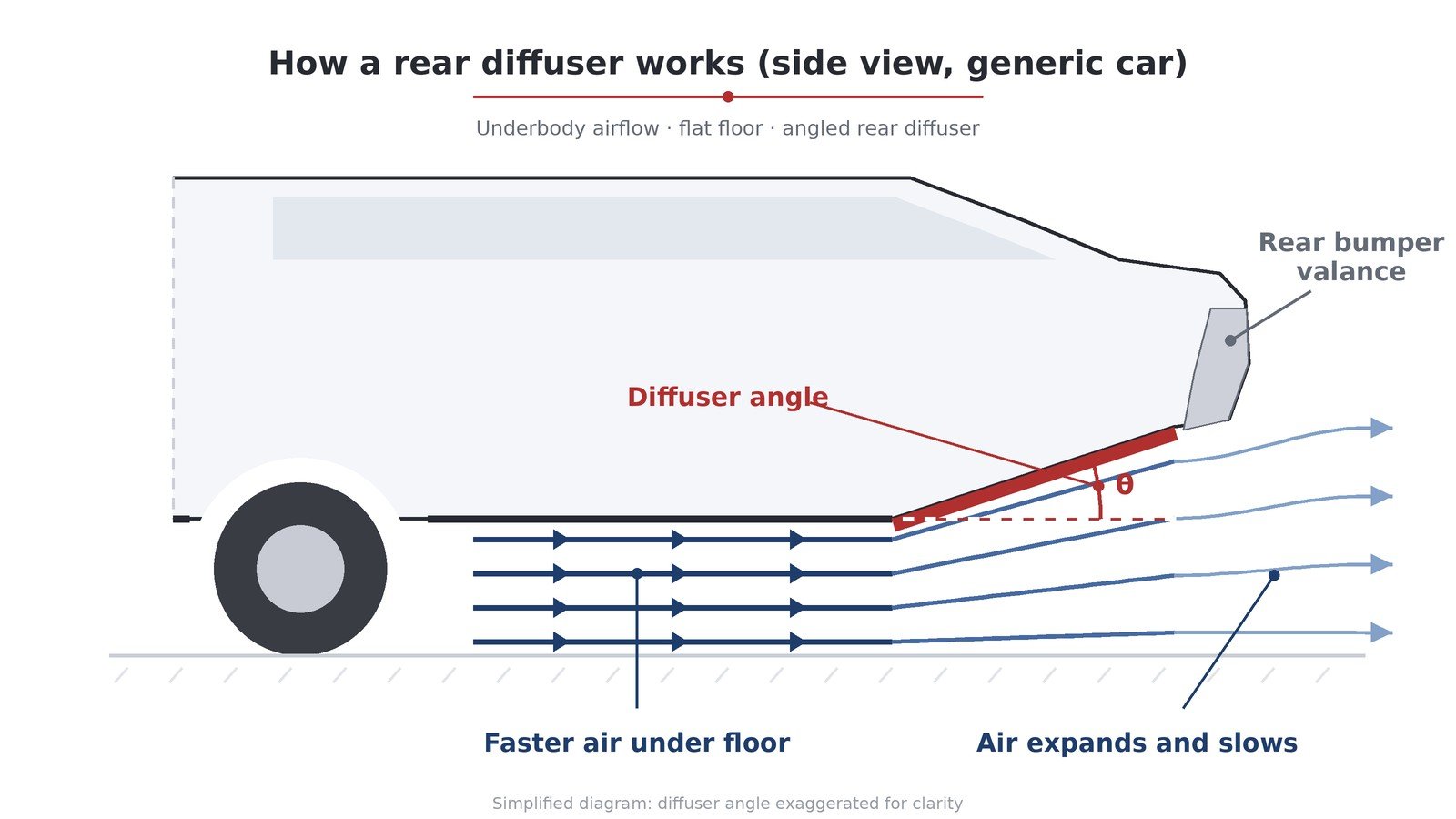
What does a rear diffuser do?
Air that passes under a moving car is squeezed between the floor and the road, so it speeds up. When it reaches the back of the car, it has to rejoin the slower air behind the vehicle. A diffuser gives that air an upward-angled exit, so it can expand gradually instead of tumbling out in a messy wake.
When the design works, three things happen:
- Lower pressure under the car. Faster air under the floor means lower pressure there, which pulls the car towards the road. This is downforce.
- A cleaner wake. Air that leaves the underbody smoothly creates less turbulence behind the car, which can trim drag.
- Better balance with the front. On track cars, the diffuser works with the front splitter and wing so grip is shared between both axles.
The vertical fins you see on many diffusers are called strakes. They help keep the airflow running straight back rather than spilling sideways out of the diffuser channels.
Real aero vs styling: what to expect on a road car
A diffuser only works properly when the air arriving at it is clean and fast, which needs a mostly flat underbody, low ride height and real speed. The aero force grows with the square of speed, so the effect at 50 km/h is a small fraction of what it is at motorway or track speeds.
Most road cars do not have a sealed flat floor. Suspension parts, the spare-wheel well, heat shields and the rear subframe all disturb the air before it reaches the bumper. That is why a diffuser bolted to the lower edge of a factory bumper usually changes the look far more than it changes how the car drives.
| Motorsport diffuser | Road-car bumper diffuser | |
|---|---|---|
| Where it sits | Part of the underbody floor | Lower edge of the rear bumper |
| Needs a flat floor | Yes, designed together | Usually not, the floor stays factory |
| Main job | Downforce and aero balance | Styling, with a small aero effect at most |
| Ride height | Very low | Factory or slightly lowered |
| What you notice | Grip at high speed | A lower, wider, sportier rear |
Electric cars are an interesting case. Many EVs have a fairly flat battery floor, so the underbody is cleaner than on a typical petrol car. Even so, an add-on bumper diffuser is not the same as an engineered underbody, and you should not expect a measurable range gain from one unless the maker has published tests for that exact part.
So buy a diffuser because you like how it looks and how it completes the car. If someone promises big downforce or range gains from a street-fit bumper diffuser, ask for the test data.
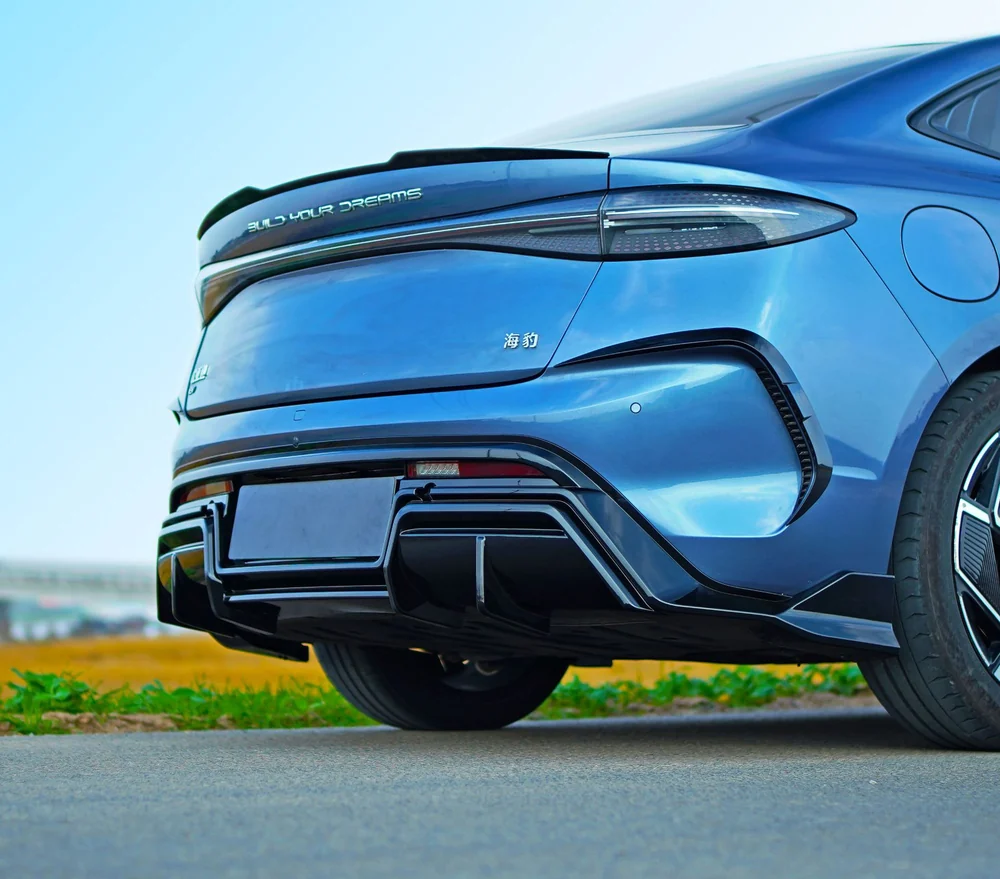
Rear diffuser vs rear lip vs rear valance
These terms overlap, and sellers use them loosely. Here is how they are usually meant:
- Rear valance is the lower panel of the rear bumper itself. Some cars have a separate valance piece from the factory.
- Rear lip (also called a back lip) is a thin add-on strip along the bottom edge of the rear bumper. It mirrors a front lip and mainly adds a sharper edge.
- Rear diffuser is a deeper add-on or replacement section with channels and fins that copy the shape of a race diffuser.
A rear lip is the subtle option. A diffuser makes a bigger visual statement and usually suits cars that also have a front lip and side skirts. If you are planning the front first, our guide to front lips, splitters and air dams explains the matching parts.
Why owners still fit diffusers
Most people who fit a diffuser are not chasing lap times. The real reasons are practical and visual:
- A finished rear. Factory rear bumpers often have a tall, flat lower section. A diffuser breaks it up and makes the car look lower.
- Kit balance. A front lip and side skirts with a plain rear can look unfinished. The diffuser closes the line around the car.
- Contrast. A dark diffuser on a light-coloured car adds definition and makes the rear look wider.
- Easy to reverse. Most bumper diffusers are add-on parts, so the car can go back to standard if you sell it.
If you are deciding whether to buy the diffuser on its own or as part of a set, read full body kit or individual parts first.
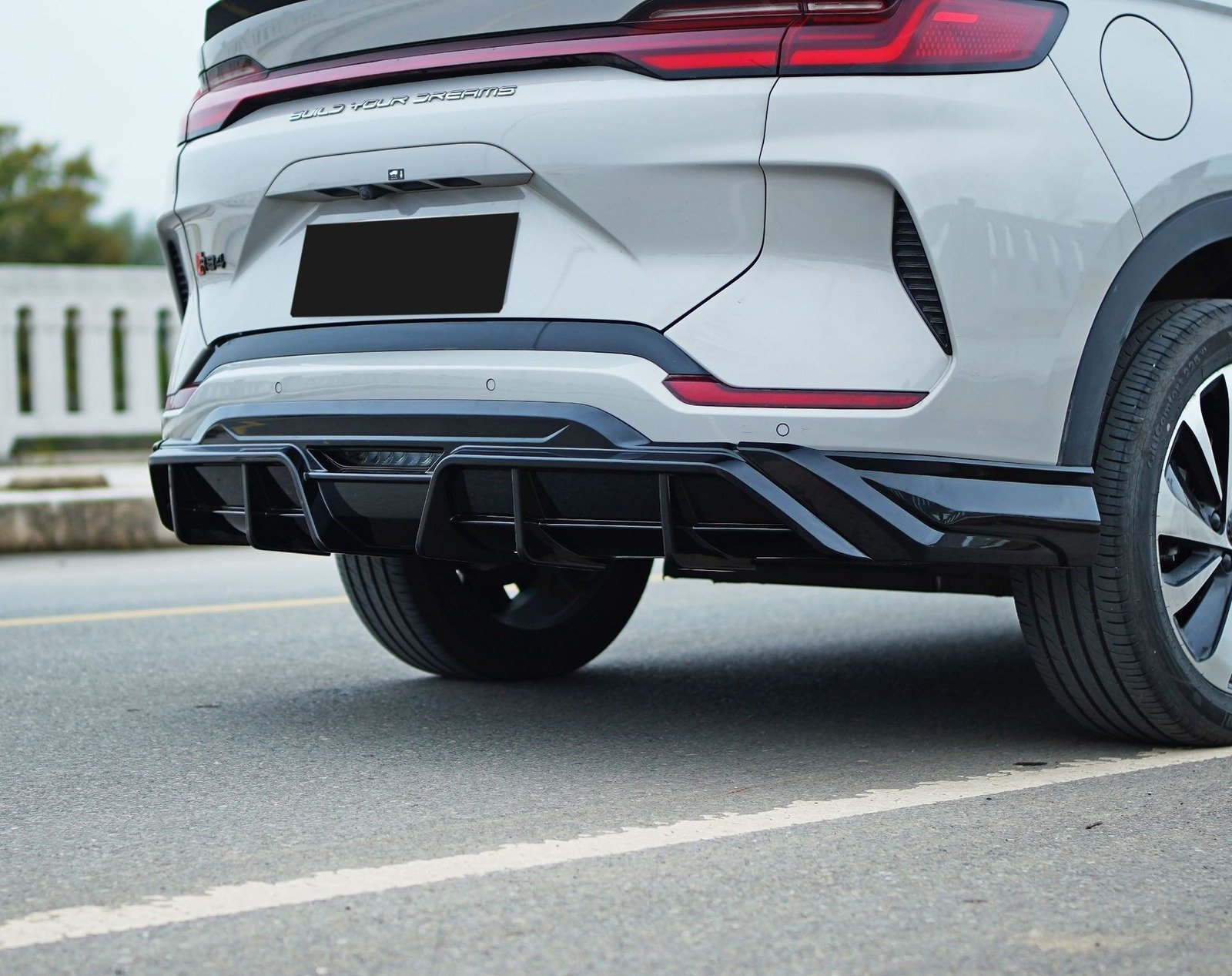
What to check before you buy a rear diffuser
A diffuser sits low and close to sensors, lights and the tow point, so a few checks save trouble later:
- Model and version. Rear bumpers change between versions and facelifts. Match the diffuser to your exact model, and send photos of the rear bumper if you are not sure.
- Parking sensors and cameras. Check that the diffuser leaves sensor openings and the rear camera view clear.
- Rear fog and reflector lights. Some bumpers have lights in the lower section. Make sure the part works around them.
- Tow bar. If your car has a tow bar or you plan to fit one, check clearance before ordering.
- Ground clearance. A deeper diffuser reduces clearance at steep driveway exits and ramps. Think about the roads you use every day.
- Finish. Gloss black, carbon-look and paintable parts look very different on the car. Pick a finish that works with your paint and the other kit parts.
- Material. Most Marvix exterior styling parts are ABS, with PP on selected kits. Our guide to PP vs ABS vs fiberglass vs carbon fiber explains how each one handles knocks, heat and paint.
Fitting time depends on the car and on whether the bumper has to come off, so ask your installer for a quote before you order. For the full budget including paint and labour, see how much a body kit costs.
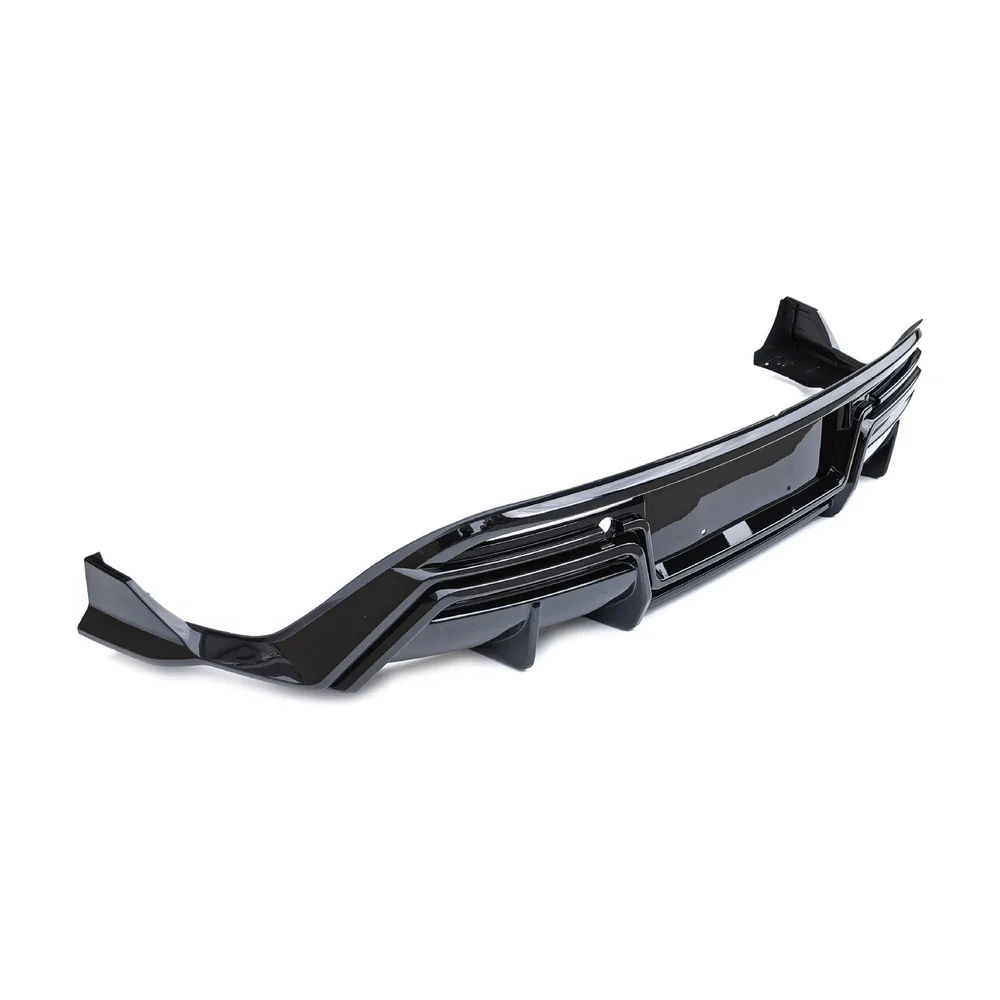
Rear diffusers for BYD models
BYD rear bumpers differ a lot from model to model, so diffusers are made for one car rather than as universal parts. You can browse every option in BYD rear bumpers and diffusers.
For the BYD Seal, the rear bumper diffuser for BYD Seal is designed for the rear bumper area and pairs well with a front lip and side skirts. Our BYD Seal body kit guide shows how the parts work together, and the BYD Seal accessories page lists everything for that car.
SUV owners have options too. The rear bumper diffuser for BYD Sealion 7 suits owners who want a sportier rear on a family SUV, and you can see the rest of the range on BYD Sealion 7 accessories.
For the plug-in hybrid SUV, the rear bumper diffuser for BYD Seal U DM-i (Song Plus) is designed for the rear bumper area of that SUV. More parts are on the BYD Song Plus DM-i / SEAL U DM-i page.
Not sure which version of your BYD you have? Send the model, year and a photo of the rear bumper through our contact page and we will check the fit before you order.
Is a rear diffuser legal?
In most countries a diffuser is treated like any other exterior styling part. The usual concerns are sharp edges, parts sticking out beyond the bumper, and anything that covers the number plate, lights or reflectors. Rules differ by country, so check locally before fitting. Our country guides cover body kits and exterior styling parts such as diffusers:
Europe
Middle East
Asia-Pacific
Frequently Asked Questions
What does a rear diffuser do on a car?
It gives air leaving the underbody an angled exit so it can expand and slow down. On race cars this lowers pressure under the car and creates downforce. On most road cars, a bumper-mounted diffuser is mainly a styling part.
Does a rear diffuser actually work on a road car?
Only a little. Road cars rarely have the flat floor and low ride height a diffuser needs, and the effect is small at everyday speeds. Expect a better look rather than more grip.
Does a rear diffuser improve EV range?
Do not count on it. An add-on bumper diffuser is not an engineered underbody, and any change in drag is likely to be too small to notice in real driving unless the maker has tested that part.
What is the difference between a rear lip and a rear diffuser?
A rear lip is a thin strip along the bottom of the rear bumper. A diffuser is deeper and has channels and fins. The lip is subtle, while the diffuser makes a bigger visual change.
Will a rear diffuser affect my parking sensors?
It should not if the part is made for your model and fitted correctly. Check that sensor openings and the camera view stay clear before you fit it, and send us photos if you are unsure.
Can I fit a rear diffuser without a full body kit?
Yes. Many owners start with the rear diffuser alone. Adding a front lip and side skirts later usually gives a more balanced look.
Shop rear diffusers or wholesale stock with Marvix
Marvix is a one-stop BYD partner: a BYD vehicle-export background plus exterior parts, accessories and export logistics. We run a dedicated plastic parts production line with in-house tooling, a large mold library and a 2,000+ m² warehouse and production site, and many BYD models are already tooled.
1-piece samples and retail orders are accepted, with tiered pricing as quantities rise. Listed parts are usually in stock, and orders under 100 sets ship directly with no production lead time. We also support mixed-SKU orders, dropshipping and fitment checks from model/year, VIN, part number or photos.
Shipping terms for large parts: Brazil, Colombia and Mexico: EXW, FOB or DAP only (the buyer handles customs clearance and taxes). All other countries: EXW, FOB and DAP, plus DDP for samples, retail orders and dropshipping. Details are on our shipping policy for BYD accessories.
Browse BYD rear bumpers and diffusers, review trade terms on BYD exterior accessories wholesale, or request a quote with your model and photos.



 English
 Portuguese
 French
 Turkish
 Russian
 Arabic
 Spanish