

BYD остаётся крупнейшим экспортёром пассажирских новых энергетических транспортных средств (NEV) Китая в июле, отгрузив 173 721 единицу, что составило 32,2% рынка, согласно данным Китайской ассоциации пассажирских автомобилей (CPCA). Июльский показатель вырос на 121,7% в годовом исчислении и на 1,7% по сравнению с июнем.
Июльский рейтинг: BYD остаётся на 1-м месте
CPCA обнародовала рейтинг в своём ежемесячном отчёте о продажах в среду. Chery заняла второе место с 82 768 экспортированными NEV и долей 15,3%, тогда как Tesla China поднялась на третье место с 66 330 единицами, что на 83,4% больше, чем в июне, и на 143,2% больше в годовом исчислении, с долей 12,3%.
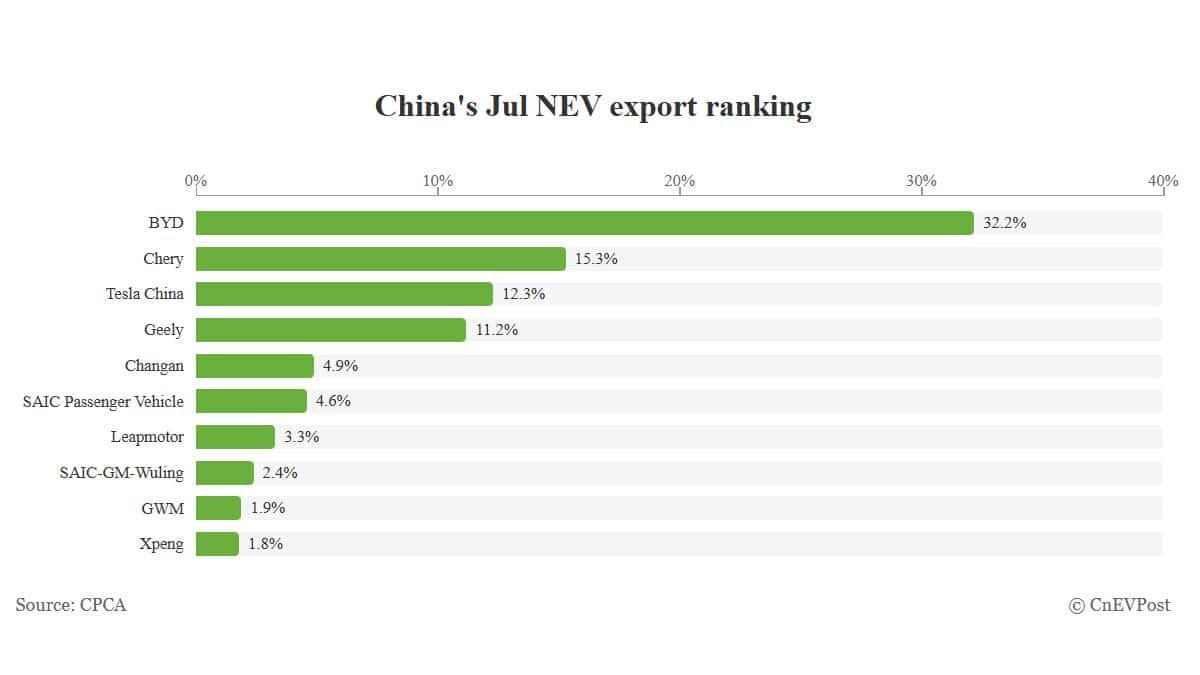
Источник: CnEVPost (данные CPCA)
Geely опустилась на четвёртое место с 60 584 единицами и долей 11,2%, за ней следуют Changan с 26 200 единицами, SAIC Passenger Vehicle с 24 778, Leapmotor с 17 569, SAIC-GM-Wuling с 13 199, GWM с 10 162 и Xpeng с 9 700. Распределение топ-10 показывает, что рынок экспорта NEV Китая больше не dominated одним игроком: даже за пределами топ-3 такие бренды, как Leapmotor и Xpeng, наращивают значимые зарубежные объёмы.
Как составляются рейтинги
Рейтинги CPCA основаны на данных об отгрузках с заводов, что означает, что они измеряют транспортные средства, покидающие заводы для экспорта, а не регистрации на рынках назначения. Они являются наиболее широко цитируемым источником данных об экспортных показателях Китая, поскольку публикуются ежемесячно и охватывают всех крупных автопроизводителей, но их не следует путать с фактическими продажами в зарубежных автосалонах — некоторые отгруженные автомобили находятся в портовых запасах или в транзите неделями.
Январь-июль: экспортная база BYD
Июльский результат BYD продолжает длительную серию. В январе-июле BYD экспортировала 943 051 NEV, что на 80,8% больше в годовом исчислении, сохранив первое место с долей 34,0%. Chery заняла второе место за тот же период с 373 069 единицами (13,5%), за ней следуют Geely с 336 001 (12,1%) и Tesla China с 295 324 (10,7%).
Для BYD экспорт теперь является структурной частью бизнеса, а не буфером для слабого внутреннего спроса. Общий объём за январь-июль подразумевает годовой темп экспорта, приближающийся к 1,6 млн единиц, что сделало бы лидера Китая по NEV одним из крупнейших экспортёров автомобилей в мире по любому критерию.
BYD также активно инвестировала в логистику для поддержки такого масштаба, включая собственный флот автовозов и чартерные мощности, а также зарубежные сборочные заводы. Её зарубежные поставки достигли нового рекорда в июле, согласно ежемесячному отчёту о продажах компании, подтверждая, что автомобили, учитываемые в экспортной статистике, доходят до покупателей, а не накапливаются на складах.
Восстановление Tesla China до 3-го места
Главным движущим игроком в июле стала Tesla China. Её экспорт в 66 330 единиц вырос на 83,4% по сравнению с июнем и на 143,2% в годовом исчислении, подняв её с четвёртого на третье место с долей 12,3%. Восстановление говорит о том, что Tesla использует свой шанхайский завод для более агрессивного снабжения рынков за пределами Китая, особенно поскольку её североамериканские производственные линии ориентированы на внутренний спрос.
Общий экспорт пассажирских автомобилей
На общем рынке экспорта пассажирских автомобилей, который включает традиционные автомобили, Chery заняла первое место в июле с 199 092 единицами и долей 21,7%, BYD — второе с 173 721 единицей и долей 18,9%. Geely была третьей с 106 220 единицами (11,6%), за ней следуют SAIC Passenger Vehicle и Tesla China.
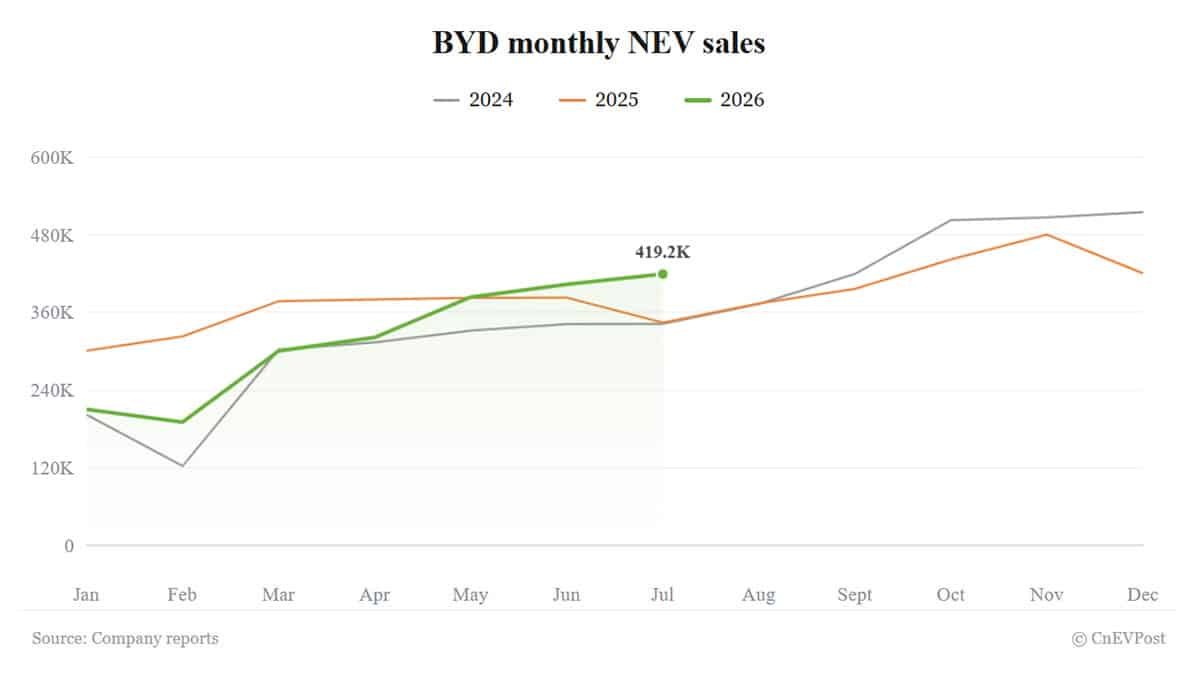
Источник: CnEVPost
Тот факт, что BYD занимает второе место даже в рейтинге экспорта всех видов топлива, подчёркивает, насколько большая часть её объёма действительно продаётся за рубежом, а не просто учитывается в статистике NEV Китая.
Региональная структура
Экспорт NEV Китая всё больше распределяется по Юго-Восточной Азии, Латинской Америке, Ближнему Востоку и Европе, при этом Африка и Центральная Азия растут с небольшой базы. Структура направлений важна, поскольку она определяет как ценовую силу, так и подверженность торговой политике: рынки с открытой торговой политикой поглощают больше объёмов, тогда как чувствительные к тарифам регионы всё больше снабжаются с местных заводов.
Что движет ростом экспорта NEV Китая
Экспорт электромобилей Китая продолжил расти в июле, продолжая тенденцию, которая сделала страну крупнейшим экспортёром автомобилей в мире. Движущие факторы включают конкурентоспособные цены, зрелую цепочку поставок аккумуляторов и электроники, а также расширяющуюся сеть зарубежных сборочных заводов и судоходных мощностей.
BYD, в частности, построила местное производство и дистрибуцию в Юго-Восточной Азии, Южной Америке, Европе и на Ближнем Востоке. Такие объекты, как Производственный завод BYD в Районге, Таиланд_Co.,_Ltd._manufacturing_plant_in_Rayong,_Thailand.png) помогают компании быстрее обслуживать региональные рынки, хотя значительная доля объёма всё ещё отгружается из Китая.
Торговый и тарифный контекст
Рост экспорта также происходит на фоне торговых трений. Тарифы ЕС на китайские электромобили и ограничения США на автомобили китайского производства продолжают определять, где китайские автопроизводители могут продавать с прибылью, направляя больше объёмов в Юго-Восточную Азию, Латинскую Америку, на Ближний Восток и в Африку. Июльские данные CPCA не разбивают экспорт по направлениям, но общее направление соответствует этому сдвигу.
Что это значит для зарубежных покупателей
Для зарубежных покупателей и дилеров устойчивые экспортные объёмы подчёркивают доступность и масштаб китайского предложения NEV — от массовых Модели BYD до新兴 брендов. Восстановление Tesla China до третьего места также показывает, насколько усиливается экспортная конкуренция, при этом решения по ценам и спецификациям всё больше определяются тем, что отгружается из Китая.
Вывод для импортёров заключается в том, что предложение китайской индустрии электромобилей растёт быстрее, чем любой отдельный рынок может поглотить, что, как правило, поддерживает конкурентоспособность цен. Работа с проверенными каналами закупок важна как никогда, поскольку диапазон моделей и региональных спецификаций, доступных для экспорта, продолжает расширяться.
Для дилеров, рассматривающих возможность добавления китайских EV-брендов, данные об экспорте также служат полезной проверкой на прочность: бренд, занимающий высокое место в экспортных таблицах CPCA, имеет за собой реальные производственные и логистические мощности, а не просто стратегию шоурума.
Что посмотреть дальше
Следите за тем, как темпы июля перейдут в третий квартал, изменят ли тарифы ЕС структуру направлений поставок и как быстро зарубежные сборочные заводы BYD поглотят объёмы, которые сейчас отгружаются из Китая. Также следите за августовским рейтингом: сезонные закономерности в Китае обычно означают спад экспортных объёмов, поэтому сравнение будет наиболее показательным с июлем, а не месяц к месяцу.
Меня зовут Луциан, я работаю в компании BYD Sourcing. Имея более 10 лет опыта работы в автомобильной отрасли, а также практический опыт в области экспортных процедур и таможенного оформления, я помогаю зарубежным покупателям приобретать китайские электромобили — в частности, модели BYD — через официальные, проверенные каналы, как для розничной, так и для оптовой торговли. Свяжитесь с нами чтобы получить выгодное ценовое предложение.
Источники
- Доля автопроизводителей в экспорте NEV из Китая в июле: BYD лидирует с 32,2%, Tesla поднимается на 3-е место с 12,3% — CnEVPost
- Ежемесячные данные об экспорте Китайской ассоциации легковых автомобилей (CPCA), по сообщению CnEVPost


 English
 Portuguese
 French
 Turkish
 Russian
 Arabic
 Spanish